Foremost Lithium (FRRSF) — asset monetization drives short-cycle value for investors
Foremost Lithium operates as an early-stage resource company that monetizes through strategic asset sales and project-level partnerships rather than operating cash flow from minerals production. The company extracts value by advancing exploration-stage projects to discrete commercialization events — joint-ventures, option agreements, or outright disposals — that convert geological upside into near-term cash. Investors should treat Foremost as a project-portfolio manager where liquidity and de-risking events drive valuation inflection points. For a concise view of how these customer and counterparty relationships shape risk and timing, visit https://nullexposure.com/.
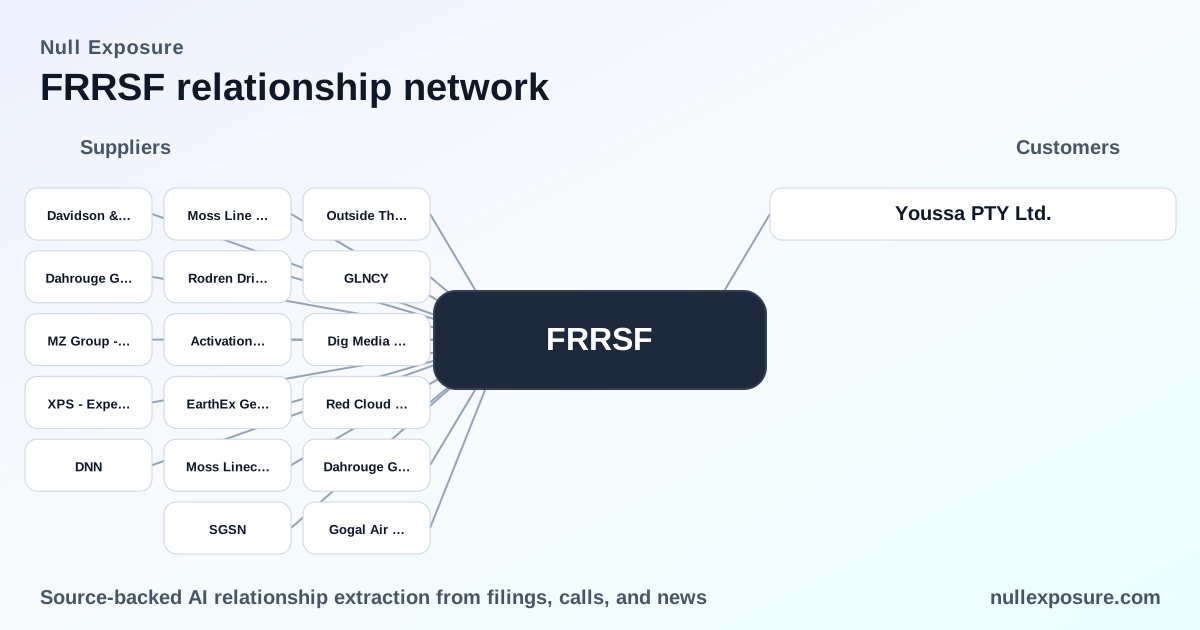
A single concrete customer event: the Youssa PTY Ltd. transaction
Foremost completed a definitive monetization event for its Hidden Lake asset when it sold a 60% interest in the project for C$3.5 million to Youssa PTY Ltd., an Australian private company. The transaction closes a capital-return pathway for a non-producing asset and demonstrates the company’s willingness to crystallize value through disposals to third-party operators. According to an Investing News report published March 9, 2026, Foremost announced the sale of its 60% interest in the Hidden Lake Project to Youssa PTY Ltd. for C$3.5 million (Investing News, March 9, 2026 — https://investingnews.com/foremost-lithium-completes-sale-of-its-interest-on-its-hidden-lake-property-for-3-5-million-cash/).
Why this relationship matters to an investor evaluating FRRSF
- Cash realization over carry exposure. The sale signals Foremost’s preference for transforming asset ownership into cash rather than retaining project-level operational risk; this reduces burn and funds corporate exploration or working capital.
- Counterparty profile matters. Selling to a private Australian firm shifts operational and execution risk to an external operator whose balance sheet, technical capability, and intentions determine the project’s future value creation. Investors should treat the buyer as a de-risking outlet rather than a long-term revenue stream.
- Value-creation cadence is event-driven. For a small-cap explorer like Foremost, the pace of portfolio monetizations — similar to the Youssa transaction — dictates liquidity events and rerates more than commodity cycles or production metrics.
All observed customer/counterparty relationships (complete list)
Youssa PTY Ltd. — Foremost sold a 60% interest in the Hidden Lake Project in Yellowknife, NWT, to Youssa PTY Ltd. for C$3.5 million; the deal closed and was publicly announced in early March 2026. The transaction converts a sizeable minority of a project into cash and transfers operational responsibility of that interest to the buyer. (Investing News, March 9, 2026 — https://investingnews.com/foremost-lithium-completes-sale-of-its-interest-on-its-hidden-lake-property-for-3-5-million-cash/)
Operating-model signals and business constraints investors should price in
With no specific contractual constraints published alongside the observed relationship, the following are company-level signals derived from Foremost’s behavior and transaction type:
- Contracting posture — discrete, one-off monetizations: Foremost’s sale-based approach indicates a contracting posture focused on episodic transfers of project equity rather than ongoing service or off-take contracts. This reduces recurring revenue potential but increases the predictability of cash inflows when deals execute.
- Concentration — limited observable counterparties: The public record shows isolated transactions rather than a diversified roster of long-term partners, implying counterparty concentration and event-driven liquidity. Investors should expect lumpy cash flow timing and dependence on deal execution.
- Criticality — asset-level rather than corporate-critical counterparty relationships: Buyers like Youssa are critical to advancing specific projects but are not presented as strategic, revenue-generating customers for Foremost’s broader corporate operations.
- Maturity — early-stage exploration with transactional monetization: Selling a significant project interest instead of progressing to production reflects an early-stage corporate lifecycle; Foremost manages maturity risk by monetizing rather than capital-intensive development.
These signals should inform valuation multipliers: discount the company-style multiple for execution concentration but recognize any premium when monetizations de-risk a material asset.
Risk factors and what to watch next
- Buyer execution risk. Once sold, the project’s future depends on Youssa’s technical execution and capital access; Foremost’s retained upside is limited to its residual interest and any earn-outs/royalties if structured. Monitor buyer disclosure and subsequent drill or permitting results.
- Event timing and cadence. Foremost’s valuation will fluctuate with the pace of similar disposals or joint-venture announcements; investors should not expect steady revenue streams.
- Transparency and disclosure. The counterparty is a private Australian firm; investors should demand clear reporting on any contingent payments, milestone clauses, or re-acquisition rights that would materially affect Foremost’s economics.
How to use this information in investment decisions
- For total-return investors seeking event-driven upside, Foremost’s business model is appealing when it can repeatedly crystallize value via sales or JV formations. Each monetization reduces exploration risk and can fund the next wave of prospecting.
- For income or operating-cash-focused investors, Foremost is not suitable: the company does not generate steady operating cash flow and instead depends on intermittent asset sales to fund operations.
- Active investors should track buyer disclosures and any earn-out structures tied to the Hidden Lake sale; contingent consideration can materially change realized proceeds.
If you want a consolidated view of counterparties and the downstream implications for FRRSF’s balance sheet and valuation, explore analytical coverage and relationship maps at https://nullexposure.com/.
Bottom line: crystallized value, event-driven upside, concentrated execution risk
The Youssa PTY Ltd. transaction is a clear example of Foremost Lithium monetizing exploration assets to convert potential into cash. Investors should value Foremost as a project-portfolio manager whose upside is realized via discrete transactions, not recurring customers. The primary investment tension is between the benefit of de-risked balance sheets after asset sales and the concentration risk that a small number of counterparties and infrequent deals create for corporate cash flow and re-rating potential. Track subsequent announcements from both Foremost and Youssa for signs that the buyer advances the Hidden Lake project and that Foremost can repeat this monetization playbook.