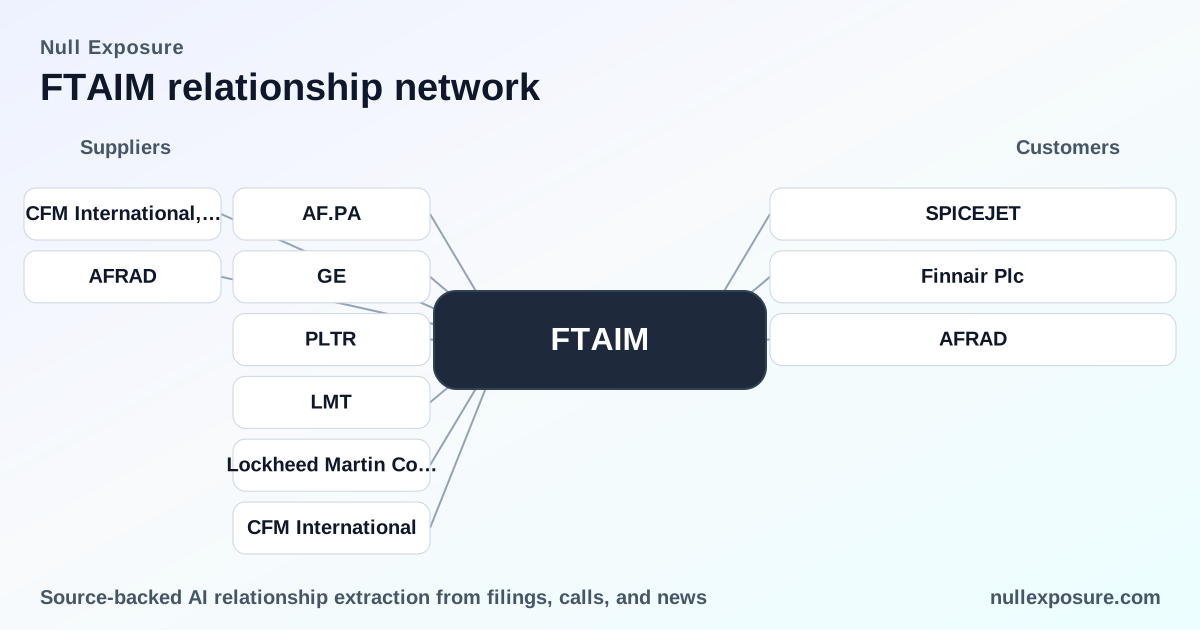
FTAI Aviation (FTAIM) — customer relationships that drive a capital-light, asset-backed earnings stream
Thesis: FTAI Aviation operates an integrated aviation asset platform that monetizes through leasing engines and aircraft, selling aerospace products and delivering MRO and engine-exchange services. The company converts long-lived, mobile assets into predictable contractual cash flows, supported by diversified global customers and growing aftermarket services that expand gross margins and EBITDA generation. For investors in FTAIM preferred paper, the credit and dividend outlook is driven more by asset cash-on-cash yields and counterparty mix than by spot equity valuation metrics. Learn more at https://nullexposure.com/.
How FTAI earns money and where customer relationships matter
FTAI’s business combines two complementary levers: leasing and remarketing of aircraft and engines (recurring leasing revenue) and manufacturing/aftermarket services for CFM56 and V2500 engines (higher‑margin service and parts sales). The company reports trailing revenue of $2.836 billion and EBITDA of approximately $1.0207 billion, reflecting operating scale across leasing and aerospace products. Contracting is predominantly long‑term and customer concentration is low — no single customer accounted for more than 10% of revenue in 2024 — so cash flow predictability comes from structural lease terms and recurring MRO agreements rather than a small set of anchor customers.
FTAI’s operating model characteristics:
- Contracting posture: Predominantly long‑term leases and multi‑year service agreements, producing contractual cash flow durability and cash‑on‑cash yield protections.
- Concentration: Customer exposure is broadly diversified across regions (North America, EMEA, APAC, LATAM) and levers, with no single customer >10% of revenue, reducing counterparty concentration risk.
- Criticality: Relationships are strategically important — engine exchanges and MRO services directly affect airline dispatch reliability — giving FTAI leverage in pricing and retention.
- Maturity: The company operates both mature leasing businesses and a scaling aerospace products/MRO franchise, moving up the value chain from asset owner to service provider.
The relationship map — what every reported customer tie means for revenue and risk
Finnair Plc — Perpetual Power Agreement (news, FY2025)
FTAI signed a multi‑year Perpetual Power Agreement with Finnair covering 36 CFM56‑5B engines to provide engine exchanges in lieu of shop visits, a structure that reduces downtime for the carrier while locking in recurring exchange revenue for FTAI. This arrangement was reported in a GlobeNewswire/ManilaTimes item and echoed by QuiverQuant in FY2025 reporting. (GlobeNewswire/ManilaTimes, Oct 2025; QuiverQuant summary, FY2025)
Finnair Plc — duplicate press reporting (news, FY2025)
A second entry replicates the same multi‑year exchange agreement coverage, reinforcing that the Finnair engagement received multiple press placements and is a material service contract in FTAI’s FY2025 disclosures. The duplicated item surfaced in QuiverQuant and other press aggregators. (QuiverQuant, FY2025)
SpiceJet — 20 engines on lease plus maintenance services (Business Today, FY2023)
FTAI provided SpiceJet with a package of 20 leased engines and associated maintenance services, reflecting the company’s model of combining asset provision with lifecycle services to regional carriers. The original coverage appeared in Business Today in mid‑2023 and is cited in FTAI’s relationship data. (Business Today, Jun 8, 2023)
SPICEJET — duplicate item from same source (Business Today, FY2023)
A duplicate entry for SPICEJET reiterates the same 20‑engine lease and maintenance programme, indicating multiple indexing entries for the same contractual program. The arrangement underscores FTAI’s exposure to APAC and LATAM lessees through engine leasing and MRO. (Business Today, Jun 8, 2023)
CFM International — MRO service agreement (news aggregate, FY2026)
FTAI signed a multi‑year MRO services agreement with CFM International to provide repair and support services for CFM56 engines, which positions FTAI as a recognized provider within OEM service networks and is expected to generate meaningful aftermarket revenue. This was reported in FY2026 news coverage summarizing FTAI’s dividend announcement and business updates. (Intellectia.ai summary, FY2026)
Air France — asset disposal and asset management collaboration (news, FY2026)
FTAI will assist Air France in optimizing the disposal process of aging aircraft and enhancing asset utilization efficiency, a relationship framed as strategic asset‑management collaboration rather than a simple lease. The engagement was described in media coverage tied to FY2026 corporate updates. (Bitget news summary, FY2026)
Air France — strategic MRO/engine access commentary (FinViz summary, FY2026)
In a separate FY2026 press note, FTAI’s COO framed the company’s expansion of MRE (Maintenance, Repair and Exchange) solutions and the importance of expanding access to CFM56 engines to support customers such as Air France. This commentary suggests deeper operational coordination with major European carriers. (FinViz news summary, FY2026)
2025 Partnership — intercompany accounts receivable noted in Q1 2026 filing (GlobeNewswire, FY2026)
FTAI’s March 31, 2026 financials include accounts receivable from a 2025 Partnership ($35,422 as of March 31, 2026), indicating active transactions with affiliated or joint‑venture partners that feed working capital and receivable balances. The disclosure appeared in FTAI’s Q1 2026 results release. (GlobeNewswire press release, Apr 29, 2026)
What investors should take away about concentration, regions and contract durability
- Diversified regional footprint: Revenue disclosures show material contributions across Europe, North America, Asia and South America, supporting the company’s claim of global operator customers and lessor diversification. The company reported Europe, North America, Asia and South America revenue splits in its FY2024 summary.
- Low single‑counterparty concentration: Management reporting confirms no customer >10% of revenue across 2022–2024, an important credit feature for preferred‑shareholders seeking predictable dividend support.
- Long‑term contract bias: Lease terms and MRO agreements are structured to produce repeatable cash flows; management discloses weighted average remaining lease terms and explicit long‑term protections in lease contracts.
Key risks and upside drivers
- Upside drivers: expansion of MRO and engine‑exchange services (in contracts with CFM International, Finnair and large carriers), rising utilization of spare‑engines inventory and higher aftermarket pricing will enhance margins and free cash generation.
- Risks: airline demand cycles and structural transitions to newer engine types reduce long‑term demand for legacy CFM56 assets; however, FTAI’s combined leasing and manufacturing/service posture mitigates single‑channel exposure.
- Credit implications: low customer concentration and long‑term cash flows support dividend coverage for the FTAIM preferred series, but investors should monitor fleet obsolescence and asset resale markets.
Final read: positioning and next step
FTAI transforms engine and aircraft inventory into a mix of predictable lease cash flows and higher‑margin aftermarket revenue, backed by a diversified global customer base and long‑term contracting posture. The suite of reported relationships — from Finnair and Air France to SpiceJet and contractual MRO ties with CFM International — demonstrates both scale and strategic integration across the asset lifecycle. For a deeper operational read and ongoing relationship tracking, visit https://nullexposure.com/.
Bold takeaways: diversified counterparty base, long‑term contracts, growing MRO exposure, and limited single-customer concentration — core attributes that define FTAI’s cash‑flow profile and are central to assessing risk for FTAIM preferred investors.