FTC Solar (FTCI) — Customer Relationships That Underpin Near‑Term Revenue Visibility
FTC Solar sells utility-scale solar tracking hardware, complementary software and professional services, and it monetizes through a mix of product sales, term-based software licenses and subscription/support arrangements. Recent multiyear supply deals with both U.S. and international developers materially extend visibility into tracker shipments over the next three to five years, reducing near-term execution risk and supporting backlog-driven revenue recognition. For background on how we compile relationship intelligence, visit https://nullexposure.com/.
How FTC Solar actually makes money — a concise operating thesis
FTC Solar is first and foremost a hardware manufacturer: solar tracker systems are the core revenue engine, supported by proprietary software (SUNPATH, SUNOPS) and engineering services that increase project economics for EPCs and developers. The company's commercial model is a hybrid: one-off product sales for trackers and components are complemented by term-based software licensing and subscription/maintenance contracts, typically running one to two years, which provide recurring revenue and after‑sales service. Geographically, revenue is concentrated in North America and Australia but the product set is sold globally, and company disclosures show a meaningful customer concentration: four customers accounted for roughly 39%, 11%, 11% and 11% of revenue in the 2024 reporting period — a concentration signal investors must price into valuation and risk assessments.
Recent customer wins that move the needle
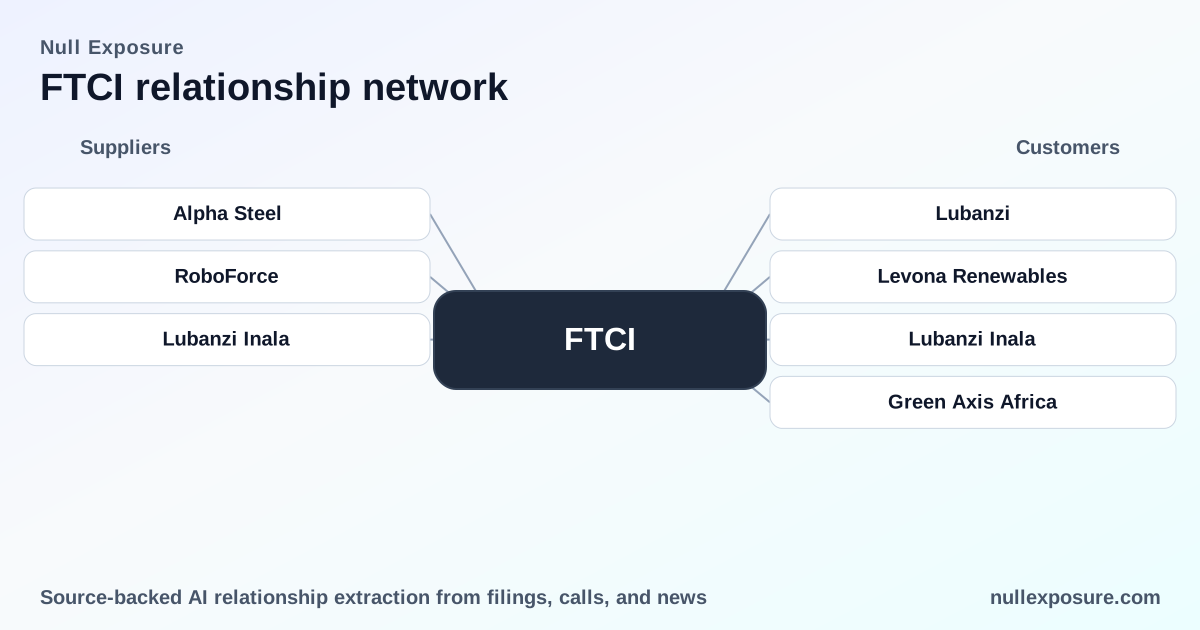
FTC Solar has announced several large supply agreements in 2026 that materially increase medium-term volume commitments. Below I cover each identified customer relationship and the public source that reported the deal.
Lubanzi / Lubanzi Inala — multi‑year South Africa supply agreement
FTC Solar signed a three‑year supply agreement to deliver approximately 840 MW of trackers to Lubanzi Inala, a South African procurement firm that is part of the Green Axis Africa EPC consortium; first projects are expected to begin around mid‑2026. According to FTC Solar's press release and subsequent investor communications dated February 23, 2026, this deal establishes a significant international revenue stream for the next three years. (Source: GlobeNewswire press release, Feb 23, 2026; Q4 2025 earnings call transcript.)
Strata Clean Energy — expansion to 1,000 MW in the U.S.
FTC Solar expanded an existing supply agreement with Strata Clean Energy by 1,000 MW on a five‑year extension, tripling the previously contracted volume after Strata reported labor efficiencies and cost savings from FTC trackers. The expansion was publicly announced on March 10, 2026 and provides U.S. project volume and a meaningful extension of sales visibility. (Source: GlobeNewswire / PV Tech coverage, Mar 10, 2026.)
Levona Renewables — 1 GW tracker and software supply agreement
FTC Solar executed a 1 GW supply and software agreement with Levona Renewables, an engineering firm, adding a large pipeline of PV tracker and software work recognized in FY2025/FY2026 news flow. This agreement reinforces FTC's role as both hardware supplier and software licensor in project execution. (Source: PV‑Tech report, 2026.)
Green Axis Africa — consortium linkage on South African projects
Green Axis Africa is referenced publicly as the EPC consortium connected to the Lubanzi Inala award; an 840 MW multi‑project tracker contract is described in coverage that ties Lubanzi Inala and Green Axis Africa together. This relationship underscores the regional project delivery structure FTC will work through in South Africa. (Source: Solarbytes / regional press coverage, 2026.)
What these relationships tell investors about FTCI's business model
- Contracting posture: FTC combines one‑time product sales with term‑based licensing and subscription/maintenance contracts, creating a mix of lump‑sum project revenue and recurring streams. Company disclosures indicate subscription license terms are typically one to two years and recognized on a straight‑line basis, which smooths revenue relative to hardware shipments.
- Customer concentration and criticality: The company has meaningful revenue concentration — four customers accounted for approximately 72% of revenue in the referenced period (39% + 11% + 11% + 11%) — which creates single‑name and industry concentration risk. At the same time, trackers are an essential component for utility PV projects, so each major customer relationship is operationally critical and can influence deployment timelines and warranty/service obligations.
- Geographic mix and market maturity: FTC's revenue base is concentrated in North America and Australia but commercial activity is global, as evidenced by the South African Lubanzi Inala award. Global sales increase addressable market but introduce country‑level execution risk (logistics, local EPC partnerships, permitting).
- Contract maturity and revenue visibility: Multiyear master supply agreements (three‑ and five‑year terms) with Lubanzi Inala and Strata extend visible backlog and reduce quarterly topline variability tied to spot bids. Longer supply agreements materially improve revenue visibility and help plan capacity and inventory, while still exposing the company to execution and freight cost volatility.
- Segments and margin mix: FTC's revenues derive from three complementary segments — hardware (trackers), services (engineering, pile testing, installation support) and software (term licenses and subscriptions) — which explains why supply deals often bundle hardware with software and services.
Financial context and risk framing for investors
FTC Solar is growing revenue (Revenue TTM ~ $99.7M) while operating at a loss (EBITDA negative and diluted EPS of -5.95), so these supply agreements are commercially material but must translate into margins and positive operating leverage to change the valuation outlook. Key investor risks include customer concentration, execution on large international shipments, and maintaining margin across hardware, software and services. On the positive side, multi‑year commitments from both U.S. and international customers directly support backlog and near‑term revenue visibility.
If you want a concise, relationship‑level view of FTC Solar's customer book and how each large contract affects revenue runway, explore our company pages at https://nullexposure.com/.
Bottom line — what matters next quarter
FTC Solar's recent supply agreements — especially the 840 MW Lubanzi Inala (3 years) and 1,000 MW Strata expansion (5 years) — shift the company from a spot‑market posture toward longer‑term supply partnerships, increasing medium‑term revenue certainty. Investors should watch margin evolution on these large contracts, delivery cadence against announced MWs, and any shift in concentration metrics as new customers contribute to revenue.