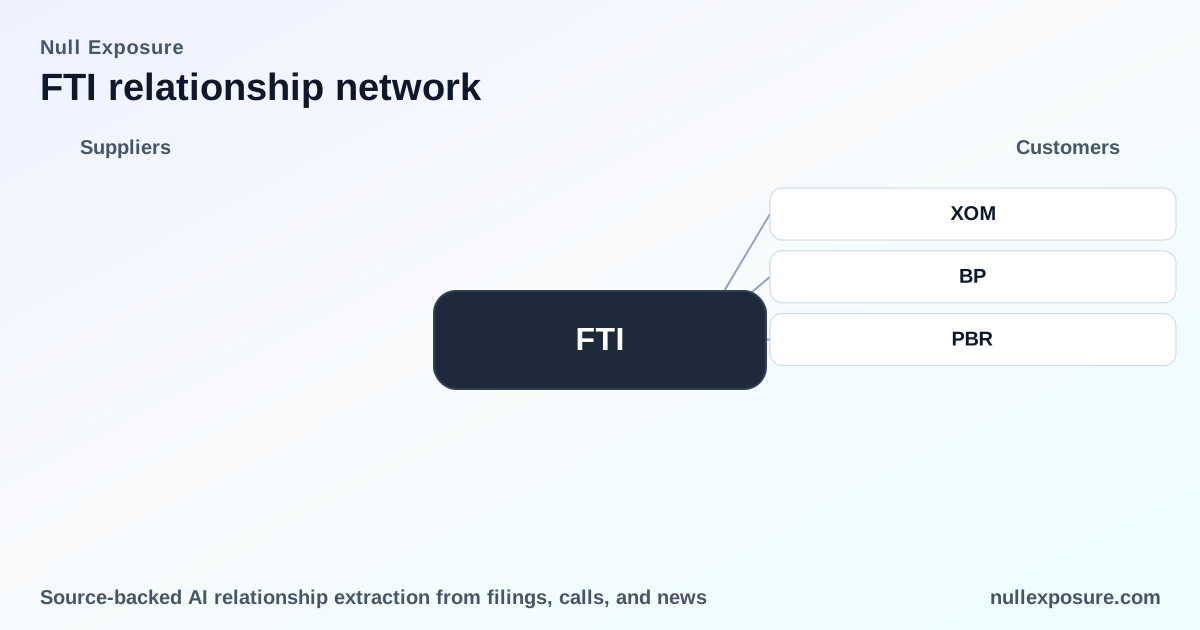
TechnipFMC (FTI): Subsea revenue powered by a small set of large, long-term operator relationships
TechnipFMC monetizes by selling engineered subsea systems, flexible pipe and integrated EPCI execution to large oil and gas operators and national oil companies; the company captures margin through equipment sales, multi-year contracts and field-level project integration that lock in schedule-critical delivery across long program timelines. TechnipFMC’s commercial strength is its ability to convert technical backlog into predictable cashflows by winning repeat awards from very large energy operators. Learn more at https://nullexposure.com/.
How TechnipFMC’s commercial model makes money
TechnipFMC sells engineered hardware (subsea trees, flexible pipe, risers) and project delivery services (EPCI—engineering, procurement, construction and installation). Revenue flows from a mix of long-term contracts and project milestones, with some elements billed on time-and-materials or usage-based terms for services and installation. Management consistently frames customers as major integrated oil companies, national oil companies and large independents, which supports larger contract sizes and extended program durations; that client mix drives both revenue concentration and predictability. The company operates globally with strategically located manufacturing and delivery hubs that enable turnkey delivery on multi-year offshore projects.
Who matters on the customer list — and why it matters
Below I walk through every customer relationship surfaced in the most recent coverage, with a short, investor-facing summary and source reference for each.
ExxonMobil — sustained subsea partner in Guyana and Hammerhead award
TechnipFMC has supplied all of ExxonMobil’s subsea production systems in Guyana since the first contract award in 2017 and was awarded the Hammerhead project, leveraging in-country experience and a track record for schedule certainty. This relationship is strategically important because repeat awards in Guyana create multiyear equipment and service demand. (Source: TechnipFMC 2025 Q3 earnings call, March 2026.)
BP — integrated EPCI scope on high‑visibility Tiber and Kaskida developments
TechnipFMC is executing the Tiber and Kaskida projects for BP using a consistent project methodology and 20K equipment, and management highlighted BP’s synchronized development approach as a model for portfolio-based execution; analysts also referenced an integrated EPCI contract from BP for Tiber valued between $600–$800 million, which materially improves near-term visibility. BP represents large-ticket integrated work where TechnipFMC’s integrated-delivery margins are most leveraged. (Sources: TechnipFMC 2025 Q4 earnings commentary and market coverage referenced in March–May 2026 media reports, including Investing.com and earnings call transcripts.)
Petrobras — leading supplier of flexible pipe and risers for pre‑salt fields
TechnipFMC described itself as Petrobras’s leading flexible pipe provider and reported multiple flexible‑type awards, including direct contracts for high‑pressure gas injection risers in Brazil’s pre‑salt developments. Brazil remains a core market for flexible pipe and riser technology, and Petrobras awards anchor revenue in that product line. (Sources: TechnipFMC 2025 Q3 earnings call and a Q1 2026 earnings transcript republished on market sites in May 2026.)
EYPT / EyePoint — an incidental press mention referencing FTI Consulting contacts, not a commercial customer of TechnipFMC
A GlobeNewswire investor‑conference notice listed investor contacts that included FTI Consulting personnel and referenced EyePoint (EYPT); this item is a communications/contact mention tied to FTI Consulting rather than a commercial sales relationship for TechnipFMC. Treat this as an unrelated press/contact item, not evidence of a supplier–customer engagement with TechnipFMC. (Source: GlobeNewswire press release, February 24, 2026.)
What the customer mix tells you about operating constraints and risk
The disclosed and implied relationship patterns reveal several company-level operating characteristics that investors should incorporate into valuation and risk assessments:
- Contracting posture is long‑term and project-oriented. Management states the majority of revenue comes from long‑term contracts that span several years, which supports backlog visibility and deferred revenue profiles across multi‑year project cycles.
- Some billing elements are usage- or time-driven. Management also noted payment terms can be fixed lump-sum or driven by time-and-materials (daily/hourly plus materials), which introduces margin variability when projects extend or face scope change.
- Customers are very large enterprises and national oil companies. Management explicitly classifies the Subsea customer base as major integrated oil companies, national oil companies, and large independents — a client set that produces large contract sizes but also counterparty negotiation power.
- Geographic footprint is global. TechnipFMC operates manufacturing and delivery worldwide to support offshore projects across Guyana, Brazil, West Africa and other basins.
- Revenue concentration is mixed across segments. At the Surface Technologies level, no single customer accounted for 10%+ of 2024 revenue, yet at the consolidated company level three customers contributed 18%, 13% and 11% of 2024 revenue respectively; this means repeat awards from a handful of large operators materially move consolidated results even if individual divisional exposure looks diversified.
- Criticality of delivery amplifies execution risk. TechnipFMC’s value proposition is schedule certainty and integrated delivery; that criticality strengthens negotiating leverage but raises the cost of underperformance, with consequences for margins and future award rates.
Investment implications and risk profile
TechnipFMC’s commercial strength rests on converting large operator relationships into repeat contract wins. Positive investment drivers include rising subsea investment, repeat awards from ExxonMobil, BP and Petrobras, and integrated EPCI scope that supports higher margin capture. Key risks are execution slippage on large EPCI projects, margin pressure from fixed‑price contracts or time‑driven variations, and revenue sensitivity to a few large counterparties at the consolidated level.
- Valuation nuance: the company’s forward P/E (~27–28x) embeds a premium for execution and backlog conversion; investors should stress test scenarios where one or more large customers delay projects.
- Operational diligence: confirm backlog composition by contract type (lump‑sum vs time‑and‑materials) and the share of integrated EPCI awards that carry higher margin optionality.
Bottom line and next steps
TechnipFMC is a classic subsea contractor whose commercial model is built on long, repeatable relationships with very large operators: ExxonMobil, BP and Petrobras form the backbone of near‑term revenue visibility, while occasional press mentions (such as the EYPT investor note) are not indicative of additional commercial exposure. For investors focused on execution and counterparty concentration, the primary questions are contract type mix and the company’s operational track record delivering schedule certainty on large EPCI scopes.
For a deeper read into counterparty exposure and project-level risk, see our research platform at https://nullexposure.com/ for structured coverage and relationship analytics.