Fulcrum Therapeutics: customer relationships that reshape near‑term economics
Fulcrum Therapeutics is a clinical‑stage biopharma that monetizes intellectual property and development progress through out‑licensing, collaborations and milestone/royalty structures rather than product sales today. The firm carries no material product revenue TTM, relies on partnership flows and license economics for cash and de‑risking, and is now executing a transition in which a previously material collaboration with Sanofi has been terminated and new licensing activity (CAMP4) has been established. For a concise interface to the relationship evidence behind this note visit https://nullexposure.com/.
How Fulcrum’s commercial model operates and what matters to investors
Fulcrum captures value primarily by discovering small molecules for genetically defined diseases and then either advancing those programs internally through clinical development or granting commercialization rights to larger partners in exchange for upfront payments, development cost sharing, milestones and future royalties. The company currently reports no product sales and negative operating cash flow, so partner payments and licensing outcomes directly govern near‑term valuation and runway. Contracts that allocate manufacturing rights, cost‑sharing and termination provisions are therefore central to revenue visibility and execution risk.
Sanofi: terminated collaboration with material historical impact
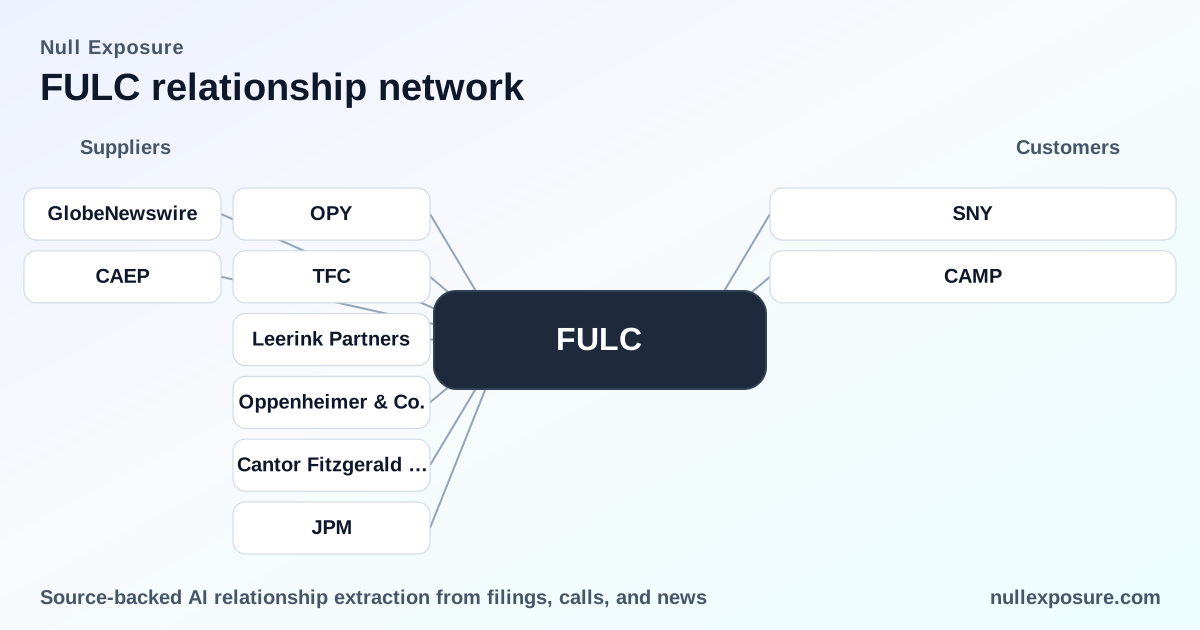
Fulcrum granted Sanofi (Genzyme) an exclusive license to commercialize losmapimod outside the U.S.; this collaboration generated material accounting effects and then reversed when Sanofi elected to terminate. According to Fulcrum's FY2026 SEC disclosure as summarized on TradingView (10‑K coverage published March 9, 2026), collaboration revenue was $0 in FY2026, a decline of $80.0 million tied to the termination of the Sanofi agreement. A company press release and financial commentary for Q4/FY2025 (GlobeNewswire, Feb 24, 2026) and Q3/2025 (GlobeNewswire, Oct 29, 2025) explain that the termination drove decreased development cost reimbursements and lower program‑related spend; the company recognized reduced costs associated with discontinuation of the losmapimod program and reimbursements under the now‑terminated collaboration (GlobeNewswire releases, Oct 2025 and Feb 2026).
Source: Fulcrum FY2026 10‑K reporting (TradingView coverage, Mar 9, 2026) and Fulcrum press releases (GlobeNewswire, Oct 29, 2025; Feb 24, 2026).
CAMP4 (CAMP): new license to the DBA program with upside contingencies
Fulcrum entered a license agreement with CAMP4 granting a worldwide exclusive license to rights under its DBA program, with potential milestone payments and royalties tied to product development and sales, establishing a new commercial pathway for that program (TradingView summary of the FY2026 filing, Mar 9, 2026). This deal represents a classic biotech monetization move: exchanging development and commercialization responsibilities for milestone‑based optionality and back‑end royalties rather than immediate product revenue.
Source: FY2026 10‑K summary reported on TradingView (Mar 9, 2026).
What each relationship means for Fulcrum’s business model and risk profile
-
Sanofi (SNY): The Sanofi collaboration historically supplied both funding and program development runway; its termination removed a large and near‑term revenue/reimbursement channel and transferred program control back to Fulcrum. The company had manufacturing obligations and supply provisions under the agreement and received global development cost sharing while the partnership was active. Evidence in the company disclosures shows the termination was effective April 17, 2025 following Sanofi’s notice (10‑K/press releases; TradingView and GlobeNewswire summaries, Mar 2026/Feb 2026).
-
CAMP4 (CAMP): The CAMP4 license converts a Fulcrum program into an externally financed development pathway that replaces some partnership economics lost with Sanofi. The CAMP4 arrangement is structured around milestones and royalties, which preserves upside without requiring Fulcrum to fund late‑stage development internally (TradingView FY2026 summary, Mar 9, 2026).
Operational constraints and how they shape execution
Fulcrum’s disclosures surface several constraints that define contracting posture, concentration, criticality and maturity:
-
Contracting posture — out‑licensing and supplier commitments are core. Fulcrum historically granted exclusive commercialization licenses (Sanofi) and retains rights to manufacture for U.S. commercialization under supply agreements; these contractual features mean the company’s strategic options are a mixture of build versus partner and involve detailed supply and IP handoffs (evidence in FY2026 10‑K as summarized on TradingView, Mar 2026).
-
Concentration — partner outcomes drive cash flows. With zero product revenue TTM and material collaboration receipts historically concentrated in the Sanofi arrangement, partner decisions have an outsized effect on short‑term liquidity and program prioritization. The termination materially reduced collaboration receipts and associated development cost reimbursements (GlobeNewswire, Feb 2026).
-
Criticality — manufacturing and IP assignments matter to near‑term value realization. Fulcrum retained manufacturing rights for U.S. activities and contractual obligations to supply Sanofi until Sanofi elected to assume manufacturing; such clauses determine whether the company carries manufacturing execution risk or relinquishes it to a partner (10‑K disclosures summarized on TradingView).
-
Maturity — programs are early clinical with contingency economics. The CAMP4 agreement illustrates a licensing model where Fulcrum monetizes pre‑commercial assets through milestone and royalty structures rather than immediate product sales; this preserves upside but delays cash realization until regulatory and commercial milestones are achieved (TradingView FY2026 summary).
These constraints collectively create a profile where partner selection, contract terms (manufacturing, cost share, termination) and milestone timing are the principal drivers of enterprise value.
Investment implications and risk map
-
Positive: The CAMP4 license provides non‑dilutive upside with milestone/royalty economics; if CAMP4 advances the DBA program efficiently, Fulcrum will capture backend royalty value without funding late‑stage costs. Press releases and filings confirm the new licensing activity is active (TradingView, Mar 2026).
-
Negative: The Sanofi termination removed a large, certain source of development reimbursements and introduced a revenue cliff (collaboration revenue fell by $80.0M in FY2026 per FY2026 reporting). Fulcrum’s operating model requires either new partners, milestone receipts or internal execution to replace that cash flow.
-
Execution risk: Fulcrum must either rebuild commercial capabilities or negotiate further licenses; corporate disclosures explicitly note the company will need sales and distribution arrangements to achieve commercial success, signaling strategic choices that affect near‑term capital needs.
For a consolidated, investor‑grade view of Fulcrum’s partner exposures and evidence base, visit https://nullexposure.com/ for the relationship index and source links.
Bottom line: partners determine the short‑term story
Fulcrum is a license‑centric, partnership‑driven clinical biotech whose near‑term valuation trajectory is determined by the timing and structure of partner payments and milestones. The Sanofi termination materially reduced near‑term receipts and demonstrated the brittleness of single‑partner concentration; the CAMP4 license restores a pathway to milestone and royalty value but pushes monetization further into future development events. Investors should treat partner contract terms, manufacturing responsibilities and milestone schedules as primary investment levers.