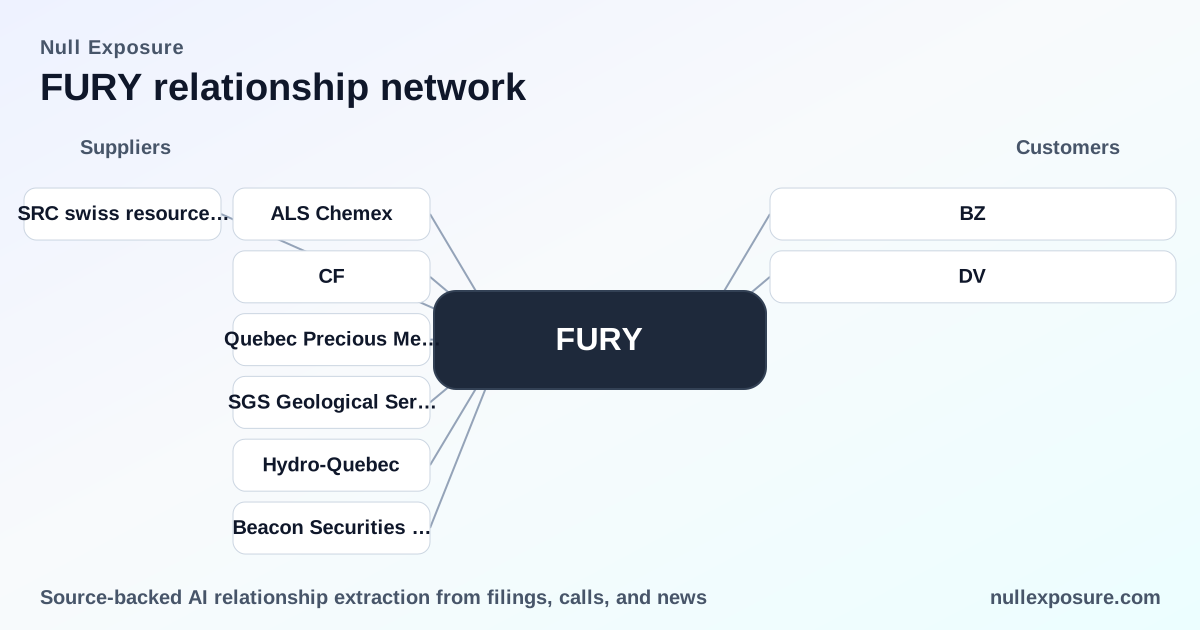
FURY: Asset-led monetization and counterparty exposures that define the next phase
Fury Gold Mines (FURY) operates as an asset-centric gold explorer/developer that monetizes through strategic divestitures, option exercises, and staged joint-venture exits rather than relying solely on operating cash flow from production. For investors and operators, the company’s commercial footprint is best understood as a series of transactional customer relationships—buyers of projects and minority interests—that crystallize value and fund ongoing exploration and development. For a concise view of Fury’s partner map and what each relationship means for near-term cash and optionality, visit https://nullexposure.com/.
Market-facing summary: Fury’s business model generates value primarily by packaging land positions and project stakes for third-party acquirers, which creates episodic cash inflows and reduces long-term capital intensity at individual projects. That posture produces concentration risk around a handful of counterparties, high criticality of each divestiture to near-term liquidity, and a transactional contracting style focused on asset transfer and option/earn-in mechanics.
Why this matters to investors
- Divestiture proceeds are a primary source of funding and value realization, so buyer credibility and timing are core value drivers.
- Counterparty concentration increases earnings volatility when a small number of buyers account for most realized value.
- Project maturity and stage-specific economics determine whether future relationships will be sale/option driven or transition to offtake/production contracts.
Key customer relationships and what they imply
Dolly Varden Silver Corporation (DVS / DV)
- Fury completed a transfer of the Homestake Ridge gold-silver project to Dolly Varden as part of a material asset sale sequence; this transaction is part of Fury’s strategy to monetize discrete project assets. According to SimplyWall.st, Dolly Varden completed the acquisition of Homestake Resource Corp. from Fury Gold Mines in FY2026 (news report, May 3, 2026).
- An earlier report from Mining News North notes that Dolly Varden’s December deal for Homestake Ridge was valued at roughly C$50 million, illustrating that single-asset transactions can be material to Fury’s balance sheet and liquidity position (Mining News North, coverage of 2022 announcement).
Benz Mining Corp. (BZ / BENZF)
- Benz exercised an option to acquire the remaining 25% interest that Fury held indirectly in the Eastmain Gold Project and the Ruby Hill properties, converting Fury’s minority stake into a cash or settled consideration event and removing those assets from Fury’s development pipeline. InvestingNews reported that Benz closed the acquisition of the remaining 25% interest from Fury in FY2025 (news release, March 9, 2026).
- This transaction confirms Fury’s repeated use of staged option/earn-in mechanisms as an exit path—selling incremental interests and then monetizing residual stakes when buyers elect to consolidate control.
How these relationships translate into operating signals
Contracting posture and commercial style
- Fury’s commercial posture is transactional and asset-centric: agreements revolve around project sales, option exercises, and percentage stake transfers rather than long-term offtake or service contracts. This structure shortens counterparty relationships to event-driven interactions and increases the importance of precise deal terms and closing conditions.
Counterparty concentration and criticality
- A small number of counterparties—specialized junior miners and consolidators—account for disproportionate share of realized value in the short term, making each sale or option exercise material to near-term funding. Investors should treat each counterparty event as a discrete liquidity milestone rather than as recurring revenues.
Maturity and optionality
- Project maturity varies across Fury’s portfolio; the company’s model emphasizes transferring assets at the stage where an external operator can extract greater value, preserving Fury’s optionality to capture upside via contingent payments, retained royalties, or staged payments. This reduces ongoing capex demands but generates uneven cash flows.
Counterparty execution risk
- Execution of value realization depends on buyer financing and the timing of option exercises; therefore, deal timing risk is a first-order consideration for valuation and liquidity forecasts.
Practical implications for investors and operators
Valuation drivers
- Monitor announced divestitures and option milestones: these are the primary triggers for balance-sheet improvement and observable cash inflows. The Dolly Varden and Benz transactions illustrate how single deals can materially change Fury’s cash profile.
- Assess buyer credit and execution capacity: given counterparty concentration, the probability of full payment (including contingent earn-outs or staged payments) is a central underwriting input.
Risk management and diligence
- For operators partnering with Fury, expect short, enforceable transfer agreements and milestone-based payments; contracts are built to ensure clean title transfer and reduce Fury’s ongoing exposure to project development costs.
- For investors, model scenario paths that separate realized proceeds from contingent future receipts; treat contingent payments conservatively until earned.
Bottom line and investor actionables
- Fury’s monetization model is clear and repeatable: package, option, and sell. The company’s realized proceeds depend on a handful of counterparties completing option exercises or acquisitions. The Dolly Varden Homestake Ridge transfer (roughly C$50M in press coverage) and Benz’s purchase of a remaining 25% interest are concrete examples of this operating playbook (SimplyWall.st, May 3, 2026; InvestingNews, March 9, 2026; Mining News North, coverage of 2022 announcement).
- Primary risks are counterparty concentration, timing of option exercises and payments, and the conversion of contingent consideration into cash. Investors should prioritize deal-level disclosures, payment schedules, and buyer financing sources when modeling Fury’s near-term liquidity.
For a structured view of Fury’s portfolio commercialization events and counterparties, see our platform overview at https://nullexposure.com/.