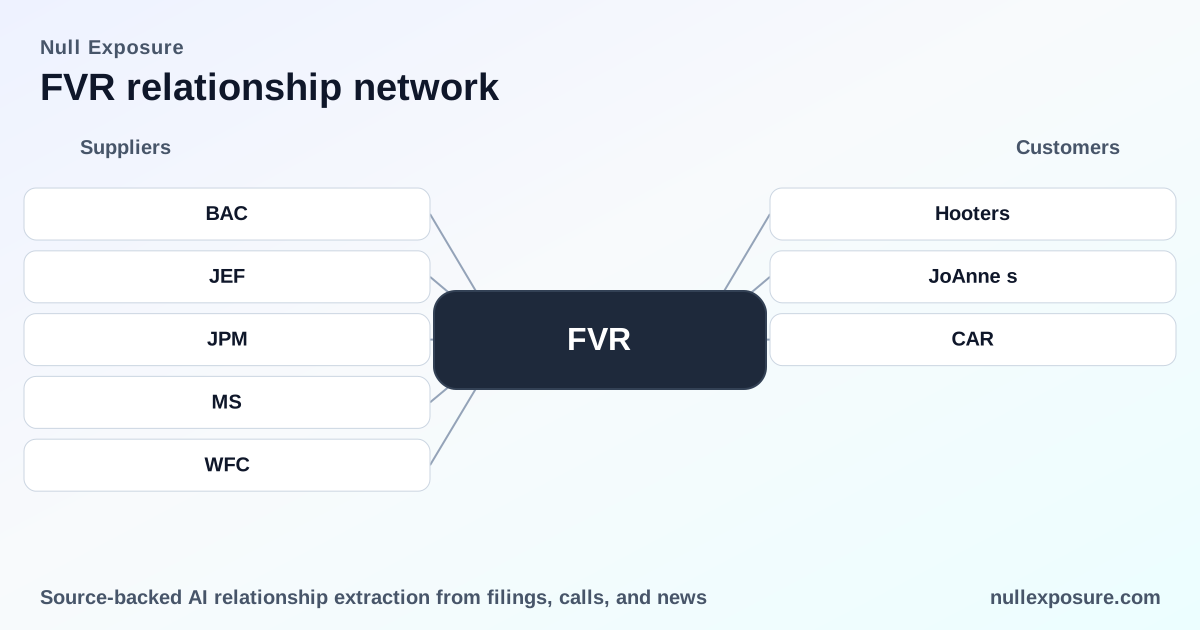
FrontView REIT (FVR): Tenant map and what it means for investors
Thesis: FrontView REIT operates as an internally managed, net‑lease REIT that acquires, owns and manages frontage retail and service properties and monetizes primarily through long‑term rent cash flows from a diversified roster of tenants across the United States. Its model depends on long‑dated net leases, active portfolio rotation and re‑leasing value capture; understanding tenant relationships is the primary channel to assess cash‑flow durability and re‑lease risk. For a consolidated view of tenant exposures and filings, visit NullExposure. (https://nullexposure.com/)
How FrontView extracts value — the operating and business model in plain language
FrontView buys properties that are typically subject to long‑term net leases and collects predictable monthly rents; company filings show average remaining lease terms in the low single‑digit years when excluding renewal options but initial terms are commonly decade‑plus at signing. The portfolio is geographically diversified across 109 MSAs in 35 U.S. states, which limits single‑state concentration while keeping exposure to national retail and service brands. FrontView generates cash flow primarily from tenant rents, and its top 20 tenant brands represented approximately 37% of ABR as of December 31, 2024 while no single brand exceeded ~2.9% of ABR, signaling mid‑level concentration: meaningful top‑brand influence without single‑tenant dominance. These characteristics produce a contracting posture that is long‑term and renewal‑option driven, an operating maturity where leases are accounted for as operating leases, and a business profile focused on service and retail tenants (restaurants, banks, healthcare, auto, telecom). (Company filings and earnings transcripts, FY2024–FY2026.)
Tenant roll‑call: who pays the rent (concise entries with source)
Below is a catalog of every tenant relationship documented in FrontView’s recent public commentary and filings; each line is a one‑to‑two sentence investor‑oriented description with source.
Razzoos
FrontView disclosed it has eliminated portfolio exposure to Razzoos through recent dispositions, reducing risk from underperforming casual‑dining concepts. Source: Q3 FY2025 earnings call transcript on Investing.com (transcript referencing recent dispositions).
Red Lobster
Red Lobster was listed among concepts eliminated from the portfolio via dispositions as part of portfolio tightening away from troubled casual‑dining names. Source: Investing.com Q3 FY2025 earnings call transcript.
Red Robin (RRGB)
Red Robin appears on both the Q3 disposals list and a later Q4 sale list; FrontView sold or disposed of Red Robin assets during the reporting period. Source: Investing.com Q3 and Q4 FY2025/Q4 FY2025 transcripts.
Ruby Tuesday
Ruby Tuesday was also specifically listed as removed from the portfolio through recent dispositions. Source: Investing.com Q3 FY2025 earnings call transcript.
Hooters
FrontView reports two Hooters locations are open and rent‑paying, and management is negotiating additional leasing interest for those assets. Source: SEC exhibit (filed as an FVR exhibit, March 2026).
CVS
CVS is named among FrontView’s tenant brands in market commentary and analyst coverage, indicating national pharmacy exposure within the portfolio. Source: MarketScreener coverage of Morgan Stanley note (FY2026).
Advance Auto Parts (AAP)
Advance Auto Parts is a multi‑site tenant for FrontView; management disclosed seven locations that represent roughly 1.3–1.4% of ABR and that several leases were proactively extended to ~10‑year terms. Sources: Investing.com Q4 FY2025 transcript and MarketScreener (Morgan Stanley) FY2026 note.
AT&T (T)
AT&T is listed as one of the tenant brands occupying FrontView properties, delivering telecom tenancy and stable cash flows. Source: MarketScreener (Morgan Stanley) FY2026 summary.
Bank of America (BAC)
Bank of America is included in FrontView’s tenant list, providing financial‑sector, typically investment‑grade tenancy. Source: MarketScreener FY2026.
Walgreens (WBA)
Walgreens appears among the national pharmacy tenants in FrontView’s portfolio mix described in analyst coverage. Source: MarketScreener FY2026.
Verizon (VZ)
Verizon is identified as a tenant brand, reflecting telecom storefront presence in the portfolio. Source: MarketScreener FY2026.
Lowe’s (LOW)
Lowe’s is cited as an example of larger‑format, strong‑frontage assets FrontView already owns and intends to add to opportunistically. Source: Investing.com Q4 FY2025 earnings call transcript.
Avis / CAR (CAR)
FrontView secured a long‑term Avis lease and highlighted a transaction that materially upgraded credit and value for shareholders after re‑leasing a property to Avis. Source: The Globe and Mail press release and Investing.com Q4 FY2025 transcript.
Oak Street Health (OSH)
Oak Street Health is called out among tenant brands, representing healthcare clinic tenancy in the mix. Source: MarketScreener FY2026.
JoAnne s (JoAnne’s)
FrontView states its JoAnne’s location is open and rent‑paying, cited in the company exhibit. Source: SEC exhibit (FVR exhibit, March 2026).
Sonic (SONC)
Sonic was sold during the quarter as part of a set of dispositions, reducing exposure to select casual‑dining concepts. Source: Investing.com Q4 FY2025 transcript.
Chipotle (CMG)
FrontView emphasized it is not selling Chipotle assets, indicating these high‑quality quick‑service locations remain core holdings. Source: Investing.com Q4 FY2025 transcript.
DICK’S House of Sport (DKS)
FrontView highlighted a larger format DICK’S House of Sport acquisition as a significant quarter purchase adjacent to a high‑performing mall, underlining the strategy for strong‑frontage big‑box assets. Source: Investing.com Q4 FY2025 transcript.
Walmart (WMT)
Walmart is listed among larger‑format assets FrontView already owns and intends to continue adding to the portfolio. Source: Investing.com Q4 FY2025 transcript.
Wendy’s (WEN)
Management confirmed a small set of Wendy’s locations (five) in the portfolio, with sales activity on most of them noted. Source: Investing.com Q4 FY2025 transcript.
Bob Evans
Bob Evans was named among brands FrontView eliminated via dispositions during the reported period. Source: Investing.com Q3 FY2025 earnings call transcript.
Café Rio
Café Rio was listed on the portfolio dispositions list removed in recent transactions. Source: Investing.com Q3 FY2025 transcript.
Dairy Queen
Dairy Queen was included among concepts where FrontView eliminated exposure through dispositions. Source: Investing.com Q3 FY2025 transcript.
Denny’s (DENN)
Denny’s was specifically cited as removed from exposure in the dispositions list. Source: Investing.com Q3 FY2025 transcript.
Freddy’s
Freddy’s was listed among concepts divested in the company’s disposition activity. Source: Investing.com Q3 FY2025 transcript.
Hardee’s
Hardee’s appeared on the dispositions list of concepts FrontView eliminated. Source: Investing.com Q3 FY2025 transcript.
Burger King (QSR)
Burger King is identified among tenant brands in the portfolio, indicating quick‑service national franchise exposure. Source: MarketScreener FY2026.
Bojangles (BOJA)
Bojangles was listed among concepts sold during the quarter as part of FrontView’s active portfolio rotation. Source: Investing.com Q4 FY2025 transcript.
Panda Express
FrontView described re‑leasing a property to Panda Express (and Jagger’s) following a sale, demonstrating re‑leasing upside. Source: Investing.com Q4 FY2025 transcript.
PNC
PNC was referenced as a dark (vacant) PNC property that was part of transactional activity during the period and sold. Source: Investing.com Q4 FY2025 transcript.
Sleep Number (SNBR)
A small number of Sleep Number stores are present in the holdings and are considered minor line items. Source: Investing.com Q4 FY2025 transcript.
Smokey Bones
Smokey Bones generated external buyer interest with multiple offers to purchase the asset during the year. Source: Investing.com Q4 FY2025 transcript.
Texas Roadhouse (TXRH)
FrontView noted Texas Roadhouse as a casual‑dining concept that continues to perform well and remains a meaningful presence. Source: Investing.com Q4 FY2025 transcript.
Twin Peaks
Twin Peaks was sold and identified as bankrupt in the company commentary—part of portfolio cleanup. Source: Investing.com Q4 FY2025 transcript.
Tricolor
FrontView reported one Tricolor property and that it had received multiple offers to buy or lease, signaling demand for that asset. Source: Investing.com Q3 FY2025 transcript.
7 Brew
FrontView referenced three properties leased to 7 Brew, representing roughly 0.6% of ABR, indicating a small but noted exposure. Source: Investing.com Q4 FY2025 transcript.
IHOP (DIN)
IHOP is listed among tenant brands in the portfolio, contributing to the restaurant quick‑service exposure. Source: MarketScreener FY2026.
Adam’s Auto / Adams Auto Group
Adam’s Auto (Adams Auto Group) properties were sold during the quarter as part of FrontView’s disposition activity. Source: Investing.com Q4 FY2025 transcript and MarketScreener FY2026 listing.
FirstBank
FirstBank was included in the set of concepts sold during the quarter, per management discussion. Source: Investing.com Q4 FY2025 transcript.
Raising Cane’s / Raising Canes
Raising Cane’s assets are an identified holding that FrontView stated it was not selling, indicating retention of selected high‑quality quick‑service tenants. Source: Investing.com Q4 FY2025 transcript.
Jagger’s
Jagger’s was part of a re‑leasing transaction alongside Panda Express at an asset FrontView sold and re‑leased. Source: Investing.com Q4 FY2025 transcript.
Mammoth Car Wash
Mammoth Car Wash is named among tenant brands in the analyst summary, representing car‑wash tenancy. Source: MarketScreener FY2026.
Heartland Dental
Heartland Dental appears in the tenant list, reflecting medical/dental service tenancy in the portfolio. Source: MarketScreener FY2026.
GoHealth (GOCO)
GoHealth is mentioned as a small tenant presence in certain micro‑pools of properties. Source: Investing.com Q4 FY2025 transcript.
Best Buy (BBY)
Best Buy is cited as an example of a larger‑format asset FrontView already owns and will pursue opportunistically. Source: Investing.com Q4 FY2025 transcript.
Constraints and what they signal for investors
- Contracting posture: long‑term net leases. Company disclosures state initial lease terms at signing are generally 10+ years with renewal options and an ABR‑weighted average remaining term of roughly 7.2–7.4 years (ex‑renewals), supporting predictable cash flows. (Company filings, Dec 31, 2024.)
- Geography: U.S. diversified. The portfolio spans 109 MSAs across 35 states, which reduces single‑state concentration risk (no state >13.2% of ABR). (Company filings.)
- Materiality: mid‑level concentration. The top 20 tenant brands account for ~37% of ABR, while no single brand exceeds ~2.9% of ABR — a balance between identifiable anchor tenants and broad diversification. (Company filings.)
- Role and revenue model. FrontView is both seller/owner and landlord; cash flows are driven primarily by rents under operating leases and management actively sells and re‑leases assets to optimize portfolio composition. (Company filings and earnings commentary.)
- Segment focus: services and retail. Tenants skew toward restaurants, telecom, banks, healthcare, auto and convenience exposures rather than exclusively commodity retail, which supports recession‑resilient cash flows in many cases. (Company filings.)
If you want an at‑a‑glance tenant exposure matrix or consolidated source pack for diligence, NullExposure provides a compact, investor‑grade view of these relationships. (https://nullexposure.com/)
Bottom line for investors
FrontView’s earnings commentary and filings document active portfolio rotation, selective disposals of weaker casual‑dining concepts, and retention of high‑quality, long‑term tenants such as Chipotle, Walmart and national pharmacies. The combination of long‑term net leases, geographic diversification and a top‑20 concentration around 37% of ABR yields a predictable rent stream with well‑defined re‑lease and asset‑management catalysts. Monitor near‑term lease rollover schedules and re‑leasing outcomes for assets sold or re‑leased to measure realized valuation upside.