German American Bancorp (GABC): How the Hilb Transaction Reframes Customer Economics
German American Bancorp operates as a regional bank headquartered in Jasper, Indiana, monetizing through net interest margin on originated loans, deposit spreads, and fee businesses including wealth management and formerly insurance operations. The company has shifted its operating footprint through a cash sale of insurance assets and a five‑year referral and non‑compete arrangement that converts a formerly owned commercial line into a predictable, fee‑based revenue stream. Investors should treat the Hilb transaction as a strategic reallocation from direct insurance underwriting to recurring referral fees and tighter regional banking focus.
Learn more about the coverage process at https://nullexposure.com/
Why this single counterparty matters to GABC's customer economics
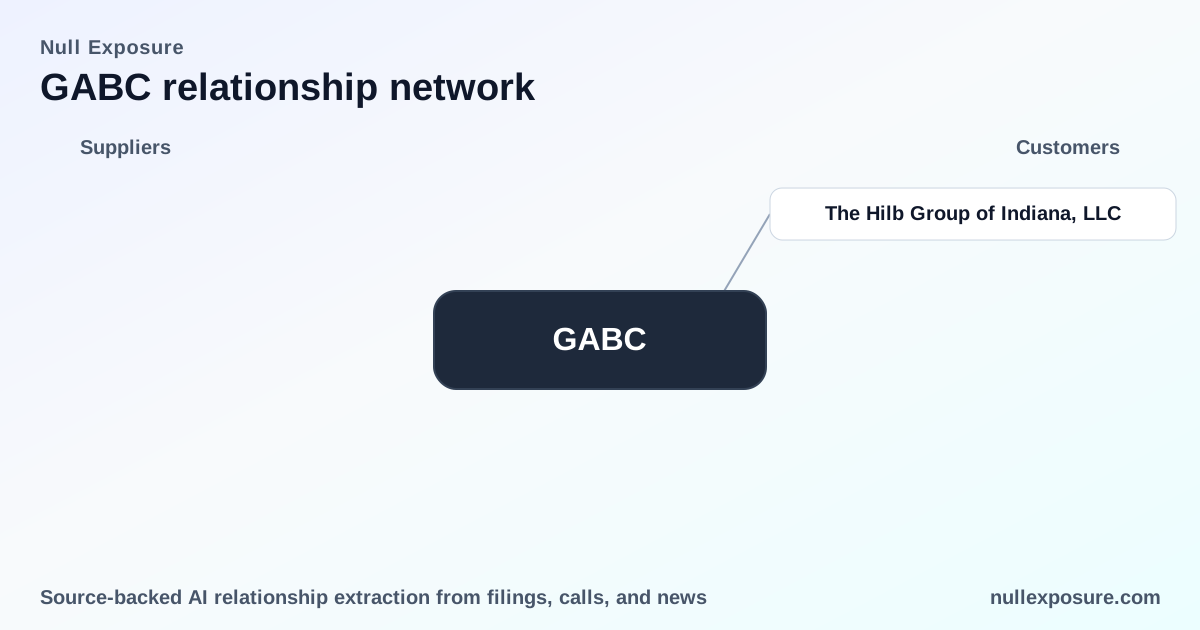
The counterparty relationship with The Hilb Group of Indiana, LLC is not merely a one‑off divestiture: it restructures how German American captures value from insurance customers. By selling substantially all insurance assets for cash and agreeing to a five‑year referral and non‑compete pact, GABC trades capital and operational complexity for immediate liquidity and fee income. That change reduces operational exposure and ongoing expense volatility, while creating a medium‑term dependency on referral fee receipts.
Strategically, this transaction highlights several company‑level operating model characteristics:
- Contracting posture: The five‑year referral and non‑compete is a formal, time‑bound commercial contract, creating a predictable, contractual cash stream instead of operational insurance earnings.
- Concentration and geography: German American’s deposit and loan franchise is regional, concentrated across Indiana, Kentucky and Ohio, so converting insurance operations to referral fees focuses resources on the core regional banking franchise.
- Criticality: The insurance business was one of three service segments (core banking, wealth management, insurance); selling it reduces segmental complexity and shifts critical revenue drivers toward banking and wealth services.
- Maturity and stage: The company shows mixed relationship maturity—ongoing client relationships in banking and wealth management but a terminated in‑house insurance operation, replaced by a multi‑year commercial referral relationship.
These are company‑level signals derived from regulatory filings and disclosure language and should guide investor diligence on revenue sustainability and contractual counterparty exposure.
The relationship entries you need to know
The Hilb Group of Indiana — 10‑K disclosure (FY2024)
German American’s FY2024 Form 10‑K discloses that, as part of the insurance asset sale, the bank “may receive payments for the referral of customers to Hilb,” and that the company will refrain from certain insurance activities for five years following closing. This positions GABC as a referrer and contractually restricted former operator of insurance services rather than an insurer. (Source: German American Bancorp, Inc. Form 10‑K, filed FY2024; summary observation logged 2026‑02‑14.)
The Hilb Group of Indiana — Market report on asset sale (FY2026)
A market report captured by TradingView covering German American’s SEC 10‑K language indicates the sale involved approximately $40 million in cash consideration, accompanied by a five‑year customer referral and non‑compete agreement. The press coverage frames the transaction as a clean exit from insurance operations and the establishment of a limited‑term revenue relationship tied to referrals. (Source: TradingView news report summarizing the SEC 10‑K disclosure, March 9, 2026.)
How the Hilb arrangement changes the revenue profile
The transaction has three immediate financial consequences for investors to model:
- One‑time liquidity gain: The reported ~$40 million sale proceeds bolster capital and can be redeployed into core banking activities or returned to shareholders.
- Shift from earned premiums to referral fees: Underwriting income volatility is removed; in its place, referral fees are contractually defined and time‑limited, improving near‑term predictability but introducing mid‑term expiration risk.
- Reduced operational complexity: Exiting insurance reduces regulatory and operational burdens, concentrating management bandwidth on loan growth and wealth‑management fee capture.
Key risk and opportunity vectors for operators and investors
- Risk — contract expiry: The five‑year term creates a known cliff where referral fee income will terminate unless extended or replaced; investors must model post‑2029 revenue scenarios and potential valuation impact.
- Opportunity — redeployment: Cash proceeds provide capital to accelerate loan growth and deposit acquisition across Indiana, Kentucky, and Ohio; this can lift net interest income if deployed against higher‑yield opportunities.
- Risk — customer attrition: Customers that previously used in‑house insurance may migrate away once referrals transition, creating modest attrition risk to cross‑sell pipelines; wealth management activity remains the most direct lever to retain those relationships.
- Operational clarity: The move signals management’s preference for predictable fee structures and regional banking scale over diversified insurance underwriting.
Practical signals for due diligence
- Track referral fee receipts in quarterly filings to confirm they match modeled expectations from the sale agreement. The Form 10‑K language commits to potential payments; actual recognition and timing will show up in subsequent periodic reports.
- Monitor wealth management and trust fee trends: with insurance gone, these services become relatively more important to fee income stability.
- Watch capital allocation choices for the $40 million cash inflow—loan growth, deposit capture, M&A, or buybacks each imply different downstream return profiles.
For a concise investor monitoring checklist:
- Confirm referral income amounts and duration in each quarterly report.
- Evaluate loan growth in the expanded Ohio/Kentucky/Indiana footprint.
- Review client retention rates for customers historically cross‑sold insurance.
- Verify any changes to operating expense structure following insurance divestiture.
Bottom line: strategic simplification with a contractual revenue twist
German American’s sale of its insurance assets to The Hilb Group of Indiana converts a capital‑intensive, operational line into immediate liquidity and a five‑year stream of referral income. That trade sharpens the bank’s regional franchise focus and improves near‑term earnings visibility, while introducing a defined medium‑term dependency on contractual referral payments and a post‑term revenue cliff that investors must model. Assess forthcoming quarterly disclosures for the realized referral fee schedule and management’s stated plan for redeploying cash proceeds.
If you want a structured view of GABC’s counterparty relationships and how they change your valuation assumptions, explore the platform at https://nullexposure.com/ for a deeper breakdown and ongoing monitoring.