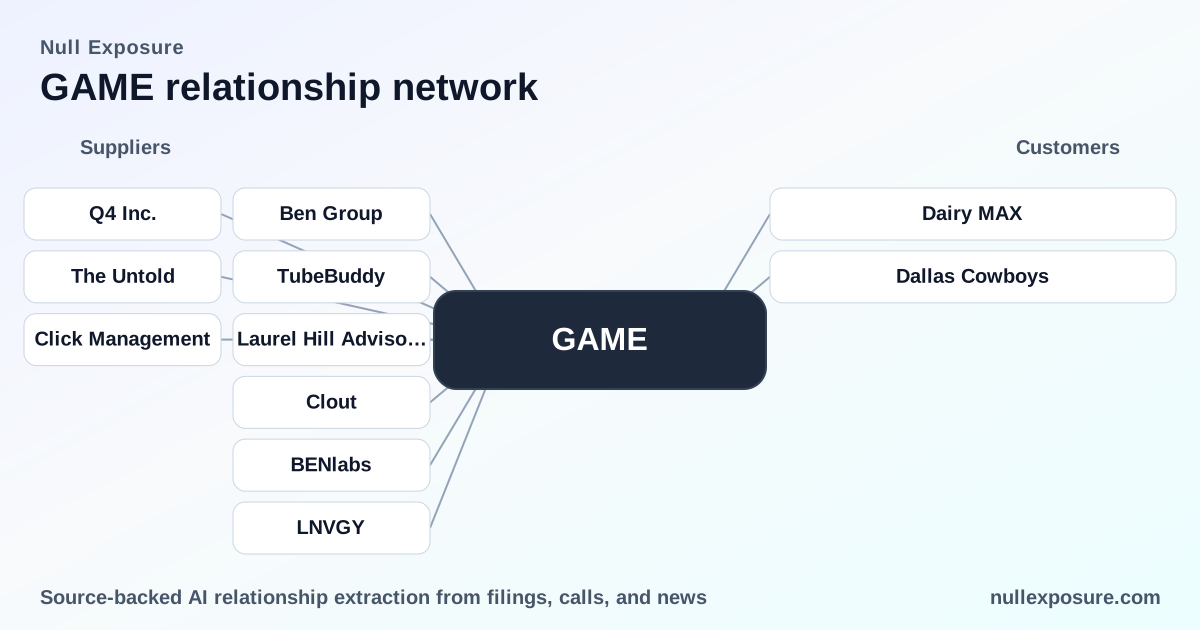
GameSquare (GAME) — Customer Map and Commercial Implications
GameSquare is a vertically integrated digital media and gaming marketing firm that monetizes through three principal channels: agency and brand partnerships (campaign services and experiential production), SaaS licensing (content management, analytics and creator tools), and IP/consumer revenue (licensed content and events). The company sells long‑term licenses and usage‑based ad inventory, executes spot campaigns and shares revenue on IP deals—generating recurring SaaS receipts alongside one‑time event and consumer product sales. For investor due diligence, the customer base mixes large enterprise advertisers and major gaming publishers, creating both diversification and exposure to a small number of high‑value partnerships. Learn more at NullExposure.
Executive thesis: why customers matter for valuation
GameSquare’s revenue profile is a hybrid of recurring software and data subscriptions plus high‑margin agency work and branded IP deals. Recurring SaaS and licensing provide predictable cashflows where multi‑year, non‑cancelable contracts exist, while usage‑based CPM arrangements and spot consumer sales introduce revenue variability tied to campaign activity and event timing. The company’s value will track three drivers: SaaS adoption and renewal rates, scale and retention of agency clients, and monetization of owned IP (FaZe, SpongeBob in Fortnite, etc.).
Before we walk through individual partnerships, note that GameSquare’s FY2025 revenue base was approximately $45M with negative EBITDA, underscoring the importance of customer quality and contract structure to operating leverage.
Visit NullExposure for the underlying signals used in this coverage.
Operating model and commercial constraints — what the contracts tell investors
Several company‑level signals define how GameSquare contracts and operates with customers:
- Pricing structure and revenue recognition: Contracts use a mix of usage‑based CPM pricing for advertising inventory, multiyear non‑cancelable license agreements for software and content, and spot, point‑in‑time recognition for consumer product and event sales. This means revenue volatility is lower in licensed SaaS but higher where campaigns and product sales drive revenue spikes.
- Role and customer type: GameSquare functions primarily as a service provider and platform licensor to large enterprise brands and gaming publishers, while also acting as the buyer/aggregator under national advertising agreements where the advertiser is the recorded customer.
- Geography and market reach: Contracts and reporting indicate North America and EMEA coverage and a stated global positioning; investors should treat GameSquare as regionally concentrated with expanding international programs rather than a fully global, homogeneous revenue base.
- Business segments: The company is organized into Teams, Agency, and SaaS + Advertising, combining software products (content management, Stream Hatchet, SideQik) and creative/production services—this hybrid model drives mixed margins and different renewal dynamics.
- Concentration and criticality: Large enterprise clients drive outsized economics; renewals and expansion with major publishers and brands are critical to scaling margins, while spot IP deals provide upside but are less predictable.
These constraints mean investors should focus on contract mix (recurring vs spot), client concentration, and the cadence of campaign/on‑platform activations when modeling future revenue.
Customer relationships: who pays GameSquare and why
Below I list the company’s named customer partners from recent public disclosures and press coverage, with a plain‑English description and source reference for each.
Dairy MAX
GameSquare’s Zoned division renewed and expanded a multi‑year partnership with Dairy MAX for integrated campaigns, reflecting repeatable agency work with regional food brands. (Press release, Democrat & Chronicle, 2026‑03‑09.)
LEGO
LEGO is cited among global brands that use GameSquare’s platform for creator and brand partnerships, signaling brand licensing and creator‑led activations on the company’s products. (Q4 FY2025 earnings transcript summary, InsiderMonkey, 2026‑05‑03.)
Dallas Cowboys
Zoned executed a world‑building Fortnite campaign for the Dallas Cowboys, illustrating GameSquare’s experiential and IP‑driven campaign capabilities for major sports brands. (Press release, SeacoastOnline & Visalia Times‑Delta, 2026‑03‑09; also mentioned in the FY2025 earnings call, InsiderMonkey, 2026‑05‑03.)
Epic Games
Epic is listed as one of the leading publishers GameSquare partners with for platform and publisher integrations—this denotes publisher‑level agency and platform work. (Q4 FY2025 earnings transcript summary, InsiderMonkey, 2026‑05‑03.)
H‑E‑B
A new partnership with H‑E‑B was announced within GameSquare’s talent platform, indicating retail brand activations leveraging creator talent and events. (Q4 FY2025 earnings transcript summary, InsiderMonkey, 2026‑05‑03.)
TurboTax
TurboTax is referenced among major brands partnered across GameSquare’s platform, reflecting seasonal and campaign advertising relationships. (Q4 FY2025 earnings transcript summary, InsiderMonkey, 2026‑05‑03.)
100 Thieves
GameSquare produced the 2025 100 Thieves Block Party and has licensing/experiential ties—this is an example of own‑IP and third‑party event monetization. (Q4 FY2025 earnings transcript summary, InsiderMonkey, 2026‑05‑03.)
Activision Blizzard
GameSquare cites renewals with Activision Blizzard, which points to retention of major publisher accounts for data and analytics services. (Q4 FY2025 earnings transcript summary, InsiderMonkey, 2026‑05‑03.)
World of Dance
Included in a list of integrated campaigns, World of Dance represents entertainment brand activations executed through GameSquare’s agency operations. (Q4 FY2025 earnings transcript summary, InsiderMonkey, 2026‑05‑03.)
Riot Games
Riot Games is called out for renewals and expansion, signaling sustained engagement with top gaming publishers for analytics and creator services. (Q4 FY2025 earnings transcript summary, InsiderMonkey, 2026‑05‑03.)
Jack in the Box
Listed among national brand clients, Jack in the Box exemplifies quick‑service restaurant partnerships and brand sponsorship work. (Q4 FY2025 earnings transcript summary, InsiderMonkey, 2026‑05‑03.)
Electronic Arts
EA is noted as a renewing customer for GameSquare’s data and analytics capabilities, reinforcing the publisher retention narrative. (Q4 FY2025 earnings transcript summary, InsiderMonkey, 2026‑05‑03.)
Mastercard
Named in agency campaign lists, Mastercard represents payment‑brand sponsorships and large enterprise advertising relationships. (Q4 FY2025 earnings transcript summary, InsiderMonkey, 2026‑05‑03.)
Roblox
Roblox appears as a partner across the platform, consistent with creator and publisher collaboration models that leverage in‑platform activations. (Q4 FY2025 earnings transcript summary, InsiderMonkey, 2026‑05‑03.)
Paramount Game Studios
GameSquare executed a two‑year revenue‑sharing agreement with Paramount Game Studios to produce multiple SpongeBob titles within Fortnite, indicating IP licensing and shared economics on branded in‑game content. (MEXC news release, 2026‑05‑03.)
Capcom
Capcom engagement included a major campaign to support the Resident Evil Requiem launch and Stream Hatchet’s largest client engagement—this is publisher marketing work plus measurement services. (MEXC, MarketScreener, SimplyWall summaries and earnings call mentions, Feb–May 2026 coverage.)
Ubisoft
A new management services agreement with Ubisoft signals expanded commercial services for large publishers, likely on a multi‑year services or MSA basis. (Q4 FY2025 earnings transcript summary, InsiderMonkey, 2026‑05‑03.)
FaZe
Integration with FaZe and owned IP generated material revenue (~$12.8M contribution noted in filings), reflecting monetization of owned talent and media IP. (FY2025 results coverage summary, TradingView/10‑K summary, 2026‑05‑03.)
Paramount (broader)
Paramount is also listed among global brands engaged with GameSquare; this broader listing supports the company’s entertainment studio partnerships beyond the gaming studio arm. (Q4 FY2025 earnings transcript summary, InsiderMonkey, 2026‑05‑03.)
Investment implications and risk checklist
- Upside: Increasing SaaS penetration and contract renewals with publishers and brands can convert top‑line into scalable, higher‑margin recurring revenue. Renewals with Riot, Activision Blizzard and EA are meaningful signs of product stickiness.
- Key risks: Customer concentration and campaign seasonality; significant reliance on large brand and publisher deals creates lumpy quarterly results. Usage‑based CPM contracts and spot consumer sales increase revenue volatility.
- Operational levers to watch: renewal rates on license agreements, expansion bookings from existing publishers, and the cadence of IP revenue from partnerships like Paramount and FaZe.
Bottom line
GameSquare’s commercial footprint is a blend of repeatable SaaS/licensing revenue and higher‑variance agency/IP income tied to marquee brands and publishers. For investors, the primary questions are whether GameSquare can convert client wins into durable SaaS revenue and sustain renewals with major publishers while scaling its IP monetization. For deeper signal analysis and to track future customer disclosures, visit NullExposure.