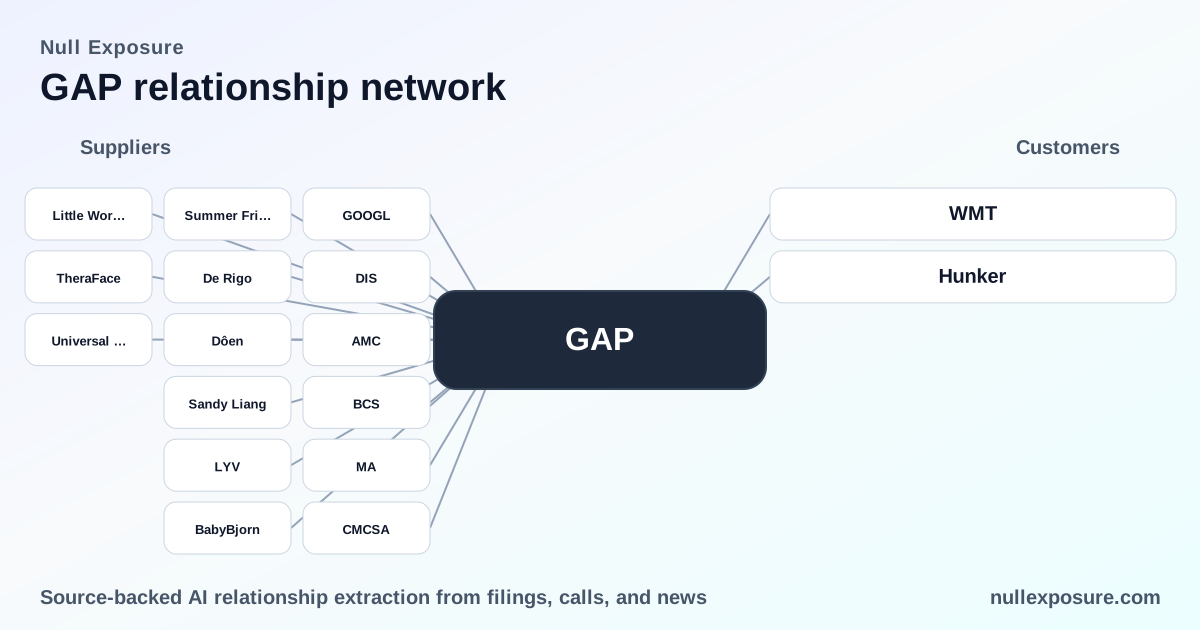
GAP Inc. customer relationships: what investors need to know
Thesis — Gap Inc. monetizes a portfolio of apparel and lifestyle brands (Gap, Old Navy, Banana Republic, Athleta) through an omnichannel retail model that sells directly via company-operated stores, e-commerce, franchises and select third‑party retail and media partnerships; its revenue mix and margin profile are driven by brand segmentation, broad geographic reach and opportunistic co‑branding and wholesale arrangements.
If you want to map how Gap converts brand equity into distribution and revenue, this review isolates the customer-facing partnerships disclosed in recent company announcements and interprets their implications for distribution, marketing ROI and concentration risk. For a concise vendor- and partner-oriented view of retail relationships, see NullExposure’s portal: https://nullexposure.com/.
Big-picture signals that shape the customer posture
Gap’s public disclosures and the relationship evidence point to a global, seller-centric operating model. Company filings and press materials describe the business as selling goods across Company‑operated and franchise retail locations, online and through third‑party arrangements, which produces several practical characteristics for investors and operators:
- Contracting posture — transactional and distributional. Gap operates as the seller in straightforward wholesale, merchandising and licensing relationships; contracts are optimized for scale, fulfillment speed and brand control rather than bespoke services.
- Geographic footprint — global reach, lower single‑market concentration. Disclosures list brand revenue and operations across global regions, supporting diversification of country-level retail risk while exposing the company to global retail cycles and FX dynamics.
- Concentration — mixed but manageable. Multiple brands and channels reduce single‑counterparty concentration, although strategic partnerships (large retailers, festival sponsorships, media activations) can become material for specific launches or categories.
- Criticality and maturity — established brand leverage with episodic partner dependence. Gap’s decades‑old brand portfolio provides mature bargaining position, but specific category or channel rollouts depend on third‑party distribution partners for velocity and reach.
These company-level signals frame the relationship summaries below and help assess where partnership risk and upside lie.
How Gap uses third parties to expand reach and product assortment
Gap’s recent announcements show the company leaning on large retail platforms, cultural sponsorships and media pop‑ups to extend product reach and drive brand moments. Each relationship below is summarized with the primary commercial implication.
Walmart (WMT) — extending Gap Home and GapKids through mass retail (FY2026)
Gap launched a collection of Gap Home products designed exclusively for GapKids and made them available on Walmart.com, extending the brand into a high‑traffic mass retail channel and tapping Walmart’s distribution scale to accelerate category adoption. According to a Gap press release published on March 9, 2026, the collaboration makes new Gap Home Kids assortments shoppable on Walmart.com and positions Gap to monetize brand extensions via third‑party e‑commerce reach.
Source: company press release on gapinc.com, March 9, 2026 (FY2026 announcement).
WMT (duplicate mention) — same programmatic distribution note (FY2026)
A second entry references the same Walmart collaboration and reinforces that Gap treats Walmart as a significant third‑party distribution partner for targeted product collections. The duplicate reporting confirms the emphasis placed on this channel in FY2026 communications.
Source: company press release on gapinc.com, March 9, 2026 (FY2026 announcement).
Coachella Valley Music and Arts Festival — experiential marketing and merch exclusivity (FY2026)
Gap will deploy its “Hoodie House” experience at the Coachella festival as the event’s exclusive clothing apparel sponsor and official merchandise partner, converting cultural sponsorship into direct sales and high‑visibility consumer engagement. According to a Gap news item published in March 2026 (first reported May 3, 2026 visibility), the arrangement positions Gap to capture festival foot traffic and social media exposure while controlling on‑site merch economics.
Source: company news release on gapinc.com, March 2026 (reported May 3, 2026).
Hunker — curated pop‑up and physical discovery for Gap Home Kids (FY2026)
For a limited time, Gap showcased the Gap Home Kids collection at the Hunker House, an evolving shoppable home activation in Venice Beach, facilitating in‑market product trials and content amplification through a lifestyle media partner. Gap’s March 9, 2026 announcement notes the Hunker House pop‑up as a complementary experiential retail channel to the Walmart online rollout.
Source: company press release on gapinc.com, March 9, 2026 (FY2026 announcement).
Investment implications and operating risks
- Distribution leverage vs. margin durability. Using Walmart and festival exclusives expands reach rapidly but trades off margin control versus direct channels; expect episodic uplift in top‑line growth with potential dilution to gross margin during promotional launches. Monitor sell‑through and margin performance for these initiatives in quarterly disclosures.
- Marketing that converts or fades. Experiential investments such as Coachella sponsorships generate high short‑term visibility; the long‑term ROI depends on conversion to repeat customers and cross‑brand migration, particularly for younger cohorts targeted by GapKids and Athleta.
- Channel complexity and execution risk. Multi‑channel rollouts across online marketplaces, pop‑ups and festivals increase execution complexity for inventory, returns and brand consistency. Gap’s established operating model mitigates much of this, but seasonal and event timing introduce operational sensitivity.
- Concentration watch. While Gap’s global and multibrand posture reduces single‑counterparty exposure, the company’s strategy to activate large partners episodically means a few relationships can drive material category outcomes in a given year. Investors should track revenue attribution by partner and channel disclosures.
If you want a deeper mapping of these customer relationships and how they affect revenue mix and partner concentration over time, explore NullExposure’s relationship intelligence at https://nullexposure.com/ — the portal surfaces partner timelines and press correlations that accelerate due diligence.
Final read: what to track next quarter
- Disclosure of revenue or units attributable to Walmart and other third‑party channels for the Gap Home Kids launch.
- Gross margin evolution tied to promotional or wholesale placements.
- Repeat purchase behavior and digital engagement metrics post‑Coachella activation.
- Any expansion of the Hunker or other media pop‑ups into additional markets.
Bottom line: Gap is deploying strategic partnerships to accelerate specific category rollouts while preserving its seller‑centric, omnichannel model. These relationships unlock reach quickly but require disciplined execution to translate visibility into durable sales and margin expansion.