GATX’s customer relationships: where revenue really comes from and what the Brookfield deals change
GATX is a capital-light operator and lessor of railcars and other long-lived transportation assets that monetizes through recurring lease rentals, full-service lease fees, and asset management/remarketing fees. The company's model combines stable contract cash flows from multi-year leases with cyclical upside from lease renewals and secondary market sales; recent transactions with Brookfield shift a portion of asset ownership while locking in recurring management fees that increase predictable service revenue. For investors, the question is not whether GATX can lease equipment — it already does — but how contract structure, customer concentration across segments, and the new Brookfield arrangements change cash-flow durability and operational leverage.
If you want a concise dataset-level view of these customer links and their financial effect, see our portal for structured relationship analytics: https://nullexposure.com/
What the Brookfield/BAM relationship delivers to GATX
Brookfield / BAM — management mandate tied to a long-term lease portfolio
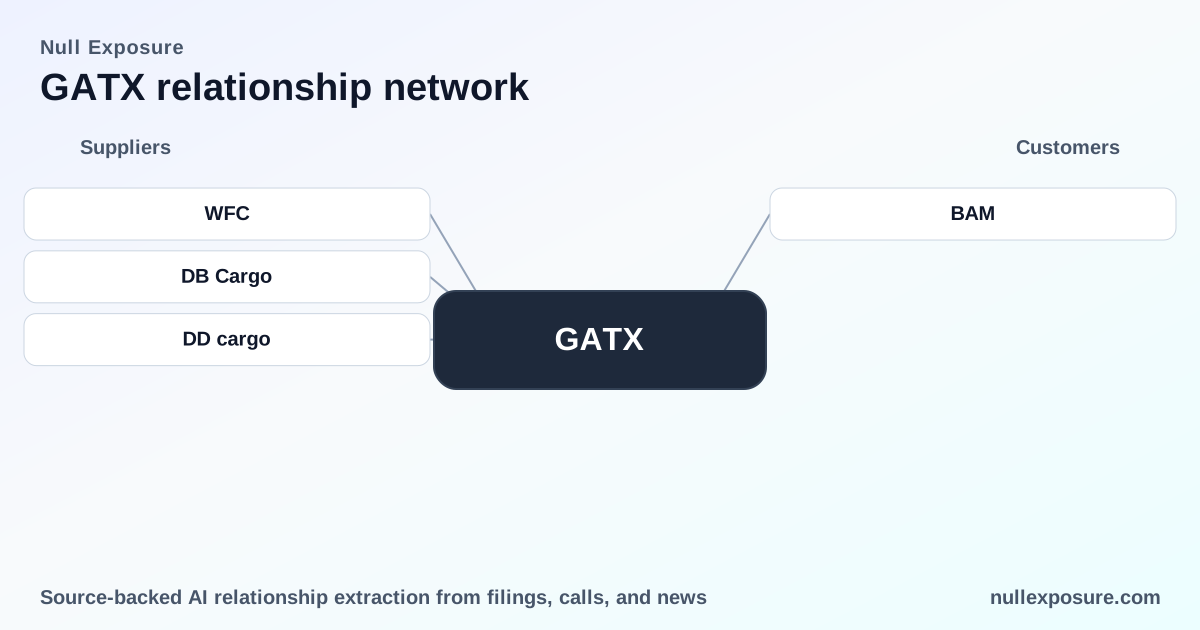
GATX will manage a long-term lease portfolio that Brookfield wholly owns, and the companies expect approximately $11 million a year in management fees for that mandate. This is a recurring, fee-based revenue stream that augments GATX’s leasing income by converting ownership economics into service economics. According to the Q4 2025 earnings call transcript (reported March 2026), management fees tied to Brookfield’s portfolio are explicit and budgeted. (InsiderMonkey, Q4 2025 earnings call transcript, March 9, 2026: https://www.insidermonkey.com/blog/gatx-corporation-nysegatx-q4-2025-earnings-call-transcript-1699688/)
BAM (as reported) — same arrangement identified by ticker BAM
Public reporting that references BAM (Brookfield Asset Management) reiterates that GATX will manage Brookfield’s railcar portfolio and collect the stated management fees, positioning GATX as an external operator to a large owner of rail assets. The earnings call language names the management fee expectation directly, reflecting a negotiated service-provider relationship rather than a pure lessor-owner arrangement. (InsiderMonkey, Q4 2025 earnings call transcript, March 9, 2026: https://www.insidermonkey.com/blog/gatx-corporation-nysegatx-q4-2025-earnings-call-transcript-1699688/)
Brookfield Infrastructure (BIP) — JV ownership with GATX as manager
GATX will serve as manager of the railcars in a joint venture created after Brookfield Infrastructure’s acquisition of Wells Fargo’s rail assets; GATX also manages the finance lease railcars and locomotives that Brookfield Infrastructure directly owns. That structure converts capital deployment by Brookfield into a recurring management role for GATX and preserves operational control over the fleet without proportional capital ownership. (BizWire via FinancialContent, Jan 5, 2026: https://markets.financialcontent.com/stocks/article/bizwire-2026-1-5-gatx-corporation-and-brookfield-infrastructure-complete-acquisition-of-wells-fargos-rail-assets?Language=english)
How GATX contracts and where revenue durability comes from
GATX’s revenue mix reflects a deliberate blend of contract tenors and fee types that shape predictability and upside.
- Contracting posture is predominantly long-term. Lease disclosures consistently show typical lease terms of 5–12 years across core rail assets, which supports predictable rental streams and reduces churn. Company segment language documents leases in the 5–15 year range for some markets.
- Shorter leases exist where market flexibility matters. Certain fleets and subsidiaries offer leases in the 1–5 year range (Trifleet’s average remaining lease term was reported around 23 months as of Dec 31, 2024), which supplies renewal optionality and faster re-pricing in tighter markets.
- Some revenue is usage- or service-based. For selected operating leases, revenue recognition ties to equipment usage or full-service contracts that include maintenance and insurance; these create variable, countercyclical components to base lease income.
- Geographic diversification is real. GATX operates globally, with material activity in North America, Europe, and India; Rail North America covers the U.S., Canada and Mexico, while Freight/India and Europe have their own footprint.
- Service-provider posture is explicit. GATX prices full-service leases as integrated offerings that include maintenance and taxes, and the Brookfield deals formalize GATX’s role as manager of third-party-owned fleets.
These operating signals come from GATX’s segment disclosures and recent reporting across FY2024–FY2026.
Concentration and criticality — a nuanced profile
GATX presents low concentration at the corporate level: management disclosures report no single customer accounted for more than 10% of revenue across recent fiscal years, which is a strong company-level diversification signal. However, segmentation reveals pockets of concentration and criticality:
- GRE (a business segment) had a single customer representing ~18% of GRE’s lease revenue in 2024, and the top ten customers accounted for ~46% of GRE revenue — a structural concentration that is material at the segment level.
- Rail North America is large and diversified overall but one customer represented more than 5% of Rail NA’s revenue in 2024, and the top ten customers combined were about 25%.
- The presence of both long-term leases and short-term products gives GATX balance: long tenors deliver cash-flow durability while shorter tenors allow repricing in improving markets and faster fleet turnover.
Key takeaway: Corporate diversification does not eliminate segment-level customer dependency; analysts should monitor segment disclosures and contract renewals, not just consolidated concentration metrics.
Operational leverage and risk vectors investors should track
- Management-fee monetization vs. capital ownership. The Brookfield transactions shift some upside from asset ownership to management fees; this reduces capital intensity and transfers remarketing risk to the JV sponsor while preserving operating margins tied to fleet utilization.
- Remarketing and residual risk remain critical. GATX’s profitability still relies on residual values when leases end or assets are sold; sustained weak secondary demand would reduce realized returns.
- Counterparty credit and sector cyclicality. Rail customers’ commodity exposure and logistics demand cycles translate to credit and utilization risk for GATX’s fleet.
- Segment concentration can transmit idiosyncratic shocks. GRE and specific Rail NA customers have the potential to alter segment results materially if large contracts are not renewed.
Bold risk note: converting ownership into fee income reduces capital risk but increases dependency on contractual management terms and JV governance — investors should watch fee floors, escalation clauses, and termination triggers in JV agreements.
What analysts and operators should do next
- Monitor quarterly filings for the actual flow of the $11 million management fee and any escalators or performance-based components; management commentary in quarterly calls will reveal how the Brookfield-managed pool is performing.
- Track segment-level revenue concentration and the renewal schedule of large customers in GRE and Rail North America to assess downside from client churn.
- Evaluate remarketing spreads and utilization metrics in each report to gauge residual value trends.
For a structured view of these relationships and ongoing updates, visit our research hub: https://nullexposure.com/
Bottom line: GATX’s move to manage Brookfield-owned assets crystallizes a strategic pivot from capital ownership to fee-based operations that strengthens recurring revenue while preserving operating leverage; the company’s long-term lease footprint and geographic breadth support predictability, but segment-level concentrations and residual-value dynamics remain primary monitoring points for investors.