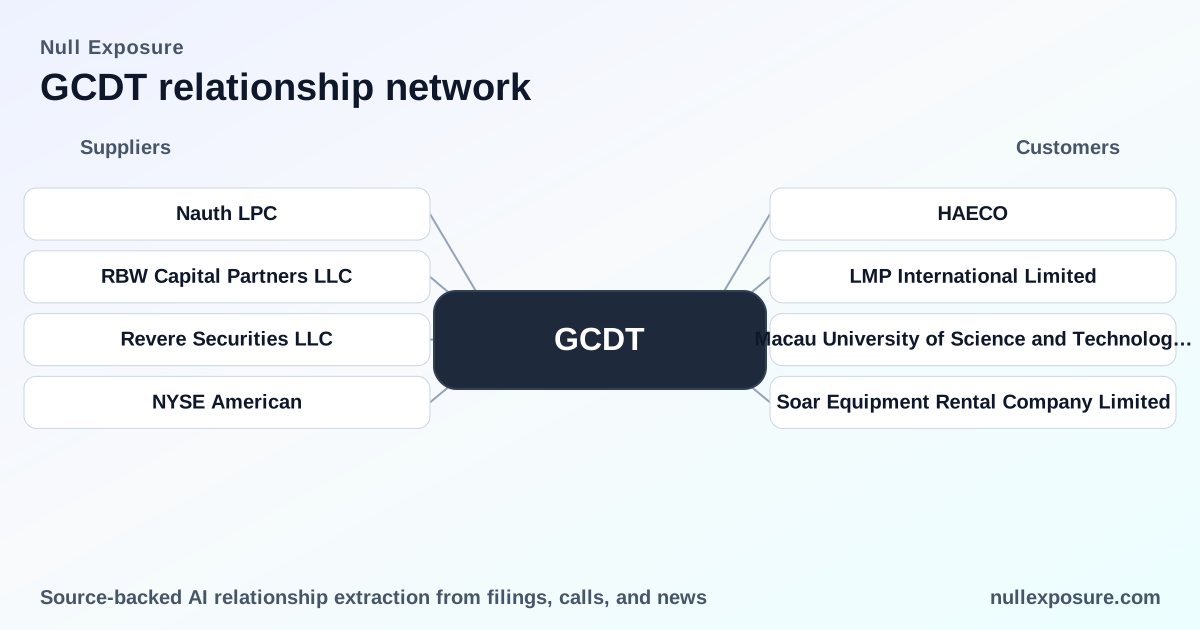
GCDT customer map: what institutional contracts reveal about the business model
GCDT builds and sells energy‑efficiency and decarbonization solutions — primarily phase change material (PCM) thermal storage for chiller plants and related consultancy services such as battery repurposing — and monetizes through project sales, implementation contracts and advisory engagements with commercial and institutional building operators. The company's customer list shows a clear route-to-market focused on asset owners and facility operators where capital upgrades deliver measurable energy savings and resilience. Investors should view GCDT as a project-driven vendor with strategic customer touchpoints in aviation, retail, healthcare and industrial services. Learn more at https://nullexposure.com/.
Why the customer list matters: concentrated projects with infrastructure utility
GCDT’s customers are not retail consumers; they are operators that run mission‑critical facilities — airports, shopping centres, hospitals and equipment rental firms. That commercial focus drives three practical implications for valuation and risk analysis:
- Revenue is project‑tied and lumpy. Contracts are delivered as capital or consultancy projects rather than high-frequency recurring subscriptions.
- Commercial criticality is high. Installations in chiller plants and hospital infrastructure create durable relationships when performance is proven, but upgrades are infrequent.
- Go‑to‑market sophistication is required. Sales cycles will involve technical procurement teams, long evaluation periods and trial installations before broader rollouts.
These are company‑level operating signals; they reflect how GCDT positions its product and sales model rather than specifics of any single contract.
The customer portfolio — concise relationship summaries
Below are the customer relationships reported in company disclosures and press coverage. Each relationship is summarized in plain language with the source noted.
-
HAECO — airport headquarters chiller plant. GCDT has a project relationship supplying thermal storage or related chiller‑plant work to an airport facility operated by HAECO, indicating penetration into aviation facility services. Source: TradingView news item, March 9, 2026.
-
LMP International Limited — Bayview Garden Shopping Centre. GCDT engaged with LMP International for a commercial retail installation at Bayview Garden Shopping Centre, demonstrating traction in the mall/retail estate segment. Source: TradingView news item, March 9, 2026.
-
Macau University of Science and Technology Foundation – University Hospital — chiller plant project. GCDT is contracted for a chiller‑plant project at a university hospital foundation, reflecting entry into healthcare infrastructure where reliability and regulatory standards are elevated. Source: TradingView news item, March 9, 2026.
-
Soar Equipment Rental Company Limited — battery repurposing consultancy. GCDT provides consultancy related to battery repurposing to an equipment rental company, signaling the company’s advisory and circular‑economy capabilities alongside product installations. Source: TradingView news item, March 9, 2026.
What the customer mix tells investors about growth levers and risks
The composition of these customers highlights several actionable investment signals:
- Commercial and institutional customers anchor credibility. Contracts with aviation, healthcare and retail operators accelerate market validation and create reference projects that ease entry into adjacent facilities.
- Business is project‑centric and relationship‑driven. Expect elongated sales cycles and milestone‑based cash flows rather than steady annuity revenue; this has direct bearing on cash planning and near‑term revenue volatility.
- Service and consultancy are complementary revenue lines. Battery repurposing work shows GCDT is not restricted to hardware sales; advisory and retrofitting services increase average contract value and broaden addressable market.
- Concentration risk exists naturally. A small portfolio of named institutional customers implies early commercial traction but also concentration that can amplify revenue swings if a handful of projects delay or cancel.
These insights should be factored into revenue modeling, discount rate selection and scenario planning.
Operational constraints and company‑level signals
GCDT’s operating posture is evident even though no constraint excerpts are listed in filings: the company operates with a project execution model requiring capital goods manufacturing, site integration and post‑installation validation. That implies:
- Contracting posture: Project contracts with milestone payments and performance verifications are the likely norm, not simple product sales.
- Customer concentration and criticality: Early stage commercial rollouts concentrate revenue in a small number of large institutional clients; each project is materially important to near‑term results.
- Maturity and commercialization stage: The profile of customers and the company’s filing activity indicate a growth stage where establishing repeatable deployment and scale is the primary objective.
- Channel and procurement complexity: Selling into airports and hospitals requires regulatory compliance, specification adherence and multi‑stakeholder approvals, increasing sales and deployment timelines.
These are company‑level signals for underwriting risk and setting near‑term operating expectations.
Bottom line for investors and operators
GCDT is executing a classic infrastructure‑upgrade playbook: solve a high‑value operational problem (chiller efficiency, battery lifecycle), secure anchor institutional customers, and scale through reference projects. The customer list shows strategic entry points across aviation, retail, healthcare and industrial services, but also signals project concentration and lumpy revenue dynamics. Investors should calibrate projections for milestone‑driven cash flows, longer sales cycles and the need for robust project execution capabilities.
For operators evaluating partnership or procurement, these customers demonstrate GCDT’s ability to work inside regulated and high‑availability environments, and the presence of consultancy projects indicates flexibility in commercial engagement models.
If you want an investor‑grade customer map and threat analysis for GCDT, start with the company’s reported customer set and build scenario models around project timing, conversion rates and post‑installation service uptake. Explore additional intelligence and client evidence at https://nullexposure.com/.
Appendix: source context
The relationship information listed above is drawn from a TradingView news item published March 9, 2026, reporting on GCDT’s project customers and related commercial engagements. The original reporting aggregates customer references tied to project descriptions for HAECO, LMP International Limited, Macau University of Science and Technology Foundation – University Hospital, and Soar Equipment Rental Company Limited.