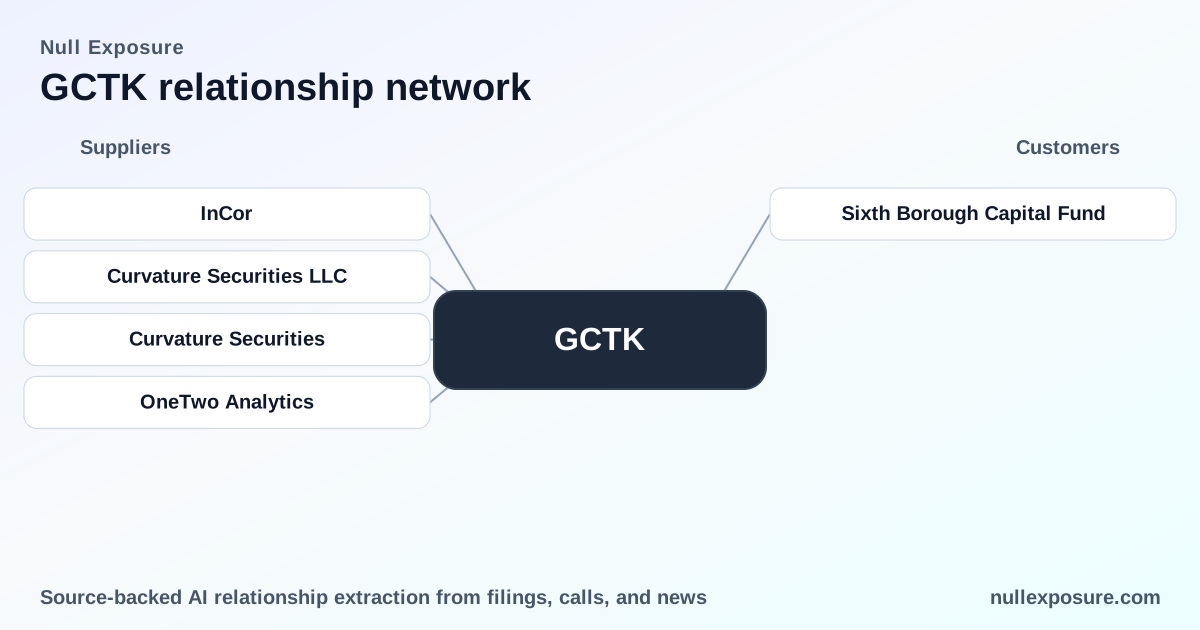
GCTK: Financing and customer relationships that define a single-product microcap
Glucotrack Inc. develops and intends to commercialize the Glucotrack continuous blood glucose monitoring (CBGM) product and monetizes primarily through the commercial sale and further development/licensing of that single product line, supplemented by capital markets financing when operational cashflow is insufficient. The company is a single-segment, U.S.-based small-cap with product-centric revenue exposure and a dependence on equity financing for near-term strategic initiatives.
For a concise view of GCTK’s customer and financing ties, visit https://nullexposure.com/ to see how these relationships map against competitive and counterparty risks.
One relationship in focus — what the Sixth Borough Capital Fund transaction signals
A September 2025 market note reported an agreement to potentially sell up to $20 million in shares to Sixth Borough Capital Fund, a transaction that pushed the stock price higher and reflected investor appetite for additional funding to support the company’s initiatives. The item was reported by StockstoTrade on September 13, 2025: https://stockstotrade.com/news/glucotrackinc-gctk-news-2025_09_13/.
This is an investor financing relationship rather than a traditional customer contract, but it is material for equity holders because it delivers near-term capital optionality and also creates dilution risk tied to how proceeds are deployed.
Every relationship returned in the results
- Sixth Borough Capital Fund — News coverage describes an agreement that would allow Glucotrack to sell up to $20 million of shares to Sixth Borough Capital, a move that catalyzed upward stock movement in September 2025; this is a capital provision relationship rather than a product customer contract (StockstoTrade, Sept 13, 2025: https://stockstotrade.com/news/glucotrackinc-gctk-news-2025_09_13/).
Company-level constraints that shape operations and counterparty exposure
The available filings and disclosures produce two clear, company-level operating signals:
- Geographic concentration: U.S.-based assets. Company filings state that the company’s assets are located in the United States of America. This geography concentration simplifies regulatory and distribution planning but concentrates policy, reimbursement, and market risk in one jurisdiction.
- Single-segment business model: Glucotrack CBGM Product Segment only. Management reports only one reportable segment — the Glucotrack CBGM product — and directs R&D entirely toward that product. This creates high product concentration: commercial outcomes for a single product will drive the company’s revenue trajectory and valuation.
These constraints translate directly into the company’s contracting posture, counterparty concentration, and strategic priorities:
- Contracting posture: As a single-product developer with limited diversification, Glucotrack will behave like a growth-stage medtech issuer that relies on vendor, partner, and investor contracts to fund development and initial commercialization. Investors and partners gain negotiating leverage because the company presents concentrated exposure and limited alternative cashflow sources.
- Concentration: Both customer/revenue concentration (one product) and geographic concentration (U.S. assets) are notable. These create binary outcomes — success in commercial adoption or regulatory clearance will have outsized positive effects, while setbacks will disproportionately harm cashflow and valuation.
- Criticality and maturity: The business is product-critical but operationally immature. The single-segment R&D posture implies the product is still the core value driver rather than a diversified revenue generator; consequently, financing relationships like the Sixth Borough transaction function as operational lifelines.
- Capital sensitivity: Equity placements and investor term agreements will regularly shape dilution, runway, and strategic flexibility. The Sixth Borough transaction is an explicit example of that dynamic.
If you want a structured dashboard tying these constraints to counterparty risk metrics, see https://nullexposure.com/.
What this means for investors and operators
- For investors: The Sixth Borough arrangement is evidence of available capital and investor confidence in management’s plan, but it is not a substitute for sustainable product revenue. Evaluate how proceeds will be allocated (commercial launch, regulatory costs, R&D) and the likely dilution profile before increasing exposure. The single-segment posture amplifies both upside and downside.
- For operators and partners: Expect that Glucotrack will prioritize financing flexibility and selective partnerships that accelerate product commercialization without sacrificing too much equity. Vendors and distribution partners can negotiate from a position of strength on pricing and milestones because the company’s revenues are tightly coupled to a single product outcome.
Key risks and how to monitor them
- Dilution risk tied to equity financings. Transactions like the Sixth Borough agreement reduce short-term funding pressure but increase share count; monitor SEC filings and shelf/registration details for issuance mechanics.
- Execution risk on a single product. With all R&D and reporting focused on the Glucotrack CBGM segment, regulatory setbacks, clinical readouts, or slower-than-expected adoption will have concentrated negative impact.
- Geographic/regulatory exposure. U.S.-centric assets concentrate regulatory, reimbursement, and distribution risk; any shifts in U.S. diabetes device policy or reimbursement would have company-level consequences.
Bottom line: high-conviction, high-concentration profile
Glucotrack is a focused medtech microcap: one product, U.S.-based assets, and capital markets transactions that materially affect runway and valuation. The Sixth Borough Capital Fund relationship is important because it supplies capital optionality and signals external investor interest, but it does not replace the need for commercial traction of the Glucotrack CBGM product to create sustainable enterprise value.
For a comparative view across small-cap medtech customer and financing relationships, visit https://nullexposure.com/ and see how partner concentration and funding events influence credit and equity assessments.