Great Elm Capital (GECC): Credit-first BDC with concentrated downside exposure from a borrower bankruptcy
Great Elm Capital Corporation is a business development company that originates and holds middle‑market loans and mezzanine financings; it monetizes through interest income, fee income and dividend distributions to shareholders. GECC’s yield profile depends on credit selection, covenant enforcement and portfolio concentration, so investor returns hinge on realized credit losses and recovery outcomes rather than asset‑turnover growth. For a concise view of our coverage and tools for monitoring counterparty events, visit https://nullexposure.com/.
How Great Elm actually makes money — and where the economics stress
As a BDC, Great Elm underwrites bilateral credit facilities, unitranche loans and mezzanine securities to sponsor‑backed and private companies. Income is realized through contractual interest, payment‑in‑kind accruals and fees; capital appreciation is opportunistic when equity or warrant components convert. The company’s financials for the latest quarter (to 2026‑03‑31) show Revenue TTM of $49.99m and a Dividend Per Share of $1.48, but negative EPS and a negative return on equity reflect realized credit impairments and mark‑to‑market volatility.
Key balance‑sheet and investor signals:
- Book value per share: $8.07; Price-to-Book: 0.68 — implying market valuation below net asset value.
- Dividend yield ~26.6%, a return profile driven by income distribution policy rather than earnings stability.
- Insider ownership ~40%, signalling concentrated insider alignment with shareholders. These items collectively indicate a closed, manager‑led credit fund model where downside credit events can meaningfully change NAV and dividend sustainability.
Contracting posture, concentration and maturity — company‑level signals
There are no explicit contractual constraints captured in the relationship data provided for GECC. As a company‑level signal, that absence translates into two practical inferences for investors: external relationship disclosures are limited in the public relationship feed, and GECC’s economic exposure is communicated primarily via periodic investor filings and press updates rather than granular third‑party constraint reporting.
Operationally this aligns with a typical mid‑market BDC profile:
- Contracting posture: negotiated bilateral loan agreements with covenants rather than standardised, exchange‑traded contracts.
- Concentration: portfolio concentration is a core risk vector — a single large borrower stress can compress NAV and earnings.
- Maturity and criticality: investments are typically illiquid private credits with multi‑year maturities, where recovery outcomes take time to crystallize. Treat these as company‑level characteristics that define how to monitor GECC: focus on borrower‑specific news, covenant amendments, and NAV revisions rather than high‑frequency revenue signals.
What the customer/borrower relationships show (complete roster)
Below is the full set of customer/borrower relationships revealed in the available public relationship feed; every captured relationship is discussed.
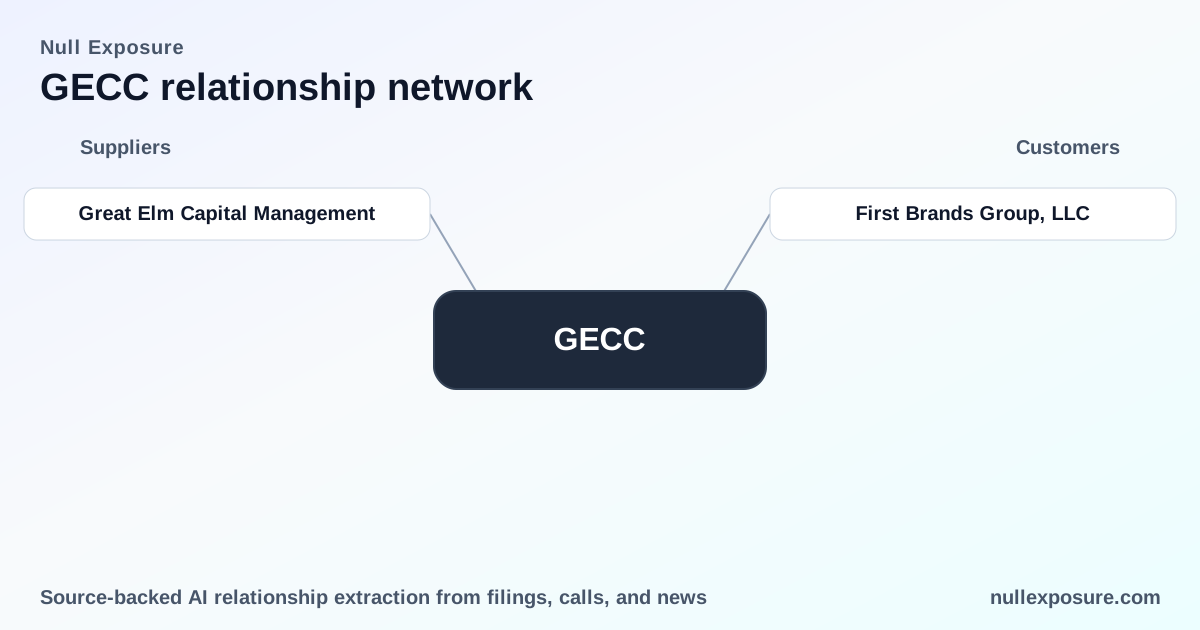
First Brands Group, LLC — bankruptcy has direct impact on GECC’s investment
Great Elm disclosed an update on its investment in First Brands Group, LLC, a global automotive parts manufacturer that filed for bankruptcy at the end of September 2025; the bankruptcy directly affects GECC’s credit exposure to the borrower. A Globe and Mail report in March 2026 summarized GECC’s public update that the investment faced material impact following First Brands’ restructuring filing. (The Globe and Mail, March 9, 2026: https://www.theglobeandmail.com/investing/markets/stocks/GECC/pressreleases/35308341/great-elm-capital-faces-impact-from-first-brands-bankruptcy/)
Why this single relationship matters more than headline diversification figures
A single large borrower bankruptcy is a high‑leverage event for a BDC with concentrated positions. GECC’s model concentrates underwriting risk in mid‑market credits where one counterparty failure can move NAV and dividend coverage materially. With insiders owning roughly 40% of equity, management incentives are aligned to preserve NAV and dividends, but that alignment also means executive decisions on workouts and restructurings will significantly determine recovery value for public shareholders.
Investors should watch for:
- NAV revisions and realized loss recognition in subsequent quarterly filings.
- Covenant enforcement or amendment language in the borrower’s credit documents disclosed in 8‑K/10‑Q filings.
- Recovery strategy — whether GECC pursues asset sales, debt‑for‑equity conversions, or negotiated creditor compromises.
Valuation and risk framing for investors
GECC trades below book, with Price/Book at 0.68 and an elevated dividend yield driven by distribution policy rather than consistent earnings. That valuation gap reflects market expectations of credit deterioration or slower recoveries, and the First Brands bankruptcy is the type of idiosyncratic shock that justifies the discount.
Risk framework:
- Credit risk is the dominant driver; portfolio concentration amplifies single‑borrower outcomes.
- Liquidity and mark‑to‑market volatility can widen during restructurings, pressuring the dividend if realized losses increase.
- Governance and insider alignment reduce agency risk but concentrate decision‑making around a limited leadership team.
Actionable monitoring checklist for investors and operators
- Track GECC’s subsequent 10‑Q/8‑K disclosures for NAV updates, realized losses, and restructuring outcomes tied to First Brands.
- Evaluate covenant enforcement language and any amendments disclosed around the time of the borrower’s bankruptcy.
- Monitor share price relative to book value for signs of market re‑rating as recovery outcomes become clearer. For an integrated view of counterparty events and valuation impact, visit https://nullexposure.com/ to see how event flows map to NAV outcomes.
Final takeaways
- GECC is a credit‑first BDC whose returns are driven by underwriting, covenant enforcement and recovery outcomes rather than revenue growth.
- The First Brands bankruptcy is a material portfolio event that crystallizes downside risk; recovery outcomes will determine NAV and dividend sustainability.
- No explicit relationship constraints were recorded in the available relationship feed; treat this as a company‑level disclosure signal and focus monitoring on filings and press updates.
Investors should prioritize borrower‑level updates and NAV cadence over short‑term price moves when assessing GECC’s risk/reward profile. For structured monitoring tools and deeper counterparty timelines, explore https://nullexposure.com/.