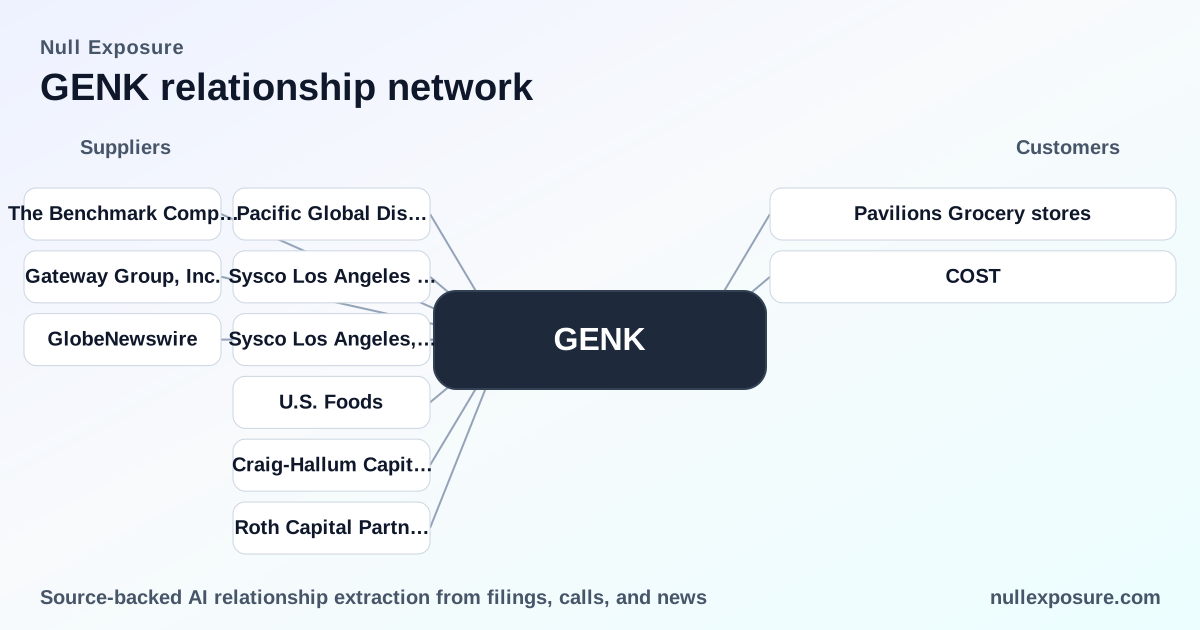
GEN Restaurant Group (GENK): Customer map and commercial signals investors need
GEN Restaurant Group operates and monetizes a fast-growing casual dining concept (GEN Korean BBQ) through company‑owned restaurants across multiple U.S. states, packaged retail products, and large third‑party gift‑card distribution. Core revenue drivers are dine‑in sales at company restaurants, wholesale retail sales of ready‑to‑cook meats, and bulk gift‑card programs sold through national retailers; the company recognizes receivables for these distributed gift cards. For a concise profile of the company, visit https://nullexposure.com/ for curated coverage and document links.
Key financial context that frames customer relationships: GEN reported $212.5M revenue TTM with negative net margins and operating losses, and its balance sheet reflects material receivables tied to gift‑card channels. These dynamics turn customer partnerships into both growth levers and working‑capital considerations.
How GENK monetizes its brand and why customers matter
GENK’s operating model combines three monetization lanes that are visible in recent disclosures:
- Company‑owned restaurants: repeat dine‑in revenues and ancillary upsells.
- Branded retail products: ready‑to‑cook meats placed in grocery chains that convert restaurant IP into grocery sales.
- Gift‑card distribution: bulk gift‑card programs sold to national retailers and recognized as accounts receivable.
These lanes are complementary: retail placements and gift‑card distribution accelerate top‑line reach beyond store openings, but they increase receivable exposure and require scalable logistics and partner management. GEN’s TTM revenue of $212.5M and gross profit of ~$28.4M underline that while brand traction exists, profitability remains a work in progress.
Commercial relationships that drive near‑term revenue and receivables
Below I cover every customer relationship surfaced in the filings and media results. Each entry is a plain‑English summary with the primary source.
Costco — large bulk gift‑card partner, revenue and receivable concentration
GEN sold approximately $29 million in gift cards to Costco during 2025, a 150% increase versus the prior year, and the company identifies Costco receivables as a primary component of accounts receivable in its FY2024 10‑K. According to the Q4 2025 earnings call transcript published on Investing.com, management highlighted the Costco program as having “greatly exceeded expectations,” and the FY2024 10‑K specifically notes that accounts receivable consist primarily of receivables from Costco for gift‑card sales. (Earnings call transcript, May 2026; Company 10‑K FY2024)
Pavilions Grocery stores — retail channel for packaged meats in Southern California
GEN announced a retail rollout that places ready‑to‑cook GEN‑branded meats into Pavilions grocery stores in Southern California, expanding the brand into packaged retail and away from pure dine‑in sales. The company press release captured by QuiverQuant on March 9, 2026, states that these ready‑to‑cook meats will be sold through Pavilions, directly linking restaurant product development to grocery shelf distribution. (QuiverQuant press release, Mar 9, 2026)
What these relationships tell investors about GENK’s operating posture
The customer evidence supports several company‑level operating signals that matter for valuation, risk, and operational planning:
- Concentration and material counterparty exposure. The persistent disclosure that accounts receivable “consist primarily of receivables from Costco” is a clear sign that a single retail partner contributes materially to working‑capital timing and credit exposure. That creates counterparty dependency, which can either accelerate scale or concentrate cash‑flow risk.
- Commercial maturity in retail and distribution. Placement into Pavilions and a multi‑million dollar gift‑card program with Costco indicate that GEN has operationalized productization beyond restaurants and executed third‑party distribution deals that require supply chain, packaging, and billing capabilities.
- Revenue diversification but added working‑capital friction. Retail and gift‑card channels diversify sales beyond dine‑in, but both channels shift cash conversion timing: grocery invoicing and bulk gift‑card receivables increase days‑sales‑outstanding and require disciplined collections and credit terms.
- Geographic scale concentrated in select U.S. states. GEN reports company‑owned restaurants across California, Arizona, Hawaii, Nevada, Texas, New York, Oregon, New Jersey and Florida, which confirms a multi‑state footprint focused on coastal and Sunbelt markets rather than broad national penetration. This regional cluster supports local brand density but limits exposure to interior geographies. (Company disclosures FY2024–FY2025)
Contracting posture, criticality and maturity — practical investor takeaways
- Contracting posture: GEN’s deals with national retail partners (Costco) and regional grocery chains (Pavilions) reflect standard vendor‑retailer supplier terms with deferred payment profiles and receivable recognition; management has prioritized scaling distribution relationships that trade lower gross margin for higher volume and brand reach.
- Concentration: The Costco receivable disclosure is a concentration risk that should be monitored; a shift in terms or program scale would have an outsized impact on cash flow and working capital.
- Criticality: For GEN, these customers are highly strategic — Costco drives a material portion of off‑premise sales via gift cards, while grocery distribution expands brand exposure that feeds restaurant traffic.
- Maturity: The relationships show commercial maturity in execution (multi‑million dollar gift‑card sales and grocery placements), but the company’s overall financial maturity lags; negative operating margins and the need to manage receivables demonstrate that operational scaling is still in progress.
Investment implications, risks and the roadmap to value
- Positive: Brand monetization beyond restaurants is a clear value-creating mechanism; the Costco program alone generated tens of millions in gift‑card sales in 2025 and accelerates cashless demand into the brand ecosystem.
- Negative: Receivable concentration and margin pressure are immediate risks. Large receivable balances from a single counterparty increase liquidity and credit risk if collection terms tighten or program renewals slow.
- Operational focus: Management must lock in favorable payment terms, diversify large distribution partners, and improve unit economics at company restaurants to translate top‑line reach into sustainable profits.
If you are evaluating GENK: prioritize diligence on Costco credit terms and receivable aging, the commercial performance and margins of the Pavilions retail rollout, and management’s plan to convert incremental distribution revenue into positive operating leverage.
For a concise hub of documents and ongoing signal tracking, visit https://nullexposure.com/ — it’s a useful starting point for follow‑up diligence.
Bottom line: brand traction with working‑capital caveats
GEN Restaurant Group has successfully converted restaurant brand equity into retail product placements and a scaled gift‑card distribution channel, producing meaningful revenue uplifts. The tradeoff is elevated receivable concentration and the need for operational discipline to turn distribution gains into sustainable profitability. Investors should treat large retail partners as both revenue multipliers and working‑capital levers that will determine the path from revenue growth to durable margin improvement.