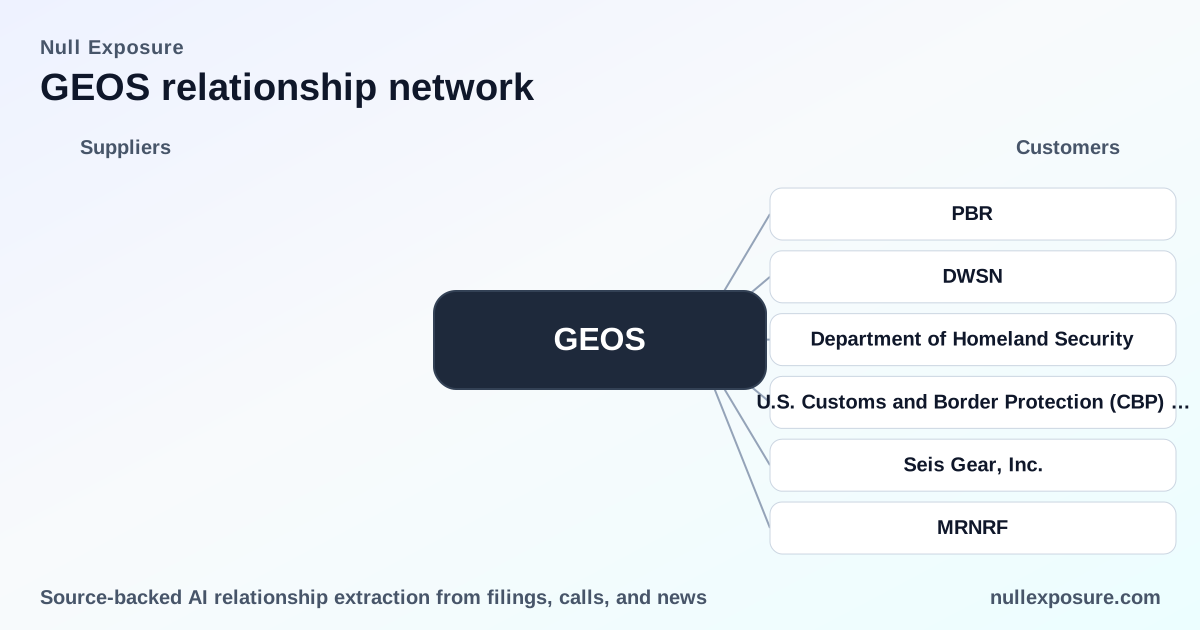
Geospace Technologies (GEOS): Customer Relationships That Reframe Revenue Optionality
Geospace Technologies designs and sells seismic acquisition instruments and complementary services, monetizing through product sales (notably the Pioneer ultralight land node and Hydroconn connectors), equipment purchase agreements, and targeted government contracts executed via its Quantum subsidiary. Recent contract wins — a large Permanent Reservoir Monitoring (PRM) engagement and multiple Pioneer node orders — materially change the revenue trajectory by shifting the company from one‑off equipment sales toward multi‑year monitoring and government work that carries higher programmatic value. For a consolidated view of relationships and evidence, visit https://nullexposure.com/.
Why recent customer wins matter for valuation
Geospace’s business is inherently cyclical: oilfield capex drives equipment demand while long‑term PRM contracts convert capital sales into recurring service-like revenue. The Petrobras PRM deal and Dawson purchase order are signal events: one establishes multi‑period revenue potential with a major national oil company, the other validates Pioneer product-market fit with large independent acquirers. At the same time, government contracts through Quantum diversify end markets into defense and homeland-security applications, supporting a steadier baseline under commodity cycles.
Customer roll call — who pays Geospace and what they bought
Below are plain-English summaries of every customer relationship documented in the results, each tied to the original reporting.
-
Petrobras / PBR — Geospace reported a major Permanent Reservoir Monitoring (PRM) contract with Petrobras, disclosed in the Q4 2025 earnings commentary and highlighted in market coverage that drove a notable stock reaction; management discussed deployment timing and revenue recognition on the Q4 2025 call (reported March 2026). (GEOS Q4 2025 earnings call; trading and press coverage, March–May 2026)
-
Dawson Geophysical / DWSN / Dawson Geophysical Company — Dawson purchased Pioneer ultralight land nodes in a material equipment order, with press releases and earnings disclosures specifying both an initial order booked in Q4 2025 (~$10.6 million recognized in the quarter) and a larger $24.2 million equipment purchase agreement cited in later reporting. This represents validation by the largest U.S. onshore seismic services firm. (Yahoo Finance & CityBiz press releases, Globe and Mail and GlobeNewswire reporting; Q4 2025 earnings call; March–May 2026)
-
Department of Homeland Security (DHS) — Geospace’s Quantum subsidiary was awarded a $10 million DHS contract to provide a technology solution routed through CBP U.S. Border Patrol, reflecting the firm’s federal contracting capabilities beyond oil and gas. (HS Today, March 2026)
-
U.S. Customs and Border Protection (CBP) U.S. Border Patrol — That DHS award was specifically under the CBP U.S. Border Patrol vehicle/mission set, meaning Quantum’s work directly services border and perimeter security operational requirements. (HS Today, March 2026)
-
Department of Defense (DoD) — Quantum’s historical profile includes longstanding support for DoD programs, noted when Geospace acquired Quantum and retained its federal contracting operations; this establishes legacy capabilities in defense geophysical sensing R&D. (Florida Today coverage of the Quantum acquisition, 2018)
-
Department of Energy (DoE) — Quantum’s archival business also includes contracts and R&D relationships with the Department of Energy, underscoring the subsidiary’s multi‑agency federal footprint. (Florida Today, 2018)
-
Seis Gear, Inc. — Geospace sold assets associated with its streamer recovery device product line to Seis Gear, a disposition that indicates portfolio pruning and focus on higher-priority product lines like Pioneer and Hydroconn. (TradingView summary of FY2025 disclosures, March 2026)
-
Mariner / MRNRF — Management referenced a recent Mariner contract and possible future requirements during fiscal 2025 commentary, signaling early commercial traction for accessories and connector products (Hydroconn) beyond core node sales. (GEOS FY2025 earnings summaries reported in March 2026)
Note: multiple sources and press outlets reported overlapping facts (earnings call transcripts, Yahoo Finance/CityBiz press releases, GlobeNewswire, and trading press), and the summaries above reflect the consolidated evidence cited in those items (March–May 2026 and archive items from 2018).
What the relationship mix tells you about GEOS’ operating model
-
Contracting posture: Geospace is primarily a seller of hardware that increasingly secures multi‑period service contracts (PRM) and government task orders through Quantum; the mix shifts risk from single shipments toward contract backlog and program execution.
-
Concentration and criticality: The company disclosed that two customers represented 19.1% and 16.2% of revenue in fiscal 2025, which means large individual customers can move reported growth materially; the Petrobras PRM contract elevates one counterparty’s strategic importance.
-
Geography and market breadth: Geospace reported domestic revenues of
$67.3 million and meaningful APAC exposure ($25.0 million), with smaller contributions from Europe, Mexico and South America, confirming a global footprint that both diversifies and complicates logistics and execution. (FY2025 revenue table) -
Customer maturity and channel: Government relationships are executed through a longstanding federal‑contracting subsidiary (Quantum), which brings programmatic procurement dynamics and compliance overhead; commercial seismic customers like Dawson operate on purchase‑order and equipment‑deployment timelines that are faster but cyclical.
-
Business model characteristics: The firm is capital‑goods centric with an emerging services/repeat revenue layer via PRM, creating differential margin profiles and sensitivity to inventory, delivery cadence, and contract schedules.
Investment implications and risk checklist
-
Upside thesis: PRM contracts with Petrobras and material Pioneer orders for Dawson create a pathway from one‑off sales to recurring, higher‑visibility revenue. The Petrobras deal is the most value‑accretive on a present‑value basis because it converts product capability into a long‑duration engagement.
-
Key risks: Customer concentration, execution risk on multi‑year PRM deployments, and integration of defense/government contracting requirements through Quantum are principal near‑term hazards. Operational leverage means missed shipments or delayed deployments will compress margins rapidly.
-
What to watch next: revenue recognition timing for Petrobras PRM milestones, backlog disclosure for Pioneer shipments (Dawson recognition), and further federal awards for Quantum.
For investors and operators who want a consolidated, evidence‑first view of GEOS customer dynamics, the company filings and contemporaneous press coverage provide the direct trail. Explore further at https://nullexposure.com/.
Bottom line
Geospace has transitioned toward higher‑value, programmatic revenue without abandoning its equipment sales core. The Petrobras PRM contract and Dawson’s Pioneer orders are transformational commercial signals, but the stock’s sensitivity to execution and concentration demands close monitoring of backlog realization and government program pacing.