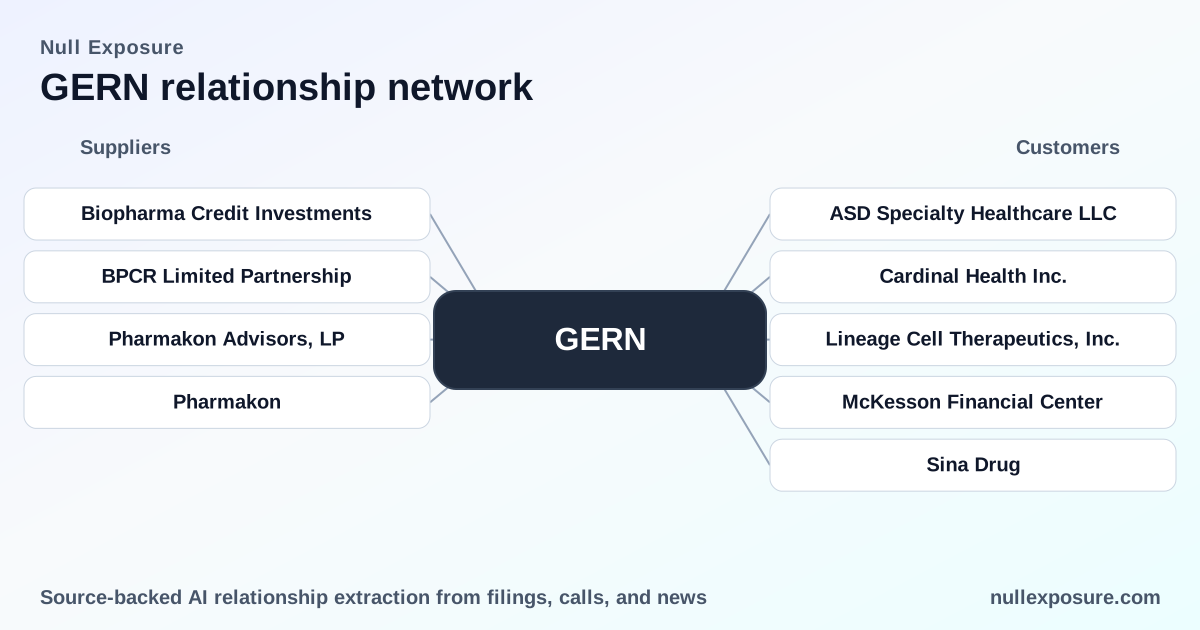
Geron Corporation (GERN): Counterparty Concentration and the Commercial Rollout of RYTELO
Geron operates as a single-product commercial-stage biopharma: it commercializes RYTELO (imetelstat) for certain lower‑risk myelodysplastic syndromes and monetizes through U.S. product sales and contractual royalty receipts tied to divested intellectual property. Revenue today is concentrated, distributor-driven, and recognized at the point of delivery, making accounts receivable composition and distributor relationships central to near‑term cash flow and credit risk analysis. For a concise map of Geron’s counterparty exposures and commercial posture, visit https://nullexposure.com/.
What matters right now: concentrated receivables and a distributor‑led go‑to‑market
Geron received FDA approval for RYTELO in June 2024 and began U.S. shipments that same month, so the company’s commercial profile is nascent but active. Product sales are recognized at a point in time—typically on delivery—so receivables spike early in commercialization, and Geron distributes through third‑party distributors and specialty pharmacies who act as its customers and resellers. According to Geron’s 2024 Form 10‑K, four customers accounted for 100% of gross accounts receivable as of December 31, 2024, concentrating credit risk across a very small set of counterparties.
Counterparty roll call: who is on the balance sheet
McKesson Financial Center
McKesson Financial Center accounted for 43% of Geron’s gross accounts receivable as of December 31, 2024, making it the single largest receivable counterparty on the balance sheet. This concentration is disclosed in Geron’s 2024 Form 10‑K.
ASD Specialty Healthcare LLC
ASD Specialty Healthcare LLC represented 38% of gross accounts receivable for the same period, positioning ASD as an equally material receivable exposure for Geron’s cash collection and working capital profile. This figure is reported in Geron’s 2024 Form 10‑K.
Cardinal Health Inc.
Cardinal Health accounted for 17% of gross accounts receivable, completing the trio of large distributor customers that together represent 98% of receivables before the smallest account. Geron lists this allocation in the 2024 Form 10‑K.
Sina Drug
Sina Drug was recorded as 2% of gross accounts receivable, the smallest of the four customers that together made up 100% of receivables as of year‑end 2024, per Geron’s 2024 Form 10‑K.
Lineage Cell Therapeutics, Inc.
Separately, Geron disclosed it is entitled to receive royalties on sales from certain research or commercial products that utilize intellectual property Geron divested, including arrangements tied to Lineage Cell Therapeutics, Inc. This royalty entitlement is reported in Geron’s 2024 Form 10‑K.
Each of the above items is drawn from Geron’s Form 10‑K for the fiscal year ended December 31, 2024, and represents the company’s explicit counterparty disclosures for receivables and royalty arrangements.
Operating model characteristics that drive counterparty risk
- Contracting posture: spot sales on delivery. Product revenue is recognized when control transfers to the customer—typically on delivery—so shipments convert into receivables immediately and collection timing becomes critical to liquidity (Geron 2024 Form 10‑K).
- Distribution structure: third‑party distributors and specialty pharmacies. Geron distributes RYTELO through third‑party distributors who resell through related specialty pharmacy providers, establishing a layered counterparty chain between Geron and the ultimate patient or provider (Geron 2024 Form 10‑K).
- Geographic concentration: U.S.-centric commercialization. All product revenue to date has originated from U.S. sales of RYTELO following FDA approval in June 2024; Geron is pursuing approvals and trials outside the U.S., but current revenue is U.S.-only (Geron 2024 Form 10‑K).
- Commercial maturity: very early stage, active market entry. The company began shipping RYTELO in June 2024 and is in the first year of commercialization; revenue and profitability are unproven and dependent on successful uptake and reimbursement dynamics (Geron 2024 Form 10‑K).
- Product concentration: single approved product. Geron is wholly dependent on RYTELO as its only approved and marketed product, creating single‑asset operational and revenue concentration (Geron 2024 Form 10‑K).
These characteristics together create a profile of high receivable concentration, distributor dependency, and single‑product exposure, which drives both upside if uptake is strong and downside if collection or reimbursement issues emerge.
What investors and operators should parse next
- Counterparty credit risk is first order. With four counterparties representing 100% of gross receivables, a disruption at McKesson, ASD, Cardinal, or Sina Drug would produce immediate balance sheet and cash‑flow stress. Investors should interrogate payment terms, collection days, and any credit support or reserves disclosed in subsequent filings (Geron 2024 Form 10‑K).
- Reimbursement and government payor exposure influence adoption. Geron’s commercial success depends on coverage and reimbursement from governmental authorities and third‑party payors; early payer decisions will materially affect demand and pricing power (Geron 2024 Form 10‑K).
- Operational leverage through distributors. Distribution partners accelerate reach but embed operational counterparty risk and margin pressure through resale channels; monitoring inventory flow and returns policy is essential for forecasting revenue recognition and working capital needs.
- Royalty streams are de‑risking but limited. Royalties tied to divested IP—such as those related to Lineage—provide non‑product revenue potential but are ancillary to RYTELO sales and not a substitute for product commercial success (Geron 2024 Form 10‑K).
For practitioners mapping counterparty exposures across life‑cycle stages, the combination of spot sales, distributor/reseller relationships, and U.S.-only initial revenue defines a concentrated, high‑turnover receivable book that requires active treasury and credit management.
If you want an organized view of counterparty concentrations and downstream risk vectors for Geron and comparable commercial-stage biotechs, see https://nullexposure.com/ for structured visibility.
Bottom line: concentrated short‑term risk with scalable long‑term upside conditional on adoption
Geron’s near‑term financial profile is unambiguous: high concentration of receivables, dependence on a small set of distributor customers, and single‑product revenue from RYTELO in the U.S. Those facts compress downside if collection or reimbursement problems materialize but also create leverage to upside if distributors expand uptake and payors provide favorable coverage. Investors should prioritize receivable aging, distributor terms, and emerging payer policy in quarterly filings; operators should prioritize collection discipline, incentive alignment with distributors, and reimbursement engagement to convert clinical approval into sustainable cash flow (Geron 2024 Form 10‑K).
Key references: Geron Corporation, Form 10‑K for the fiscal year ended December 31, 2024 (customer concentration, revenue recognition policy, distribution and royalty disclosures).