GE Vernova (GEVG): utility aftermarket wins drive predictable, high-margin service revenue
GE Vernova operates and monetizes through a dual model: capital equipment sales (turbines, generators, balance-of-plant) and an aftermarket services business that sells upgrades, repower kits, and long-tail maintenance contracts to utilities and independent power producers. The aftermarket and upgrade business converts installed capacity into recurring, high-margin revenue streams that lengthen customer lifecycles and improve lifetime value; equipment sales provide episodic but high-ticket margins. For investors evaluating customer relationships, the most valuable signals are large utility contracts for upgrades and repower activity, because they imply multi-year service tails and elevated criticality across power grids.
For a concise view of GEVG customer coverage and to track further contract updates, visit the company overview at https://nullexposure.com/.
The Taiwan Power agreement: a clear aftermarket win
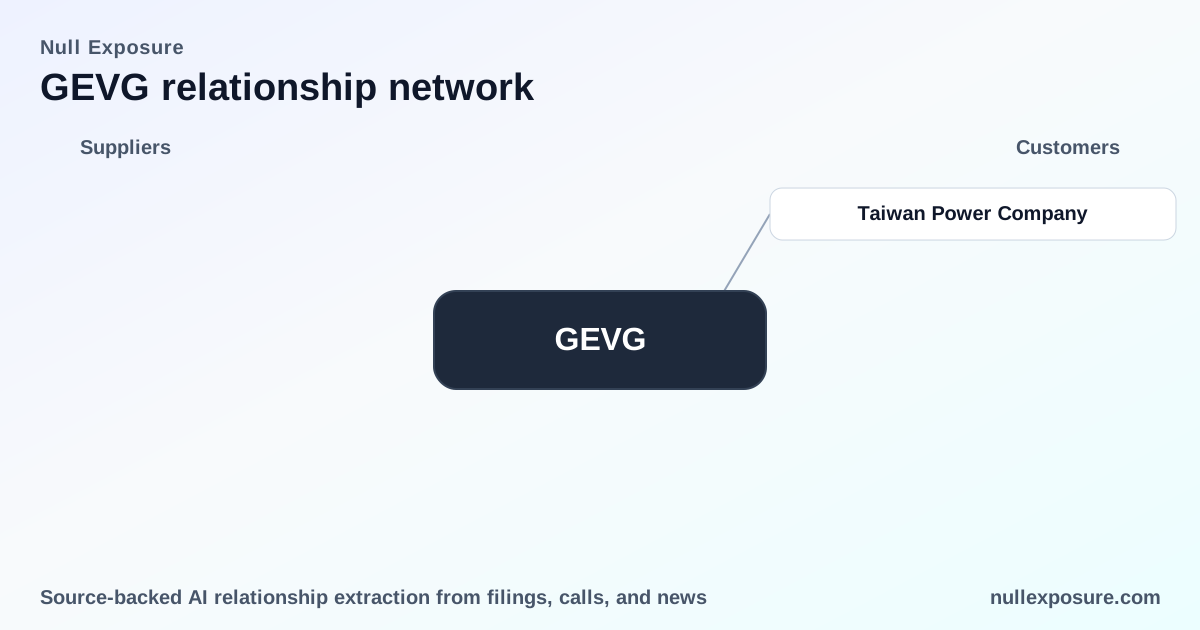
GE Vernova secured an agreement with Taiwan Power Company to supply 25 repower upgrade kits, a transaction recorded in FY2025. This sale reflects the company’s strategic emphasis on upgrading existing fleet assets rather than only selling new units, locking in downstream service and parts revenue associated with modernization programs. According to a Barchart news report published in March 2026, GE Vernova reached this agreement with Taiwan Power Company (news item dated 2026-03-09, reporting on FY2025 contract activity): https://www.barchart.com/story/news/36237148/ge-vernova-gains-momentum-is-gev-stock-a-buy-here.
Why a repower kit sale matters to investors
- Repower contracts translate to recurring revenue. Selling upgrade kits is rarely a one-off: it initiates installation work, parts replacement, and testing that generate follow-on service and spare-parts income.
- Utility customers are strategically important. A national utility like Taiwan Power Company represents concentrated, high-visibility business where delivery timeliness and reliability are critical to grid stability.
- Margin profile improves with aftermarket exposure. Aftermarket services typically command higher gross margins than initial equipment sales and create long-duration cash flows, which support valuation multiples for industrial OEMs oriented toward services.
These dynamics combine to make such wins disproportionately valuable relative to their headline dollar size: the kits themselves are revenue, but the embedded service stream and upgrade installation elevate lifetime revenue per customer significantly.
Company-level constraints and operating model signals
The customer relationship feed contains no constraint excerpts; that absence is itself a company-level signal. In plain terms, there were no flagged contractual constraints, exclusive supply covenants, or unusual payment arrangements reported in this results set. Use that lack of constraint data as a neutral input: it neither confirms nor negates the existence of typical industrial contracting practices, but it does mean there were no anomalies recorded in the feed to warn investors.
From the reported customer activity and the nature of repower transactions, the following operating model characteristics apply to GE Vernova as a company-level overview:
- Contracting posture — negotiated, project-based engagements. Contracts with national utilities for upgrades are negotiated project agreements with milestone billing and performance acceptance gates rather than commoditized, spot sales.
- Concentration — customer-level concentration risk exists but is manageable. Large utility wins are important and concentrated by customer, yet the company’s global footprint and multiple utility customers dilute single-customer dependency over time.
- Criticality — high to the customer. Repower kits touch core grid assets; failures or delays carry systemic consequences for utility customers, which increases the stickiness of vendor relationships and the leverage to negotiate service terms.
- Maturity — aftermarket upgrade business is established. Repower and upgrade services are mature product lines for industrial OEMs; revenue is less cyclical than new-build orders and more predictable once the installed base is known.
These characteristics explain why investors should value the aftermarket stream more highly than headline unit sales: recurring, critical, and higher-margin cash flows support a premium valuation multiple relative to equipment-only peers.
Full catalog of customer relationships in this review
This section lists every customer relationship found in the provided results and summarizes each in plain English.
- Taiwan Power Company — GE Vernova reached an agreement to supply 25 repower upgrade kits in FY2025, signaling a focused aftermarket engagement that will drive installation, parts, and follow-on service revenue; reported by Barchart in March 2026 (news report: https://www.barchart.com/story/news/36237148/ge-vernova-gains-momentum-is-gev-stock-a-buy-here).
Investment implications and risk framing
Upside: The Taiwan Power transaction validates the company’s go-to-market for fleet modernization and supports a durable aftermarket revenue base. Investors should value GEVG with a services-adjusted multiple because aftermarket contracts convert capital expenditure cycles into sustained cash generation.
Downside / risks: Concentration risk exists where single large utilities represent material program value, and execution failure on installations or delayed delivery has outsized reputational and financial consequences given utility criticality. Geopolitical or regulatory shifts in specific markets (e.g., energy policy changes in Asia) can alter program timing and margins.
Key takeaway: The Taiwan Power deal is a concrete example of GEVG’s strategy to monetize installed base upgrades and to grow higher-margin, recurring revenue — a structural positive for valuation if the company scales similar utility engagements globally.
For ongoing coverage and a streamlined view of these customer relationships, visit https://nullexposure.com/ for portfolio-level tracking and updates.
Final read: what investors should watch next
Track three variables to assess whether this aftermarket momentum becomes a durable growth driver: (1) the rate of repeat repower agreements with other utilities, (2) the conversion of kit sales into long-term service contracts, and (3) delivery execution against project milestones. Each will determine whether aftermarket wins like the Taiwan Power contract drive sustainable margin expansion and multiple expansion for GEVG.