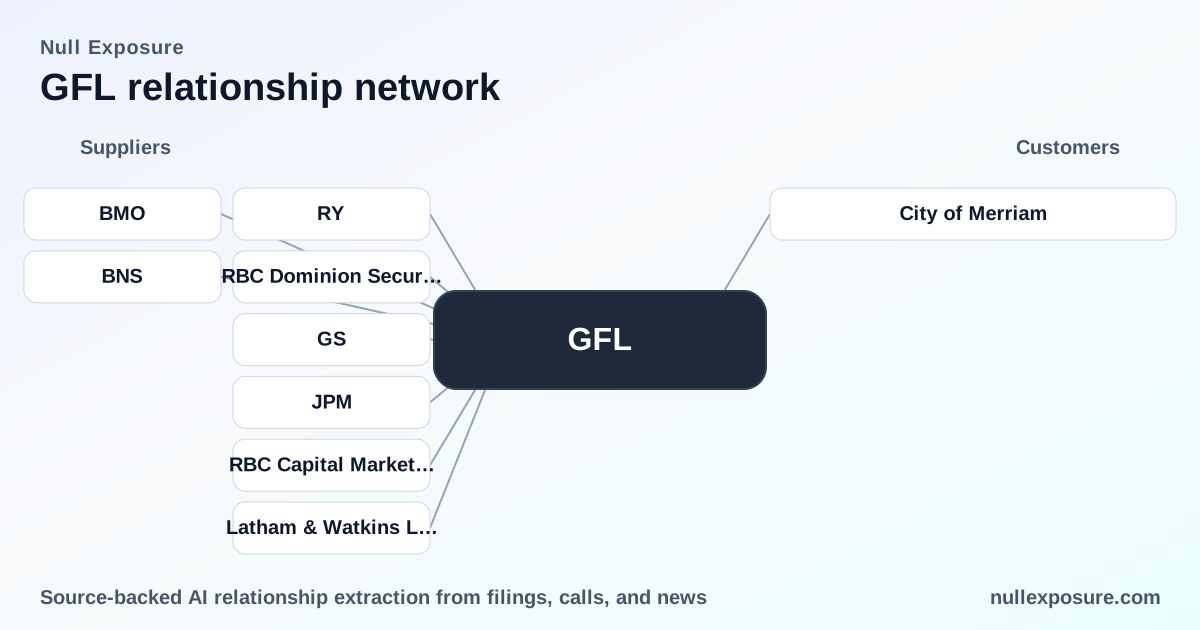
GFL Environmental: customer footprint, contract behavior, and near-term implications for investors
GFL Environmental operates as a diversified environmental services provider across Canada and the United States, monetizing through long-term municipal and commercial contracts for waste collection, transfer, recycling, and disposal, alongside infrastructure and specialty services. The business generates recurring revenue from essential services, augments scale through M&A, and has recently restructured portions of its Environmental Services business via a strategic sale. For investors tracking customer relationships and contract exposure, the mix of municipal contracts and asset divestitures is the central lens for assessing revenue resilience and execution risk. Visit https://nullexposure.com/ for additional company relationship analytics and sourcing.
The customer picture summarized: what the relationships say about revenue exposure
GFL’s customer signals in the public record from 2025–2026 reveal three actionable items: continued municipal contracting wins, strategic portfolio rebalancing through third‑party transactions, and market-level asset transfers that redistribute regional customer coverage. Together these items illustrate a company that secures local recurring revenue while actively reshaping its asset footprint through transactions.
City of Merriam — a municipal contract win
GFL won a five‑year contract to provide solid waste services to the City of Merriam, approved by the city council in a unanimous vote. According to the Johnson County Post (July 2025), the contract represents a typical municipal municipal-service engagement that supplies steady, recurring collection revenue for the term. Source: Johnson County Post, July 15, 2025.
Apollo/BC Partners transaction — monetizing part of the Environmental Services business
Apollo Global Management and BC Partners completed the acquisition of a 56% stake in GFL’s Environmental Services business, a transaction that materially changes the company’s ownership and operating posture for that business line. Simply Wall St reported in March 2026 that the sale transfers majority control of that unit to private-equity buyers, reflecting strategic de‑risking and capital recycling by GFL. Source: Simply Wall St report on Apollo/BC Partners, March 2026.
Casella and regional asset transfers — market redistribution in the mid‑Atlantic
Casella has expanded in the mid‑Atlantic through acquisitions of several GFL assets, shifting regional customer and asset ownership. Waste Dive reported in May 2026 that Casella’s purchases included former GFL assets, a development that indicates regional consolidation and GFL’s willingness to divest non‑core or strategically redundant assets. Source: Waste Dive, May 2026.
What these relationships imply about GFL’s operating model
- Contracting posture: GFL continues to secure municipal contracts that deliver recurring, predictable cash flow, while simultaneously executing portfolio-level transactions to optimize capital allocation. Long-term municipal contracts underpin base revenue; asset sales and stakes sold to private equity indicate an opportunistic approach to balance growth with liquidity.
- Concentration and customer mix: Municipal and small‑to‑mid municipal contracts such as Merriam’s are numerous and dispersed, which dilutes single‑customer concentration risk but creates operational complexity across jurisdictions. The sale of a majority stake in the Environmental Services business suggests a partial concentration risk transfer to new owners rather than a direct reduction of customer concentration on GFL’s balance sheet.
- Criticality of services: Waste collection, transfer, and disposal are essential municipal services; winning city contracts equates to high service criticality and elevated switching costs for municipalities, favoring retention and predictable renewal revenue.
- Maturity and capital strategy: At a market capitalization north of $13 billion and with recurring EBITDA contribution, GFL operates as a mature consolidator in a fragmented industry. The company’s reported FY2026 sale transactions evidence an active capital strategy—deploying divestitures and partnerships to improve returns and manage leverage.
Risk and opportunity lens for investors
GFL’s model provides stability through municipal contracts and flexibility through M&A. Investors should weigh the following:
- Operational stability: Municipal contracts like Merriam’s create durable cash flows; the company’s scale supports service delivery and pricing power in competitive local tenders.
- Execution and integration: Continued M&A and divestitures create execution risk; successful integration and carve‑outs will drive margin and free cash flow improvement, while misexecution would pressure returns.
- Capital structure: Selling a majority stake in a business unit to Apollo/BC Partners supplies liquidity and reduces capital intensity, but it also reduces future EBITDA ownership for GFL and transfers growth upside to the new owners.
- Regulatory and reputational dynamics: Municipal contracts carry policy and service quality oversight; poor service performance risks contract penalties and reputational damage, which can impair renewals.
Relationship-by-relationship takeaways for portfolio analysis
- City of Merriam (municipal contract) — GFL was awarded a five‑year solid waste services contract, demonstrating continued success in municipal procurement and the company’s role as a local service provider. Source: Johnson County Post, July 2025.
- Apollo Global Management / BC Partners (transaction counterparty) — Apollo and BC Partners completed acquisition of a 56% stake in GFL’s Environmental Services business, a strategic capital transaction that materially alters GFL’s ownership and operating exposure for that segment. Source: Simply Wall St, March 2026.
- Casella (asset acquirer / regional competitor) — Casella acquired several GFL assets in the mid‑Atlantic region, reflecting regional consolidation dynamics and GFL’s selective divestment of assets. Source: Waste Dive, May 2026.
Investment implications and final verdict
Investors should treat GFL as a recurring‑revenue operator in an essential services sector that is actively rebalancing its asset footprint. The municipal contract pipeline underpins stable top‑line expectations, while the sale of a majority stake in part of its Environmental Services business reconfigures future EBITDA capture and risk exposure. The net effect is a company that reduces capital drag and refocuses on core markets but cedes some near‑term earnings ownership through the transaction.
For further relationship mapping and primary‑source summaries that inform investment diligence, consult our coverage at https://nullexposure.com/.
Bold decisions on GFL should reflect conviction in the company’s contract retention ability and confidence in management’s execution of its capital reallocation strategy.