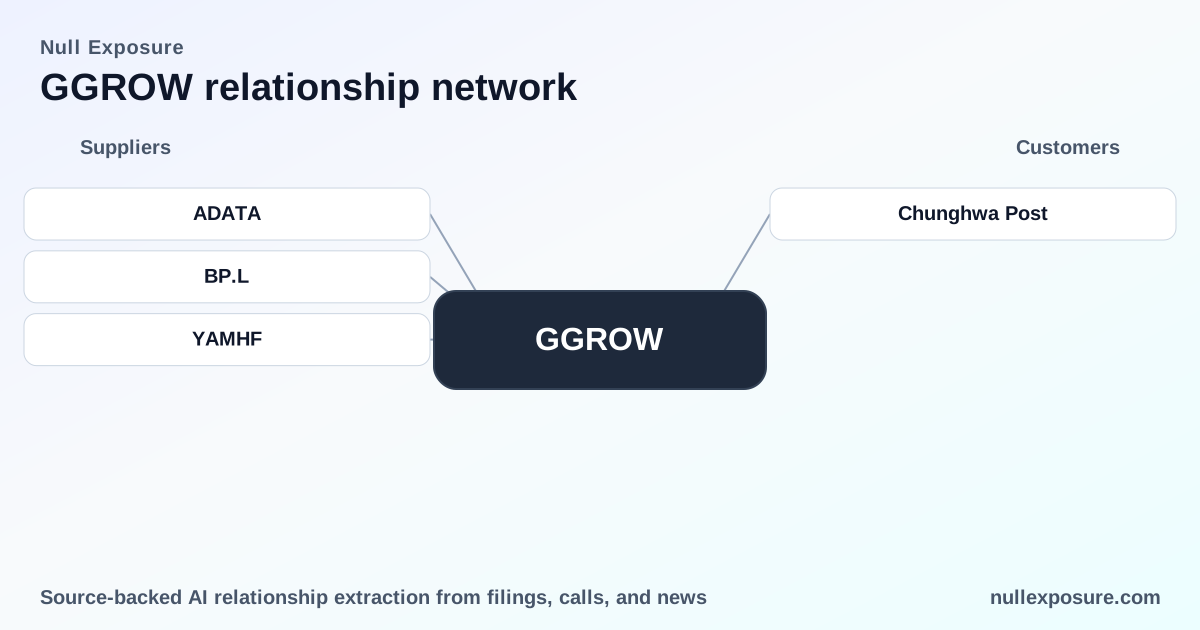
GGROW / Gogoro — fleet validation and recurring‑revenue leverage
Gogoro operates a two‑sided transportation platform that sells electric scooters while capturing recurring revenue through its battery‑swap network and related services; the company monetizes via vehicle sales, battery subscriptions, energy and network services, and institutional fleet deals that accelerate unit deployment and service adoption. The Chunghwa Post order for over 1,000 Crossover S units is the kind of fleet validation that accelerates recurring revenue per vehicle while signaling commercial durability in Gogoro’s home market. For further context on coverage and tooling, visit https://nullexposure.com/.
Why the Chunghwa Post win matters to investors
According to Gogoro’s Q4 2025 earnings call (reported 7 March 2026), Taiwan’s government postal service, Chunghwa Post, added more than 1,000 Gogoro Crossover S scooters to its delivery fleet, underscoring the company’s emphasis on durability and reliability in commercial applications. This is a clear commercial reference sale: government postal fleets are both visible and operationally demanding, and the order implies confidence in hardware, service uptime and logistics integration (Q4 2025 earnings call, 7 March 2026).
Deal implications beyond the headline number
A >1,000 unit fleet deployment delivers immediate scale effects: higher near‑term vehicle revenue, faster onboarding to Gogoro’s swap network, and a meaningful increase in addressable subscription customers (batteries and service). For operators, fleet contracts can compress customer acquisition cost and accelerate per‑unit lifetime value if swapping subscriptions or energy services are attached. The Chunghwa Post engagement is a commercial proof point that supports Gogoro’s transition from retail scooter maker to platform provider for institutional fleets (Q4 2025 earnings call, 7 March 2026).
How Gogoro actually makes money — the business model explained
Gogoro’s revenue mix combines one‑time hardware sales and recurring service streams. Vehicle sales drive upfront cash; battery‑as‑a‑service and swap subscriptions create annuity‑like income; network services and energy aggregation add margin on scale. Financials through FY2025 show Revenue TTM of $281.5M and Gross Profit of $23.2M, with EBITDA reported at roughly $14.2M, reflecting ongoing investment as the company scales (company financials as of 2025‑12‑31). That profile indicates top‑line traction but constrained profitability, with reported negative profit margin and meaningful operating leverage potential if subscription uptake rises.
Operating model characteristics investors should weigh
With no explicit contractual constraints disclosed in the customer‑relationship feed, company‑level signals give a read on operating posture:
- Contracting posture: Commercial fleet wins like Chunghwa Post imply direct procurement relationships with public and private institutions rather than pure retail distribution; contracts likely include service SLAs and staged delivery.
- Concentration: Institutional fleet deals can be lumpy — a few large contracts can materially shift quarterly unit volumes and subscription backlogs.
- Criticality: When scooters are used for postal delivery, reliability becomes mission‑critical and exposes Gogoro to operational risk if swap availability or maintenance does not meet SLAs.
- Maturity: Deployment at scale in Taiwan indicates regional commercial maturity and a replicable playbook for other urban markets pursuing electrification.
These are company‑level signals drawn from observed customer behavior and financial disclosures through 2025, not from any specific binding constraint in the relationship dataset.
All disclosed customer relationships (exhaustive)
- Chunghwa Post — Taiwan’s government postal service committed over 1,000 Gogoro Crossover S units for postal deliveries, validating Gogoro’s durability and reliability claims in a high‑utilization fleet context (Q4 2025 earnings call, 7 March 2026).
What this means for returns and risks
The Chunghwa Post order is a meaningful commercial milestone: it both accelerates recurring revenue potential and reduces the time to revenue breakeven per unit when battery subscriptions attach to fleet units. That said, investors should weigh the following core considerations:
- Upside: Fleet validation creates a reference customer for municipal and corporate tenders, helping Gogoro scale its swap network and recurring revenue base. Improved utilization of swap stations and energy services can lift gross margins over time.
- Concentration risk: Dependence on a small number of large deals can amplify volatility in unit shipments and revenue recognition.
- Operational risk: Fleet use is intensive. Failure to meet service SLAs or maintain swap station uptime would damage retention and the company’s ability to cross‑sell subscriptions.
- Margin pathway: Current financials show constrained profitability; the margin story depends on converting hardware buyers into subscription customers and leveraging network scale.
Bottom line and next steps for due diligence
The Chunghwa Post deployment is an important commercial endorsement for Gogoro’s product and service model. For investors evaluating GGROW exposure, the key questions are whether Gogoro can replicate fleet wins outside Taiwan, convert those fleet units to recurring subscribers, and maintain service reliability at scale. Monitor contract cadence, subscription attach rates, and swap‑station uptime metrics in subsequent quarters.
If you want ongoing, structured coverage of similar customer developments and how they influence issuer economics, explore our analyst briefs at https://nullexposure.com/.
Conclusion: Gogoro’s fleet traction anchors the growth narrative, but the pathway to durable profitability depends on scaling recurring revenue and managing concentration and operational risks while expanding the swap network internationally.