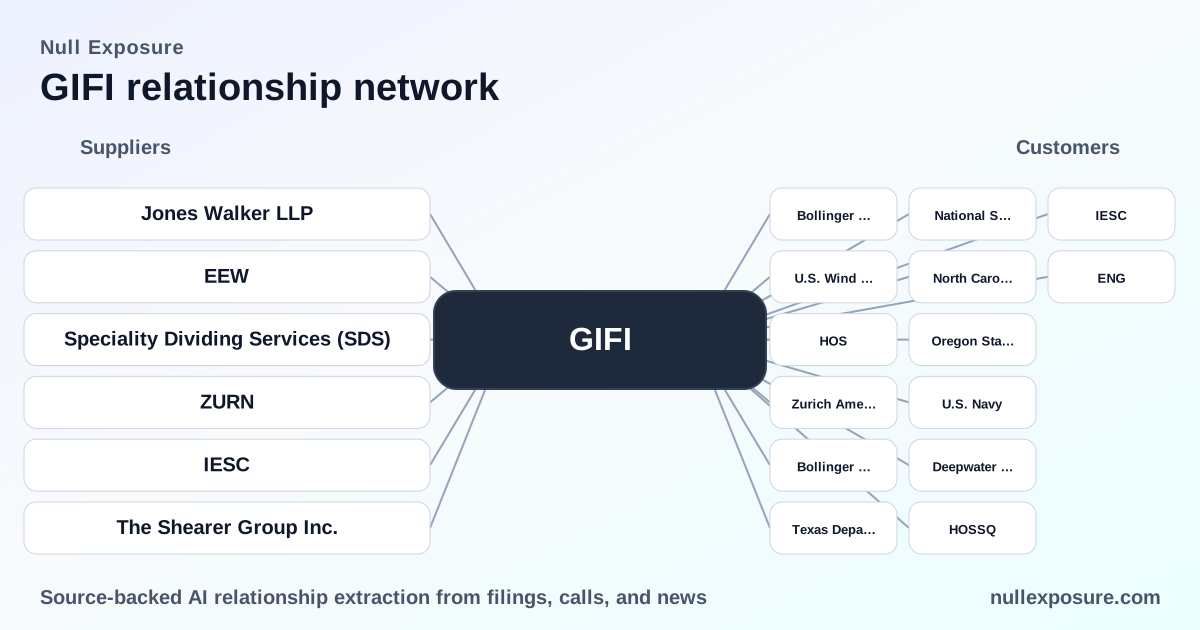
Gulf Island Fabrication (GIFI) — Customer Relationships and Commercial Signals
Gulf Island Fabrication operates as a specialty fabricator and shipbuilder that historically monetized through fixed-price and negotiated contracts for offshore energy infrastructure, research and government vessels, and public ferry projects. Revenue generation combined project engineering, large-scale steel fabrication and vessel construction; over the past five years the company shifted from owning shipyard assets toward contract transfers and finally integration into a larger infrastructure platform under IES Holdings. For a concise overview of the coverage and signals in this note, explore Null Exposure’s research hub: https://nullexposure.com/.
Quick thesis: Gulf Island’s cash flow profile is project-driven and lumpy, tied to a relatively small set of large counterparties; contractual disputes and asset sales have compressed standalone scale and pushed the business toward consolidation under IES.
What investors should take away up front
- Project concentration: Gulf Island wins large, episodic contracts (vessels, jackets, ferries) rather than recurring annuity revenue.
- Counterparty mix: Customers span public agencies (transportation departments, NSF, U.S. Navy) and private offshore energy operators — a mix that drives both size and political/contractual complexity.
- Commercial risk: Historical contract disputes and the 2021 sale of shipyard assets suggest contractual friction and execution risk that affects timing of revenue recognition.
- Strategic outcome: The January 2026 acquisition by IES transforms Gulf Island into a capacity and capability play inside a larger, cash-rich infrastructure platform, reducing standalone investor exposure to execution volatility.
If you want ongoing updates on these counterparties and how they move revenue, see our research portal: https://nullexposure.com/.
Mapping every customer relationship reported in our collection
Below I cover each counterparty cited in public reports and filings in the data set. Each entry is a concise, plain-English summary with the reporting source and period.
Zurich American Insurance Company
Gulf Island previously had an agreement tied to multipurpose service vessels (MPSVs) that involved Zurich American Insurance Company as the buyer, with the contract later awarded to Eastern Shipbuilding. Reporting on this transaction is in gCaptain (March 2026). Source: gCaptain, March 9, 2026.
Bollinger Shipyards / Bollinger Shipyards LLC
Gulf Island sold shipyard facilities and certain vessel construction contracts to Bollinger in 2021 for approximately $28.6 million, a decisive move that removed in‑flight shipbuilding capacity from Gulf Island’s balance sheet. Source: WorkBoat (FY2021) and MarineLink (FY2021).
Hornbeck Offshore Services (HOS / HOSSQ)
Hornbeck originally placed orders for multipurpose offshore service vessels with a Gulf Island subsidiary more than a decade ago; two such vessels were later the subject of dispute and were excluded from the 2021 Bollinger asset sale. Reporting includes multiple 2021–2024 items. Sources: gCaptain (March 2026) and WorkBoat (FY2021).
U.S. Wind Inc.
Gulf Island’s fabrication subsidiary signed a contract to build a meteorological (MET) tower and platform for U.S. Wind’s offshore wind project off Maryland, demonstrating Gulf Island’s participation in early-stage offshore wind construction. Source: WorkBoat (FY2018).
U.S. Navy
Gulf Island’s shipbuilding pipeline historically included contracts for towing, salvage and rescue ships for the U.S. Navy, reflecting defense demand in the company’s backlog prior to asset sale. Source: MarineLink (FY2021) and WorkBoat (FY2020).
Deepwater Wind
Gulf Island contracted to fabricate five jacket/pile foundations for the Block Island Wind Farm, signalling earlier participation in shallow-water offshore wind foundations work. Source: OffshoreWind.biz (Nov 2014).
IES Holdings, Inc. (IESC)
IES acquired Gulf Island for roughly $192 million in equity value (deal closed January 16, 2026), folding Gulf Island into IES’s Infrastructure Solutions segment to continue serving existing customers and to add engineered power and enclosure capabilities. The sale price presentation and closing were covered in December 2025–January 2026 filings and press releases. Sources: GlobeNewswire (Dec 2025; Jan 16, 2026) and The Globe and Mail (FY2026 coverage).
Texas Department of Transportation (TxDOT)
Gulf Island built a 70-vehicle, double-ended ferry for the Texas Department of Transportation, an example of the company’s public-works ferry projects generating one-off large-ticket revenue. Source: WorkBoat (FY2019).
National Science Foundation (NSF)
Contracts to deliver university research vessels funded by the NSF formed part of Gulf Island’s project list that transferred with the 2021 asset sale, reflecting engagement with public research capital programs. Source: MarineLink (FY2021) and WorkBoat (FY2020).
North Carolina Department of Transportation (NCDOT)
Two 40-vehicle ferry contracts for NCDOT were part of Gulf Island’s contract inventory but were excluded from the 2021 sale, underscoring contractual complexity around in-flight government projects. Source: MarineLink (FY2021).
Oregon State University
Gulf Island was building research vessels for Oregon State University as part of broader research-vessel work included in shipyard transactions, tying the company to academic research fleet programs. Source: MarineLink (FY2021).
ENglobal (ENG)
Gulf Island reported acquiring certain assets of ENglobal’s automation, engineering and government services businesses in 2025Q2, a move that signals targeted capability additions on the engineering and controls side prior to the IES acquisition. Source: GIFI earnings call (2025 Q2).
Operational and commercial signals (company-level)
There were no explicit constraint excerpts provided in the dataset; as a result, the following are company-level operating signals inferred from the relationship map rather than constraint text:
- Project-based contracting posture: Gulf Island’s revenue model is dominated by large individual contracts with lumpy cash flow and milestone-driven billing.
- Moderate customer concentration: Revenue depends on a relatively small number of large public agencies and energy operators; this concentration amplifies execution risk.
- Contractual complexity and criticality: Public-sector contracts and long‑lead offshore work create legal and schedule exposure that materially affects timing and profitability.
- Maturity and strategic transition: Asset sales in 2021 and the IES acquisition in 2026 reflect a shift from owner-operator shipyard scale to an integrated-engineering asset inside a larger infrastructure business, reducing standalone capital intensity.
Final read for investors
Gulf Island’s commercial footprint is specialized and concentrated, with legacy shipbuilding contracts, government work and offshore energy customers driving upside when execution succeeds and downside when disputes or delays occur. The 2021 asset divestiture followed by the 2026 IES acquisition converts Gulf Island’s volatile, project-driven profile into an element of a broader, more diversified infrastructure platform—an outcome that materially changes the risk and return profile for prior standalone investors.
For ongoing tracking of Gulf Island counterparties and contract-level developments visit Null Exposure: https://nullexposure.com/.