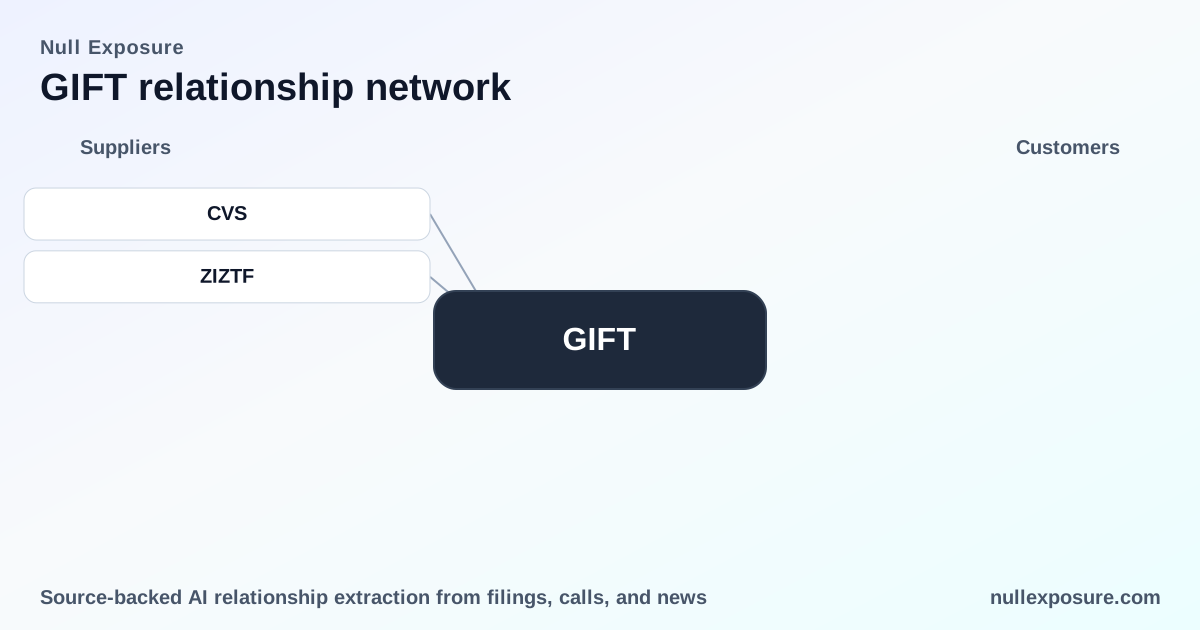
GIFT (RDE, Inc.): Customer Relationships and What They Signal to Investors
RDE, Inc. (NASDAQ: GIFT) operates a US-focused restaurant deal marketplace that monetizes by selling discounted certificates and gift cards to a large B2C base while also serving B2B partners—effectively extracting margin from two sides of the market. Revenue is recognized at delivery (point in time), the core product is digital restaurant certificates and gift cards, and the company generates material revenue from both direct consumers and partner channels. For investors, the key questions are concentration of demand, contract posture with customers and partners, and how named third parties—like Restaurant.com and CardCash—fit into distribution and technology strategies. Visit https://nullexposure.com/ for additional coverage and datasets on customer relationships.
Quick financial context for relationship analysis
GIFT reports approximately $83.2 million in trailing revenue with negative EBITDA (about -$8.1 million) and a narrow gross profit base (~$14.85 million), reflecting a low-margin, volume-dependent marketplace. The business mixes B2C and B2B equally (≈50/50 gross revenue split by disclosure) and concentrates activity in major US urban centers—New York, Chicago and Los Angeles. These characteristics frame the customer relationships below: high transactional volume, spot delivery recognition, and sensitivity to consumer demand cycles and promotional cadence. According to company disclosures for the fiscal year ended December 31, 2024, revenue is derived primarily in the United States and recognized when control transfers to the customer.
How RDE positions partnerships and distribution
RDE sells discounted restaurant certificates directly to consumers and also provides distribution services and white-label solutions to partners. Contracts are predominantly spot / point-of-sale in nature, meaning the firm recognizes revenue when certificates transfer to the buyer, rather than through long-term subscriptions or multi-year contractual guarantees. That operating posture increases revenue volatility but preserves flexibility to scale promotional activity quickly when demand warrants. According to company filings, performance obligations are satisfied at the point of delivery.
Customer relationship: Restaurant.com — a named commercial customer
Restaurant.com: RDE (branded Giftify in reporting) has deployed AI-driven practices across Restaurant.com, indicating a commercial integration that leverages RDE’s machine-learning or personalization functionality to enhance offerings on the Restaurant.com platform. According to a report in The Globe and Mail (May 3, 2026), Giftify’s AI capabilities are operationally embedded in Restaurant.com efforts, signaling a product-to-platform distribution relationship that can drive incremental certificate sales and customer reach.
Source: The Globe and Mail, “Analysts conflicted on these communication services names… RDE (GIFT) …,” May 3, 2026.
Other named partner signals: CardCash and direct-to-database sales
CardCash (named in company disclosures): The company’s legal filings describe CardCash as providing white-label gift-card exchange solutions for brands and as a purchaser/reseller of unused gift cards, which RDE references in operational disclosures about partner roles. This indicates RDE’s strategic use of third-party intermediaries for gift-card liquidity and off-platform distribution. Company disclosure language highlights CardCash’s white-label and resale activities; treat CardCash as a known distribution and liquidity partner rather than an unrelated vendor.
Source: RDE company disclosure (filing excerpts describing CardCash in partner role).
Direct-to-database sales: RDE reports a customer database of roughly 6.2 million, to which it sells discounted certificates for approximately 10,000 restaurants, reflecting a repeatable direct-marketing channel and proprietary demand engine. That database is a commercial asset central to monetization and is cited directly in the company’s disclosures about revenue mix and product offering.
Source: RDE company filing (disclosure on customer database and certificate inventory).
What the constraints reveal about operating model and risk
-
Contracting posture: predominantly spot, point-in-time recognition. This structure favors agility but increases headline volatility because revenue is tied to individual transactions rather than recurring contracts; company filings explicitly state revenue and cost of sales are recognized when control transfers to the customer.
-
Counterparty type: individual consumers drive the core economics. The company reports material B2C revenue lines and presents top B2C markets (New York, Chicago, Los Angeles), signaling retail demand concentration that correlates with urban dining patterns and seasonal flows.
-
Geographic concentration: North America-first (US-centric). Revenue is primarily in the United States; international expansion does not show as a material revenue driver, concentrating macro and regulatory risk in the US market.
-
Materiality: balanced B2C/B2B exposure. Disclosures place B2C and B2B each at roughly 50% of gross revenue, underscoring that partnership depth is as consequential as consumer retention for overall profitability.
-
Relationship roles: RDE functions as seller, reseller and service provider across different channels. Company excerpts show RDE sells discounted certificates directly to its database, leverages reseller channels for gift cards, and integrates white-label solutions for partners. Where partners like CardCash are explicitly named, the filings describe them as white-label service providers and resellers, which creates multiple flow-throughs for inventory and cash conversion.
-
Core-product maturity: single reportable segment concentrated on gift cards and discount certificates. That simplicity reduces operating complexity but heightens vulnerability to category-specific dislocation (restaurant closures, changes in dining out habits).
Source: Company filings and disclosure excerpts (fiscal reporting and segment descriptions).
Investor implications and key risks
-
Volume and promotional effectiveness are the primary value drivers. With low gross margins and negative EBITDA, the firm requires consistent unit throughput from both its B2C database and partner channels to achieve leverage.
-
Customer and geographic concentration magnify execution risk. Heavy reliance on US urban dining demand and a point-in-time revenue model expose the stock to cyclical swings in discretionary spending.
-
Distribution partnerships like Restaurant.com and CardCash materially influence growth trajectories. Partnerships can scale reach quickly but also create dependence on third-party platform economics and integration success; the Globe and Mail pickup of the Restaurant.com AI deployment is a signaling event that could expand transactional volume if the integration drives conversion.
-
Balance sheet and cash conversion are critical. Negative operating margins demand tight inventory and promotional control; partners that buy or resell inventory (CardCash-type relationships) help de-risk stock but also compress margin.
Bottom line for investors and operators
RDE’s model is a high-volume, low-margin marketplace with two levers: direct-to-consumer monetization through a large database and partner distribution via white-label and reseller arrangements. Watch partnership execution, promotional ROI, and urban dining recovery as the leading indicators for revenue and margin inflection. For deeper comparative relationship analytics and ongoing updates on named partners, see our homepage: https://nullexposure.com/.
For a focused briefing on how specific partner integrations affect unit economics at the transaction level, contact our research team through the portal at https://nullexposure.com/.