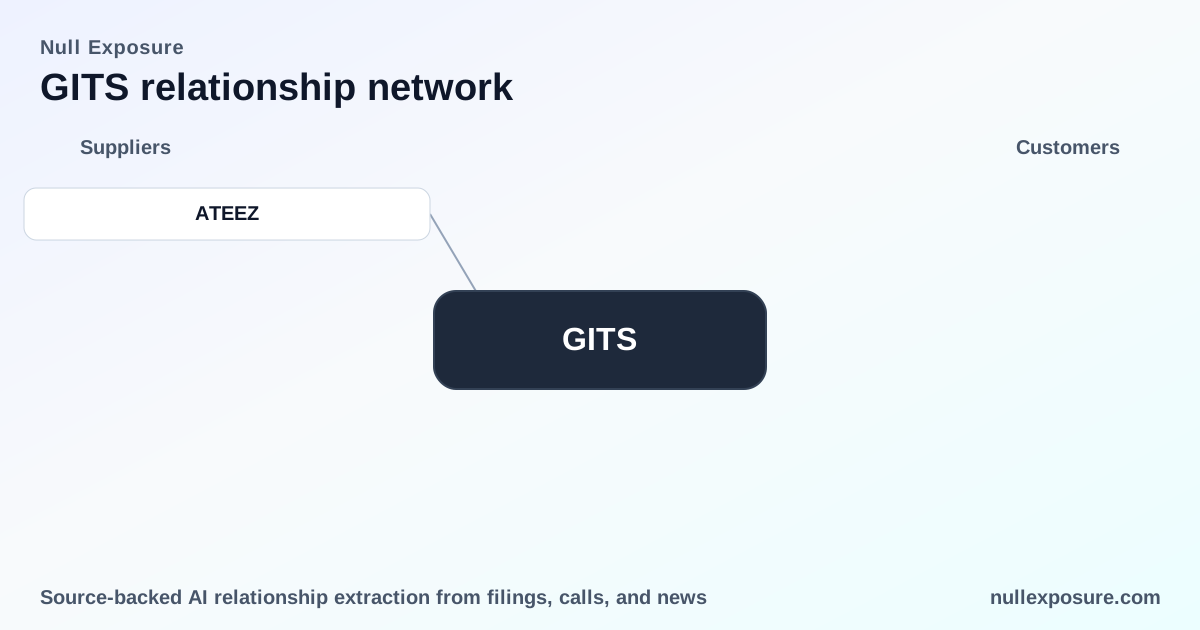
GITS: How FANING’s Consumer Reach and an $18M Equity Facility Shape Investment Risk and Opportunity
Global Interactive Technologies, Inc. builds and monetizes FANING, a fandom-centered interactive platform that drives revenue through content, community commerce, and creator monetization while relying on capital markets access to fund scale. GITS monetizes by converting a large global base of individual users into commerce and creator-led revenue streams, and supplements operational runway with equity financing arrangements that directly affect dilution and liquidity. For investors assessing customer relationships, the combination of a mass individual user footprint and a recent equity purchase agreement with a private investor is the clearest lens into both growth potential and near-term financing risk. For a detailed view of platform exposure and counterparty implications, visit https://nullexposure.com/.
Quick take: business model, scale, and near-term capital posture
Global Interactive Technologies operates a consumer-facing software platform (FANING) launched in 2021 that aggregates K‑culture content, social interaction, and commerce for fans and creators. The company’s economic model is low-ticket, high-volume: individual users are the revenue generators through content purchases, creator economies, and in-platform commerce. Company disclosures show the platform had over 26.6 million registered users as of December 31, 2024, giving GITS scale in reach but concentrated exposure to consumer monetization economics.
Key operating metrics and capital signals:
- Market capitalization is small — approximately $5.25 million — and the company reports negative operating margins and EBITDA, signaling a growth-stage technology business dependent on external funding.
- Revenue TTM is minimal relative to user count, so monetization per user is currently low; operating losses and negative EPS highlight reliance on capital access.
- Capital access has been secured via an equity purchase agreement that allows up to $18 million in share sales over 24 months, a contractual lever that affects future dilution and liquidity.
The single material customer/partner relationship: Hudson Global Ventures, LLC
Global Interactive Technologies entered into an Equity Purchase Agreement with Hudson Global Ventures, LLC that gives GITS the discretionary right to sell up to $18 million of common stock over 24 months at a price tied to approximately 93% of market price. This transaction functions as a financing counterparty relationship rather than a commercial customer contract and materially changes capital structure options available to management. (Source: Globe and Mail / TipRanks coverage reporting the March 26, 2026 agreement; reported May 2026.)
What that Hudson facility means for customers, operators, and investors
The Hudson facility is a corporate finance instrument, not a revenue partnership, but its existence is material to customer strategy because it underwrites the company’s ability to continue investing in product features, creator incentives, and marketing that drive user engagement and monetization. The terms — selling into the market at approximately 93% of prevailing prices — create a predictable dilution dynamic tied to share price performance and operational execution.
Operationally, this structure creates three visible effects:
- Immediate liquidity optionality for GITS, allowing management to fund growth without traditional debt covenants.
- Continuous dilution risk, since the facility permits share issuance over two years; shareholder economics are sensitive to execution and market reception.
- Alignment pressure on user monetization, because company survival and investor returns depend on converting the large registered user base into sustainable revenue streams.
The customer base and platform constraints that shape the relationship view
Company disclosures and product descriptions provide clear signals about how the FANING platform defines and serves its users; these are company-level constraints relevant to any investor analysis rather than attributes of the Hudson relationship.
- Counterparty type: individual. The platform’s primary counterparts are individual consumers and creators rather than enterprises; this reduces counterparty bargaining power but increases churn and engagement risk. Evidence: company statements defining the user base and reporting ~26.6 million registered users in 2024.
- Geography: global. FANING reports a global registered user base, which diversifies market exposure but introduces multi-market go‑to‑market complexity and regulatory considerations. Evidence: company disclosures as of December 31, 2024.
- Relationship role: service provider. GITS functions as a platform and service provider to fans and creators, responsible for content, community tools, and commerce infrastructure; the company bears product delivery and moderation costs. Evidence: product descriptions noting content interaction, monetization for fan art, webtoons, and merchandise.
- Relationship stage: active. FANING is an active platform with ongoing user engagement since launch in May 2021 and continued growth through 2024; consumer relationships are current and operationally central. Evidence: repeated company references to user totals through December 31, 2024.
- Segment: software. The business is a software platform selling digital experiences and commerce capabilities, with margin profiles and scale economics common to consumer social/commerce platforms. Evidence: product positioning as a fandom-centered platform.
From an operational perspective these constraints produce a predictable contracting posture: GITS operates a low-contractual-friction, high-volume consumer platform where the company controls most commercial terms with end users but needs to finance user acquisition and creator incentives externally. Concentration is low at the user level but high at the shareholder and capital-provider level, because a small number of capital relationships can determine runway. Criticality is high for the platform: FANING is central to the business model and revenue engine. Maturity is early-growth: launched 2021 with large registered users but limited monetization and negative operating margins.
Risks and value levers for investors and operators
- Risk — dilution and governance: the Hudson equity facility is a blunt instrument for liquidity that creates dilution risk tied to share price performance; investors should model potential share issuance under multiple price paths. (Globe and Mail / TipRanks, March 26, 2026.)
- Risk — monetization conversion: a 26.6 million registered-user base is valuable only if conversion and ARPU increase; current reported revenue and profitability metrics show monetization is nascent.
- Value lever — user engagement and creator economics: improving retention, take-rates on commerce, and creator revenue share structures unlock substantive upside without further financing.
- Value lever — selective partnerships and regional focus: given global reach, targeting higher-LTV markets and strategic partnerships could compress CAC and accelerate sustainable revenue growth.
Practical takeaways for portfolio managers and operators
- Treat GITS as a growth-stage consumer software platform with significant user reach but early monetization. Investment theses must balance large registered-user counts against low per-user revenue and a reliance on equity financing.
- Monitor equity issuance closely. The Hudson facility provides optionality but also creates a direct channel for dilution; track actual sales under the Agreement and changes to share count.
- Operational focus should be on conversion metrics. Improvements in ARPU, creator monetization, and commerce penetration materially reduce dependence on dilutive financing.
For a concise operational and counterparty risk map tailored to investor due diligence, see more on Null Exposure at https://nullexposure.com/.
Bold final note: GITS’s strength is scale of registered users; its immediate vulnerability is capital structure and monetization velocity. Operators who accelerate conversion and stabilize ARPU will directly reduce financing dependency; investors should evaluate both customer-side metrics and the cadence of share sales under the Hudson agreement when sizing positions.