GLBKV Customer Landscape: What One Public Link Tells Investors About Exposure and Execution Risk
GLBKV’s customer footprint, as captured in public signals, shows tangible exposure to legacy government-program contracts that can affect cash flow and compliance risk. The company monetizes through contractual service delivery tied to government reimbursement programs and third‑party partners; that model creates concentration and regulatory sensitivity that investors should price into valuation and operational due diligence. For a concise vendor and counterparty readout, this note parses the available customer linkage, its immediate implications, and what is not visible in the record.
If you want a consolidated view of counterparty signals and investor-ready summaries, visit the Null Exposure homepage: https://nullexposure.com/
Operational read: contracting posture, concentration, criticality, maturity
- Contracting posture — transactional with program linkage. The single public relationship flagged involves a contract that generated government program payments; that structure signals GLBKV operates where reimbursement flows are contractual and monitored. This creates standard vendor oversight needs (audit trails, documentation, and contract compliance).
- Concentration — evidence of concentrated, material counterparties. With only one explicit public relationship surfaced, counterparty concentration is a material consideration; a small number of large contracts can swing revenue and reputational exposure.
- Criticality — high for government-linked flows. Contracts tied to federal or state reimbursement programs carry outsized operational and compliance risk because payment levels and eligibility are subject to audit and retroactive adjustment.
- Maturity — legacy contract dynamics dominate observed signal. The available record references contract activity from earlier program years and a later settlement, indicating legacy obligations remain relevant to current financial and legal positioning.
Data fidelity note: retrieval encountered a rate-limit warning during collection; treat coverage as selective rather than exhaustive and prioritize further corroboration through filings and direct counterparty disclosures.
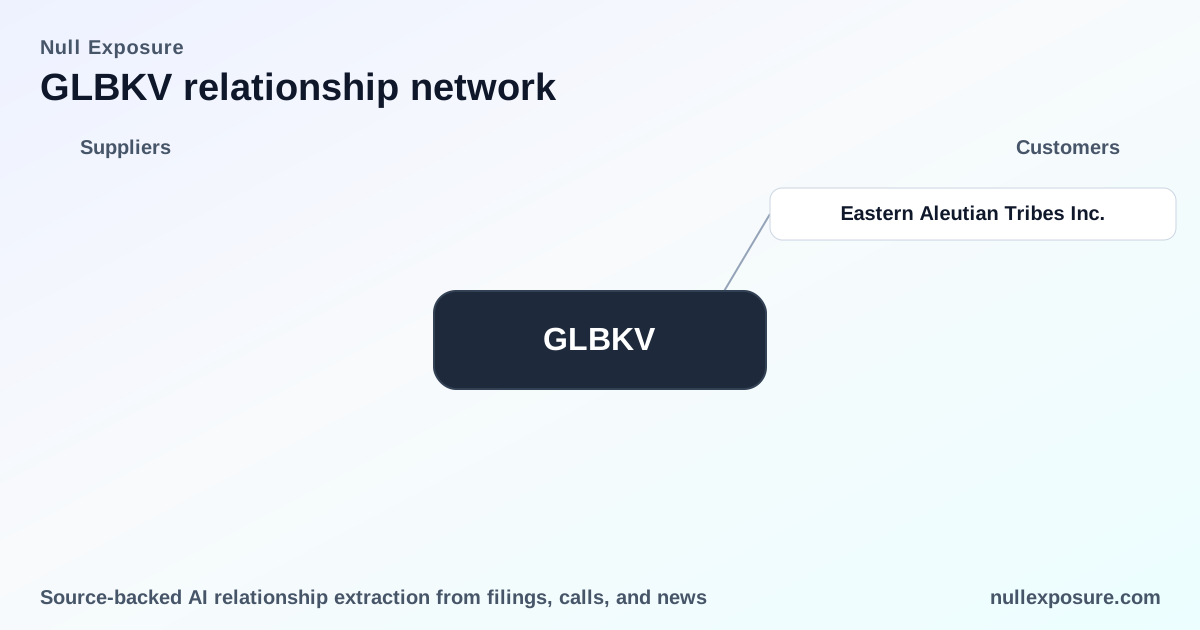
A single public relationship — what it is and why it matters Eastern Aleutian Tribes Inc.
- Eastern Aleutian Tribes Inc. is tied to a historical contract that influenced federal program payments connected to an intermediary contractor. According to an Anchorage Daily News report on May 11, 2023, the intermediary agreed to a multi‑million‑dollar settlement after higher payments were received in connection with its contract with Eastern Aleutian Tribes for program years 2015–2018. (Anchorage Daily News, May 11, 2023.)
- The public report is a compliance and reputational signal: government reimbursement lines were affected by contracting behavior, and that led to a settlement that compromises counterparty credit profiles and increases audit risk. (Anchorage Daily News, May 11, 2023.)
How each relationship translates to investor action
- Financial sensitivity: Contracts that route government reimbursements through third parties create liquidity and timing risk if payments are clawed back or adjusted; investors should stress-test models for retroactive payment adjustments.
- Compliance exposure: A public settlement tied to a contract is evidence of regulatory friction; this elevates the need for a rigorous compliance checklist during diligence.
- Counterparty concentration: With public coverage limited to a single named end customer, GLBKV’s revenue base should be evaluated for similar single‑name dependencies and for the presence of indemnities or pass‑through protections in its contracts.
Constraints and what they tell us about GLBKV’s operating model
- No explicit constraints were returned in the retrieval output; this absence is itself a company‑level signal that public constraint disclosures are limited in the records reviewed. Investors should interpret this as a prompt to seek primary documents: audited financials, contract schedules, and regulatory correspondence.
- Because the available public signal references an historical settlement tied to program payments, treat contract maturity and legacy obligations as operational levers that can still materially affect present financials even when current contract activity looks routine.
Practical due‑diligence checklist for investors and operators
- Obtain copies of material contracts that tie payment flows to government reimbursement programs and verify audit clauses, indemnities, and escalation mechanisms.
- Review legal correspondence and settlements connected to any intermediary contractors or reseller relationships to quantify potential contingent liabilities.
- Assess revenue concentration by customer and by contract vintage; model downside scenarios that include retroactive payment adjustments.
- Validate the counterparty creditworthiness of organizations named in contracts and confirm whether GLBKV carries insurance or contractual protections against clawbacks.
Why this single public signal is commercially meaningful
- A settlement linked to a contract is not a peripheral event — it changes the risk profile of counterparties and the economics of related contracts. For GLBKV, that means investors should prioritize the disclosure of contract structures and the presence of third‑party intermediaries in revenue recognition.
- Public reports referencing program years years earlier indicate legacy liabilities can persist and influence current valuation. That persistence affects both operational planning and investor returns.
Middle‑distance call to action For a deeper, consolidated counterparty and compliance readout tailored to GLBKV or peer comparisons, see our summary hub at https://nullexposure.com/
Final takeaway GLBKV’s publicly visible customer signal centers on a government‑program linked contract with Eastern Aleutian Tribes that fed into a later settlement. That linkage elevates questions of concentration, compliance, and contingent liabilities; investors should treat these as active diligence priorities rather than background noise. Absent more extensive public disclosure, primary contract review and legal inquiry are the only reliable paths to quantify exposure and price risk accurately.