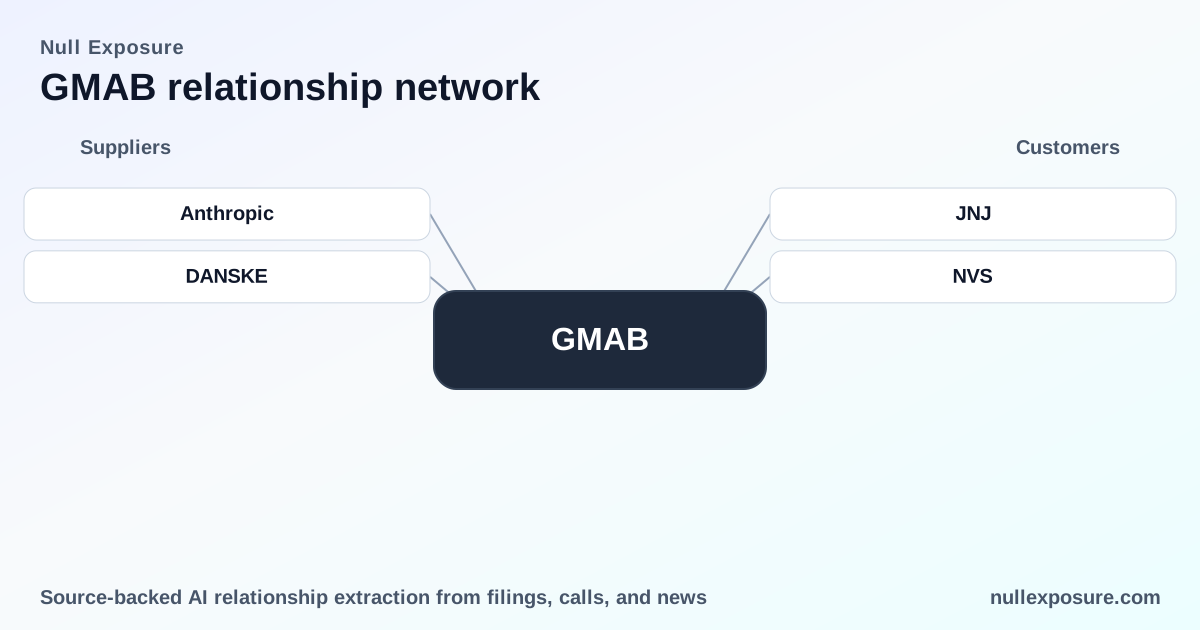
Genmab (GMAB) — Royalty Engine with Concentrated Partner Risk
Genmab monetizes its antibody-engineering platform primarily through royalty streams and milestone payments from large pharmaceutical partners that develop, manufacture, and commercialize its inventions. The business model is a low-capex, partnership-led commercialization strategy: Genmab out-licenses assets to major pharma firms, retains ongoing royalties (material for near-term cash flow), and supplements income with milestone receipts as pipeline programs advance. For deeper diligence on partner exposure and revenue sensitivity, visit https://nullexposure.com/ for tailored counterparty mapping and monitoring.
How Genmab actually generates cash — a concise investor frame
Genmab operates as an intellectual-property-rich originator that captures value via license agreements rather than end-to-end commercialization. That produces revenue that is:
- Recurring and tied to partner sales (royalties), which provides high gross margin but revenue volatility linked to partner performance.
- Concentrated around a small set of large pharma collaborators, so single-counterparty outcomes can move Genmab’s top-line materially.
- Supported by milestone payments that smooth but do not eliminate sales dependence.
This contracting posture creates predictable cash flow under favorable partner sales, but also exposes Genmab to concentration and commercialization execution risk if one partner underperforms or product demand shifts.
Counterparty relationships and what they mean for investors
Johnson & Johnson (J&J / Janssen Biotech, Inc.)
Genmab receives royalties on worldwide net sales of DARZALEX (daratumumab) under an exclusive development and commercialization arrangement with J&J; DARZALEX remains a primary royalty driver and reported global sales in 2025 were cited at roughly US$14.35 billion, producing substantial ongoing royalty revenue for Genmab. According to Genmab press releases on GlobeNewswire (Jan–Apr 2026) and coverage summarizing 2025 net trade sales, DARZALEX is the company’s largest near-term royalty generator.
Source: Genmab press releases on GlobeNewswire (Jan 21 and Apr 14, 2026) and market reports summarizing 2025 Darzalex sales (SimplyWall/Stated Jan–Mar 2026).
Novartis (NVS)
Genmab’s collaboration with Novartis generates royalties on Kesimpta (ofatumumab) sales and contributed materially to the firm’s royalty growth; Genmab reported that higher DARZALEX and Kesimpta royalties were the primary drivers of a $585 million (23%) increase in royalty revenue in its FY2025 results. This establishes Novartis as a meaningful secondary revenue partner supporting Genmab’s near-term growth.
Source: Genmab annual report press release on GlobeNewswire (Feb 17, 2026).
Bolt Biotherapeutics (BOLT)
Bolt publicly cites strategic collaborations with Genmab as part of the technology stack supporting its Boltbody ISAC platform, indicating ongoing R&D and pre-commercial collaboration activity that positions Genmab as a scientific partner rather than a downstream royalty source in this case. This relationship signals Genmab’s active role in collaborative early-stage programs beyond pure licensing.
Source: RTTNews coverage referencing Bolt’s strategic collaborations (Mar 2026).
Operating-model signals and business constraints (company-level)
- Royalty concentration. Genmab’s revenue profile is dominated by royalties from a small number of large partners, creating high revenue leverage to partner sales performance. That concentration is a company-level signal that investors must monitor closely.
- Contracting posture: long-term, license-first. The firm consistently uses exclusive licenses and partnership agreements to transfer commercialization responsibilities to large pharma, keeping IP upside (royalties, milestones) while minimizing commercialization capital requirements.
- Revenue criticality and maturity. Core royalty assets are commercial-stage, high-volume products, delivering sizable near-term cash flow but exposing the company to market and competitive dynamics that affect partner sales.
- Counterparty execution risk. Because Genmab is not the commercial agent for most of its products, execution and market access by partners directly determine revenue realization, making partner relations and reporting cadence material to valuation.
- Pipeline and diversification through collaborations. Genmab uses strategic collaborations to advance earlier-stage programs, which reduces single-product dependency over time but introduces typical biotech development risk into the growth outlook.
What investors should watch next
- Partner quarterly sales disclosures (particularly J&J’s DARZALEX updates) will be the most direct short-term signal for royalty flow; Genmab has already cited DARZALEX and Kesimpta as primary drivers of recent royalty growth in FY2025–FY2026 communications.
- Milestone timing on pipeline collaborations will influence the cadence of lump-sum recognitions; while royalties are recurring, milestones are lumpy and can skew quarterly earnings.
- Any change to license scope or commercial terms (e.g., geographic carve-outs, co-promotion rights, or generic pressure on underlying products) would materially affect Genmab’s cash flow profile.
Investment implications — concentrated upside with partner-dependence
Genmab offers high-margin, capital-light earnings backed by durable license economics; this is a positive for free-cash-flow generation. However, the revenue stream is concentrated and materially levered to a small number of large pharmaceutical partners, so downside risk is concentrated too. For investors and operators evaluating counterparty exposure, the priority is continuous monitoring of partner sales trajectories, contract milestones, and any signs of shifting commercialization strategy at counterparties.
If you want structured counterparty monitoring or a mapped view of how partner disclosures translate to Genmab cash flows, see practical resources and monitoring offerings at https://nullexposure.com/.
Bottom line
- Genmab is a royalty-first biopharma originator: it captures outsized upside from successful commercialization by large partners while avoiding the direct costs of global marketing and manufacturing.
- Concentration is the defining risk: a handful of partners drive the majority of near-term revenue, so partner performance equals company performance.
- Active monitoring of partner sales and milestone events is essential for any investor or operator assessing Genmab’s risk/return profile.