Gaming Technologies (GMGT): Customer Relationships and Commercial Posture
Gaming Technologies, Inc. operates and monetizes through licensed online gaming platforms and branded partnerships across regulated markets in the United States, Mexico, and the United Kingdom. The company generates revenue by operating online casinos and sports-betting sites, licensing gaming IP and mobile titles to regional operators, and co-managing regulated sites through partner relationships. Investors should view GMGT as an early-stage, partnership-driven operator with concentrated customer ties, negative operating margins, and extremely limited market capitalization. For a concise view of GMGT’s customer footprint and how those relationships influence commercial risk, see more at https://nullexposure.com/.
Executive takeaway: small market cap, partnership-led distribution, high execution sensitivity
Gaming Technologies reports a market capitalization of $27,420 and negative operating economics (EBITDA roughly -2.44 million and operating margin deep in the red), indicating the company is functionally pre-profit and heavily reliant on a small set of commercial arrangements to generate top-line activity. Revenue is minimal and has contracted materially year-over-year (quarterly revenue growth YOY: -87.5%). This profile implies a contracting posture that favors short-term partnerships and licensing agreements rather than large, long-term enterprise contracts. Institutional ownership is reported at 0%, while insider ownership is high at ~43.5%, reinforcing founder/operator control and concentrated equity incentives.
How the commercial model works in practice
Gaming Technologies’ model centers on three monetization levers: direct operation of regulated web properties, licensing of branded game content and mobile titles, and strategic partnerships where GMGT contributes software/platform capabilities in exchange for revenue share or fixed fees. Given the financial profile—negative gross profit and slim revenue per share—the company is dependent on a small number of partner operators to supply regulated market access and player liquidity. Contracting posture therefore skews toward flexible, partner-managed arrangements rather than vertically integrated scale operations.
- Concentration: Economic scale is limited; a single partner operating a regulated site can materially affect revenue.
- Criticality: For licensed operators who require turnkey platforms in specific jurisdictions, GMGT’s software and licenses can be critical to go-to-market execution.
- Maturity: Financial metrics indicate an early-stage commercial rollout, with negative margins and shrinking revenue trends that place priority on customer acquisition and retention.
See corporate filings and financials for the referenced metrics and recent quarters.
Customer relationships: what our research found
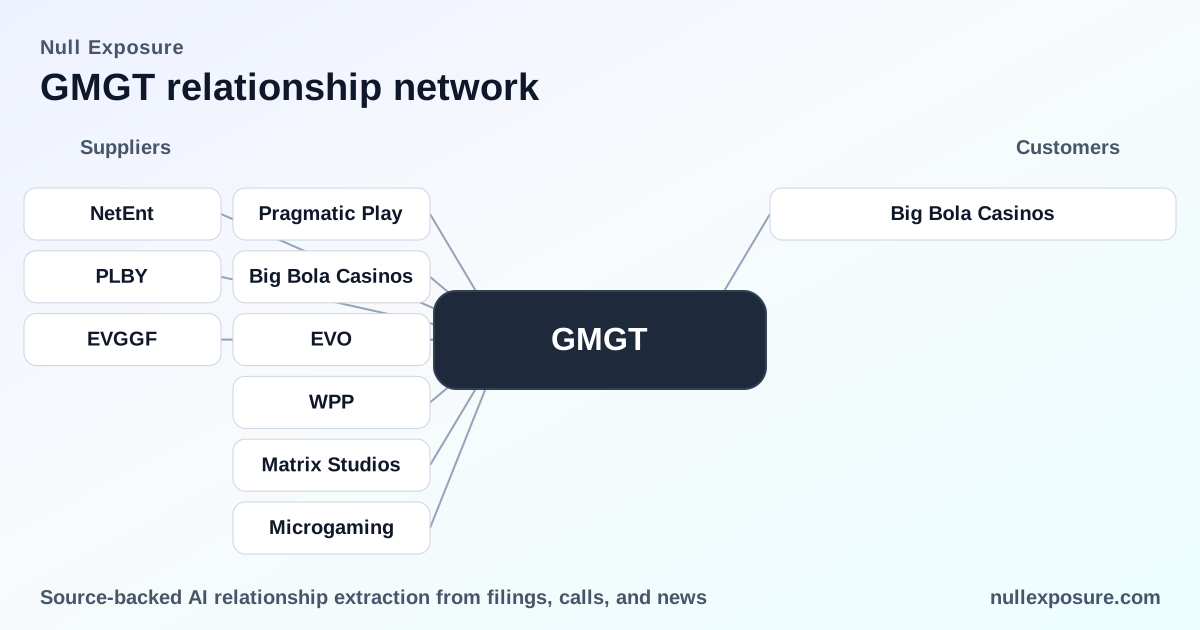
Below is the complete set of customer relationships surfaced for GMGT in our review.
Big Bola Casinos — Mexican regulated site partner
Gaming Technologies operates in partnership with Big Bola Casinos and, through that arrangement, owns and operates www.vale.mx, a regulated online casino and sports betting site in Mexico. This relationship places GMGT squarely in the operator role for a jurisdictional product and ties revenue generation directly to the Mexican market’s regulatory and competitive environment. According to Licensing International coverage (March 2026), the partnership and ownership of vale.mx are presented as part of GMGT’s regional operations.
Source: Licensing International article on March 9, 2026 describing Gaming Technologies’ partnerships and regional product activity.
What the relationship list implies for investors
With only one customer relationship surfaced in our results, the commercial picture is concentrated and transparent: GMGT relies on a partner-operated model in at least one regulated market (Mexico). That concentrated footprint carries several investor-relevant implications:
- Revenue volatility risk is elevated. A single partner or site underperformance would have an outsized effect on reported top-line given the company’s small revenue base.
- Regulatory exposure is non-trivial. Operating a regulated site in Mexico requires ongoing compliance investment and subjects revenues to jurisdictional changes and enforcement actions.
- Operational leverage exists but is unproven. If GMGT can scale its platform across multiple partners and jurisdictions, gross margins could improve; current results show the company has not yet achieved scale.
Company-level signals and constraints
No discrete customer-level constraints were returned in the dataset we reviewed. At the company level, the available financial and ownership metrics communicate clear operating characteristics:
- Contracting posture: Partner-centric and flexible; GMGT is structured to execute through third-party operators and licensing agreements rather than large, long-term enterprise contracts.
- Concentration: High—few customers/partners drive performance, which increases single-counterparty risk.
- Criticality: For the partner in Mexico, GMGT’s platform is functionally critical to the live operation of vale.mx, tying the company’s fortunes to partner retention and regulatory stability.
- Maturity: Early-stage commercial roll-out with negative profitability and steep revenue decline year-over-year; the company remains pre-scale and reliant on capital markets or partner funding to bridge to profitability.
These signals are derived from the company’s public financial profile and the relationship data described above (market capitalization: $27,420; EBITDA: -2,443,160; quarterly revenue growth YOY: -87.5%; insider ownership ~43.5%; institutional ownership 0%).
Investment implications and risk checklist
- Upside: If GMGT can replicate the vale.mx model across multiple regulated operators, revenue and margins could scale quickly due to software and content leverage. Strategic licensing deals or branded mobile game rollouts offer pathways to recurring revenue.
- Downside: Extreme concentration, minimal liquidity (market cap under five figures), negative margins, and sharp recent revenue declines present severe downside risk. Regulatory action in any operating jurisdiction would materially impair business continuity.
- Catalysts to monitor: New announced partner agreements, evidence of diversified customer roster outside Mexico, improvements in quarterly revenue growth, and any capital raises that stabilize the balance sheet.
If you want a deeper mapping of GMGT’s partner exposure and a targeted monitoring plan for regulatory and commercial catalysts, explore our research hub: https://nullexposure.com/.
Final read
Gaming Technologies is a small, partnership-dependent gaming operator with a single publicly surfaced partner relationship in Mexico that materially shapes near-term commercial prospects. For investors focused on early-stage gaming operators, the story is simple: substantial operational leverage exists if GMGT can replicate its platform across multiple regulated markets, but current financials and customer concentration create elevated execution and regulatory risk. Continuous monitoring of partner announcements and quarterly revenue trends is essential before considering a position.