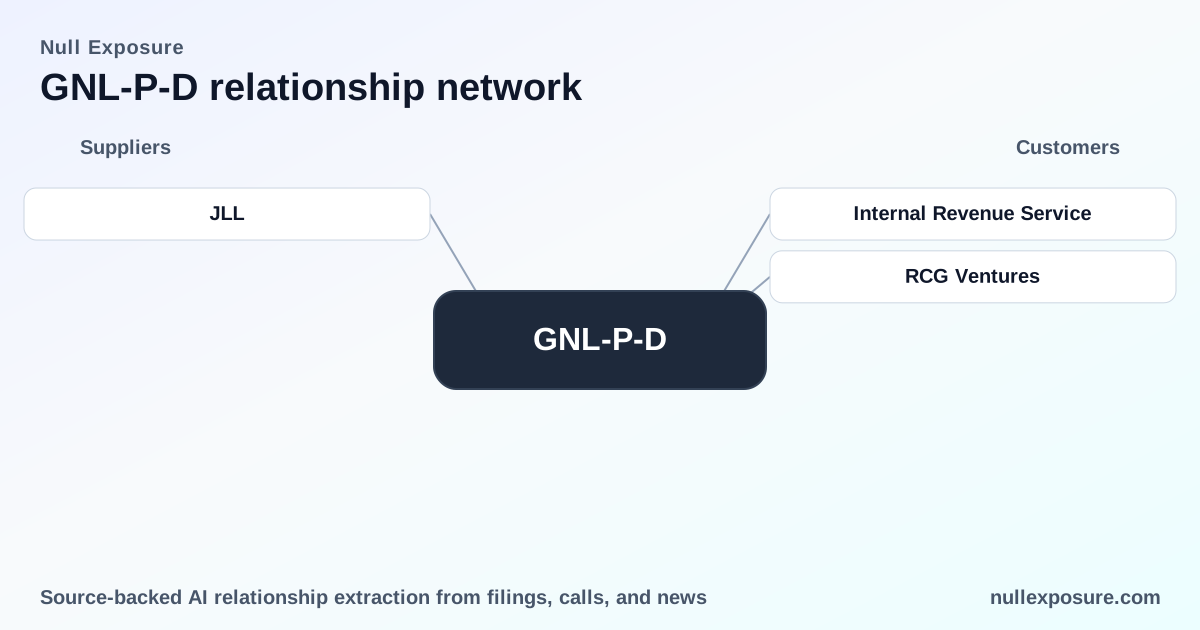
GNL-P-D: Net-lease cash flow anchored by long-term tenants and active capital recycling
Global Net Lease (GNL-P-D) operates as a classic net-lease REIT: it acquires mission-critical, single-tenant properties and monetizes them through long-term, triple-net leases that convert real estate into predictable rental cash flow, while supplementing returns through strategic asset dispositions and portfolio rotations. For investors and operators evaluating customer relationships, recent public reports show both the durability of tenant cash flows and an active disposition program that recycles capital into higher-return opportunities. For more on our coverage and comparative deal history, visit https://nullexposure.com/.
How GNL-P-D’s model turns leases into yield
Global Net Lease’s operating model is straightforward and finance-friendly: secure creditworthy tenants on long leases, collect rent with limited operating responsibilities, and redeploy proceeds from sales into new net-lease assets. That structure produces several useful investment characteristics:
- Predictable cash flow profile driven by long lease terms and contractual rent escalations.
- Low property-level operating risk because tenants assume most maintenance and taxes under net leases.
- Opportunistic capital recycling when markets are favorable for selling stabilized retail or office assets to realize gains and redeploy into higher-yielding or geographically diversified holdings.
These dynamics create a REIT that monetizes in two ways: ongoing rental income (the core dividend engine) and realized gains from targeted dispositions (a supplemental return source). The interplay between tenant credit and disposition activity is central to evaluating GNL-P-D’s customer relationships.
Customer relationships: what the public record shows
The public reporting captured two customer-facing items linked to GNL-P-D’s portfolio activity.
- The Internal Revenue Service is identified as the tenant in a 135,000-square-foot national office in Franklin, Tennessee, historically owned by a Global Net Lease subsidiary; the facility’s profile underscores the company’s focus on mission-critical, government-leased real estate and the resulting rent stability. This was reported by The Real Deal in March 2025.
- RCG Ventures completed a $1.1 billion retail purchase from Global Net Lease, reflecting a sizeable disposition of retail holdings and the company’s use of portfolio sales to unlock capital. GlobeSt reported on this transaction in March 2025.
Why the IRS tenancy matters to credit and cash flow
A government tenant such as the Internal Revenue Service is a high-credit, low-volatility tenant for a net-lease owner. Government leases of this type reduce downside rent risk and increase the predictability of cash flows over long lease terms. According to a March 2025 article in The Real Deal, the IRS was targeting the 135,000-square-foot national office in Franklin, a property once recorded as owned by a subsidiary of Global Net Lease. That dynamic is the archetype of GNL-P-D’s tenancy strategy: prioritize tenants whose operations are non-discretionary and therefore support stable rent collection.
What the RCG Ventures sale signals about capital strategy
The $1.1 billion retail sale to RCG Ventures demonstrates GNL-P-D’s active use of dispositions to manage portfolio composition and liquidity. GlobeSt’s March 2025 coverage noted that RCG Ventures expanded its portfolio by acquiring this tranche from Global Net Lease. For investors, this is a dual-edged signal: on one hand, sales crystallize gains and replenish balance-sheet flexibility; on the other hand, large retail dispositions change the rent roll composition and shift exposure away from sectors that historically generated steady rent but offered less upside.
Operating constraints and company-level signals
With no explicit constraint excerpts provided, the observable company-level signals describe a mature, contractually defensive net-lease operator:
- Contracting posture: Predominantly long-term, triple-net leases transfer most operating obligations to tenants and create a defensive income stream. That posture supports credit-sensitive investors who prioritize yield reliability.
- Concentration and diversification: The portfolio strategy balances sectoral diversification with selective concentration in mission-critical assets; the presence of government and large corporate tenants reduces idiosyncratic customer risk even where individual assets are single-tenant.
- Criticality of tenants: Focus on mission-critical properties increases tenant stickiness and reduces churn risk, improving occupancy stability.
- Maturity of model: Global Net Lease operates with an established net-lease playbook—acquisition, lease underwriting, and capital recycling—which is well understood by capital markets and institutional counterparties.
These characteristics are company-level strategic signals rather than discrete constraints tied to a particular tenant or sale.
Investment implications and risk considerations
For investors and operators assessing GNL-P-D customer relationships, prioritize the following takeaways:
- Credit quality matters most. Government and large corporate tenants materially reduce cash-flow volatility and lower default risk in a net-lease portfolio.
- Disposition activity affects yield composition. Large sales such as the $1.1 billion retail transaction with RCG Ventures provide liquidity and potential for higher returns elsewhere, but also reduce rental diversification and can alter the portfolio’s weighted average lease tenor.
- Operational leverage is low but balance-sheet sensitivity remains. Net leases offload property-level operating risk but leave the REIT exposed to financing and interest-rate dynamics; sale proceeds are a primary lever to manage leverage and secure growth capital.
- Tenant mix drives valuation multiples. Portfolios weighted toward government and essential-service tenants typically command higher valuation multiples and lower cap-rate spreads compared with volatile retail tenants.
Key risk: if disposition activity accelerates and the company rotates into shorter-duration or lower-credit tenants, the yield profile will change materially; monitor the tenant credit mix post-disposition.
Final perspective and next steps
Global Net Lease’s public footprint in 2025 and the transactions reported in March 2025 reinforce a core thesis: stable, long-term leases underpin current income while targeted sales fund strategic repositioning. The IRS tenancy demonstrates the defensive side of the rent roll; the RCG Ventures sale shows active capital recycling. Both signals are consistent with an asset manager that converts property-level predictability into portfolio-level optionality.
For a deeper review of comparable deal flows, transaction history, and customer relationship analytics, see our platform at https://nullexposure.com/.