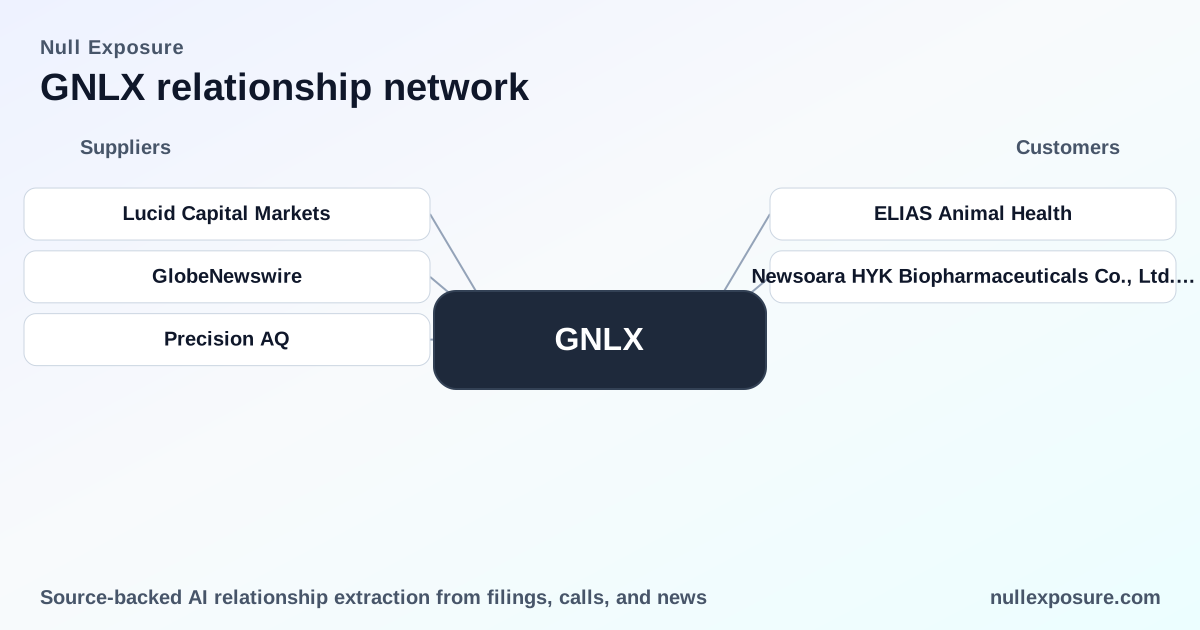
Genelux (GNLX) customer relationships: licensing-first commercialization with early pocket change
Genelux develops next‑generation oncolytic viral immunotherapies and monetizes primarily by licensing assets and outsourcing commercialization, receiving upfront fees, milestone payments and future royalties rather than direct product revenue today. The company’s customer map shows deliberate externalization of commercial risk—veterinary and regional licensing deals that convert R&D value into small but real near‑term receipts while preserving upside tied to downstream regulatory and market success. For investors this positions Genelux as a biotech developer with low current revenue, high operating loss, and optionality through partner execution. Visit https://nullexposure.com/ for further coverage and data on partner exposure.
What the company’s partner list actually tells you
Below are the relationships surfaced in public filings and press coverage; each entry is stated plainly with its source.
ELIAS Animal Health — exclusive out‑license announced (FY2021)
Genelux announced an exclusive worldwide licensing agreement for V‑VET1, the company’s clinical‑stage veterinary candidate, to ELIAS Animal Health, transferring commercialization responsibilities for the animal health program to a specialist partner. This deal was disclosed in a PR Newswire release dated March 2026 describing the strategic out‑license for V‑VET1 to a veterinary biotech. (PR Newswire, March 2026)
ELIAS Animal Health — license revenue recognized (FY2026)
Genelux recognized a nominal revenue figure—$0.01 million—reported in FY2026 and attributed to the license agreement with ELIAS Animal Health, indicating early, de‑minimis cash realization from the veterinary out‑license rather than material commercial sales. The revenue recognition was reported in a TradingView summary of the company’s FY2025/2026 results. (TradingView, May 2026)
Newsoara HYK Biopharmaceuticals (Newsoara) — Greater China license for Olvi‑Vec (FY2026)
Genelux granted Newsoara an exclusive license to develop and commercialize Olvi‑Vec in greater China (Mainland China, Hong Kong, Macau and Taiwan), transferring regional development and market execution to a local partner that is positioned to handle regulatory navigation and commercialization. This licensing agreement was disclosed in a Yahoo Finance report covering encouraging interim data and related corporate actions. (Yahoo Finance, March 2026)
How these relationships define Genelux’s operating posture
Genelux is operating as a licensing‑centric developer. Public evidence and corporate language identify three company‑level signals:
- Contracting posture — licensing is central. The firm’s disclosure notes it is “entitled to receive payment upon the achievement of contingent milestone events or the performance of obligations,” indicating that cash flows are predominantly contingent and milestone‑driven rather than recurring product revenue.
- Role flexibility — distributor and licensee constructs in use. The company describes the use of third‑party distributors and licensees for trademarks and commercialization, which signals a preference to delegate commercialization while retaining intellectual property upside.
- Revenue concentration and maturity — early stage monetization. Recognized revenue is currently negligible (RevenueTTM: $8,000) while recent license fees (for example, the $0.01M entry from ELIAS) indicate contractual monetization is nascent and highly concentrated around a small set of partner transactions.
These signals collectively describe a business model that converts R&D into partner‑led commercialization rights and contingent cash. That structure reduces near‑term capex requirements but concentrates execution risk in partners and leaves Genelux dependent on milestone triggers and successful handoffs.
Financial implications for investors
Genelux’s capital markets profile reflects its developer/licensor model: Market capitalization ~$127.8M, deep operating losses (EBITDA: –$32.97M) and effectively no commercial revenue base (RevenueTTM: $8k). License transactions are serving as the first revenue inflection points, but the amounts disclosed to date are immaterial to the financial runway.
- Positive read: Licensing to ELIAS (veterinary) and Newsoara (Greater China) demonstrates an active commercialization approach that translates assets into non‑dilutive cash and future royalty prospects.
- Risk read: Economic terms are contingent and limited in current scale; the company’s operating margin and profit metrics indicate continued reliance on financing or materially larger partner milestones to fund operations.
Investors should treat current partner receipts as validation of strategy rather than evidence of sustainable revenue.
Risk factors tied to partner execution and contract design
Key operational risks arise from the revealed relationship architecture:
- Contingent economics. The company explicitly structures income around milestones and obligations, so revenue is lumpy and inherently uncertain until partners deliver on regulatory and commercial milestones.
- Concentration risk. A small number of partners are listed; the loss, delay, or underperformance of any single partner would have outsized financial implications.
- Brand and license governance. Public language warns that misuse of trademarks or breaches by licensees can “jeopardize our rights in or diminish the goodwill,” which imposes reputational and legal oversight burdens on management.
These are company‑level constraints that investors must weigh alongside clinical progress and capital structure.
Near‑term catalysts and monitoring checklist
Watch the following to convert the licensing story into investor value:
- Milestone payments and royalty disclosures from ELIAS and Newsoara; timing and quantum will drive short‑term cash inflows.
- Regulatory progress for Olvi‑Vec in greater China, which determines commercialization potential and royalty runway for the Newsoara agreement.
- Commercial roll‑out for V‑VET1 under ELIAS, particularly veterinary approval and launch metrics that could convert small license consideration into recurring revenue.
- Any additional licensing or distribution agreements that broaden geographic or sectoral exposure and reduce concentration.
If you want continuous tracking of partner exposure and contract‑type dynamics, explore deeper reports at https://nullexposure.com/.
Bottom line
Genelux is executing a licensing‑first commercialization strategy that converts R&D into partner‑led market access and contingent cash flows. The company is not a revenue story today; it is a milestone and royalties optionality story backed by two disclosed license relationships—veterinary (ELIAS) and Greater China (Newsoara)—that validate the approach but do not materially alter the company’s negative operating profile. Investors should prioritize partner execution, milestone schedules, and regulatory progress as the primary levers that will convert these early license agreements into meaningful shareholder value.