Genenta (GNTA): Collaboration-driven clinical stage play focused on engineered hematopoietic stem cell therapies
Genenta Science SpA (GNTA) operates as a clinical-stage biotechnology company developing hematopoietic stem cell gene therapies for solid tumors from its Milan base and monetizes primarily through collaborations, licensing and future commercialization of proprietary cell-gene assets. The corporate value proposition for investors is straightforward: advance clinical programs, de-risk through strategic partnerships and capture value via milestone and commercialization economics once regulatory and manufacturing hurdles are cleared. For active diligence and customer-read analysis, visit the NullExposure home page for continuous updates: https://nullexposure.com/
Why the collaboration profile matters to valuation
Genenta’s operating profile is classic for a small-cap biotech: no reported revenue, a negative EBITDA and meaningful insider ownership that concentrates strategic decision-making. Public filings show a market capitalization of roughly $16.3 million and last reported EBITDA of -$6.6 million, reflecting R&D-driven cash burn rather than commercial cash flow. Partnerships that expand manufacturing capacity or accelerate clinical supply chains therefore count as high-value drivers because they materially affect program timelines, capital intensity and the company’s ability to deliver clinical readouts that reprice the equity.
Key public financial signals:
- Market capitalization: $16,327,300
- EBITDA (latest reported): -$6,575,658
- Revenue TTM: $0
- Shares outstanding: 23,591,000; insiders control ~30.4% and institutions ~14.2%
These figures underline a concentrated ownership structure and early-stage maturity, which favors deal-driven value creation over organic revenue generation in the near term.
Constraints and what the absence of flagged constraints signals
The customer-scope data returned no explicit constraints tied to operational dependencies or contractual lock-ins. This empty constraint set is itself a company-level signal: no single-customer exclusivity or material supplier lock was extracted from the available sources, which aligns with a partnership-oriented, flexible contracting posture typical of clinical-stage biotech. Investors should interpret this as indicative of modular, collaboration-based operations rather than vertically integrated manufacturing or single-counterparty concentration documented in public sources.
Operational characteristics implied by the company-level signal:
- Contracting posture: collaboration-first, with third-party partners for development and manufacturing.
- Concentration: financially concentrated ownership (high insider stake) but no single external customer dominance shown.
- Criticality: manufacturing and scale-up partners are operationally critical to commercial potential given zero revenues and clinical-stage status.
- Maturity: early clinical stage with program-level binary risk rather than diversified commercial streams.
Public customer relationships — what’s visible
Genenta’s customer/partner footprint in the available record is limited but strategic. Below are all relationships surfaced in the customer-scope results.
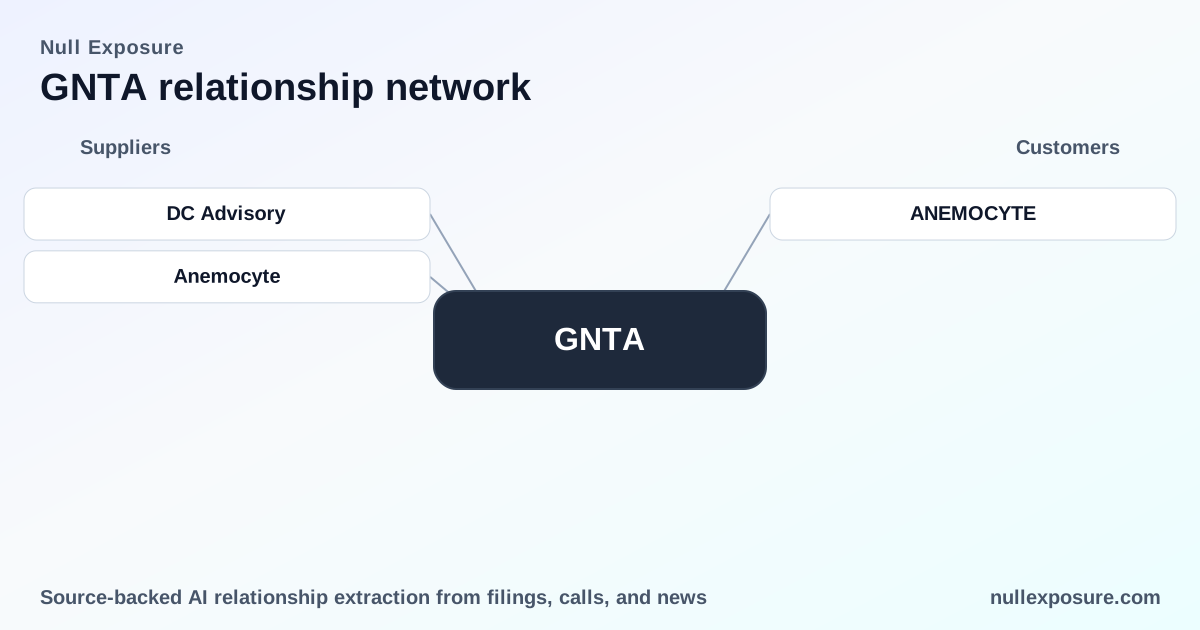
ANEMOCYTE — expanded collaboration to scale “off-the-shelf” production
Genenta announced an expanded collaboration with Anemocyte to boost off-the-shelf genetic therapy production, signaling a push to industrialize manufacturing for its engineered hematopoietic stem cell programs; the expansion was reported in a Benzinga item on March 9, 2026. According to the Benzinga report, the market reacted positively to the collaboration announcement, reflecting investor recognition that manufacturing partnerships accelerate clinical and commercial readiness (Benzinga, March 9, 2026 — https://www.benzinga.com/trading-ideas/movers/25/10/48402072/genenta-extends-collaboration-with-anemocyte-to-boost-off-the-shelf-genetic-therapy-production).
What the Anemocyte relationship concretely changes
The Anemocyte expansion influences three investor-relevant vectors:
- Time-to-supply: Contracting with an external specialist reduces the company’s capital needs to develop internal GMP capacity, accelerating patient supply timelines for trials.
- Execution risk: Leveraging a partner for “off-the-shelf” production shifts technical manufacturing risk from Genenta to a specialized counterparty, improving the company’s ability to hit development milestones without large CAPEX.
- Commercial optionality: A robust manufacturing arrangement increases the feasibility of scalable commercialization or out-licensing deals tied to supply assurances.
These are operationally material items for a firm with no revenues and a clinical pipeline; the Anemocyte tie is therefore a high-leverage relationship for GNTA’s valuation path.
Risks and trade-offs investors should price
- Binary clinical and regulatory risk: As a clinical-stage biotech with no revenue, valuation will remain highly sensitive to trial readouts and regulatory milestones.
- Manufacturing dependency: The company’s strategy to rely on partners like Anemocyte improves capital efficiency but creates counterparty and execution risk that requires active monitoring of partner performance and contractual protections.
- Concentration of control: High insider ownership (≈30%) concentrates governance and exit decision-making; institutional ownership is modest (~14%), limiting broad market stewardship.
- Limited public disclosure of additional customers: The visible relationship set is narrow; investors should expect future re-ratings only after additional partnership announcements or clinical achievements.
Practical takeaways for investors and operators
- Partnerships are the primary short-to-mid-term value driver. For Genenta, deal flow and manufacturing collaborations directly influence clinical velocity and dilution needs.
- Monitor partner milestones and supply agreements. Critical checkpoints for valuation updates include partner capacity commitments, delivery timelines, and any milestone/royalty terms disclosed in future filings.
- Governance and financing cadence matter. Expect capital raises tied to clinical milestones; investors should track dilution scenarios given the current cash-burn profile and insider concentration.
For continuous, relationship-focused intelligence on GNTA and peer companies, NullExposure maintains updated customer and partner dossiers: https://nullexposure.com/
Bottom line
Genenta is a collaboration-driven clinical-stage biotech where partnerships such as the expanded Anemocyte relationship materially accelerate manufacturing readiness and reduce near-term capital requirements. With no revenue and concentrated insider ownership, market revaluation will be driven by partnership execution and clinical readouts, making the company a classic high-volatility, high-upside speculative holding for investors who allocate to early-stage therapeutics ventures.