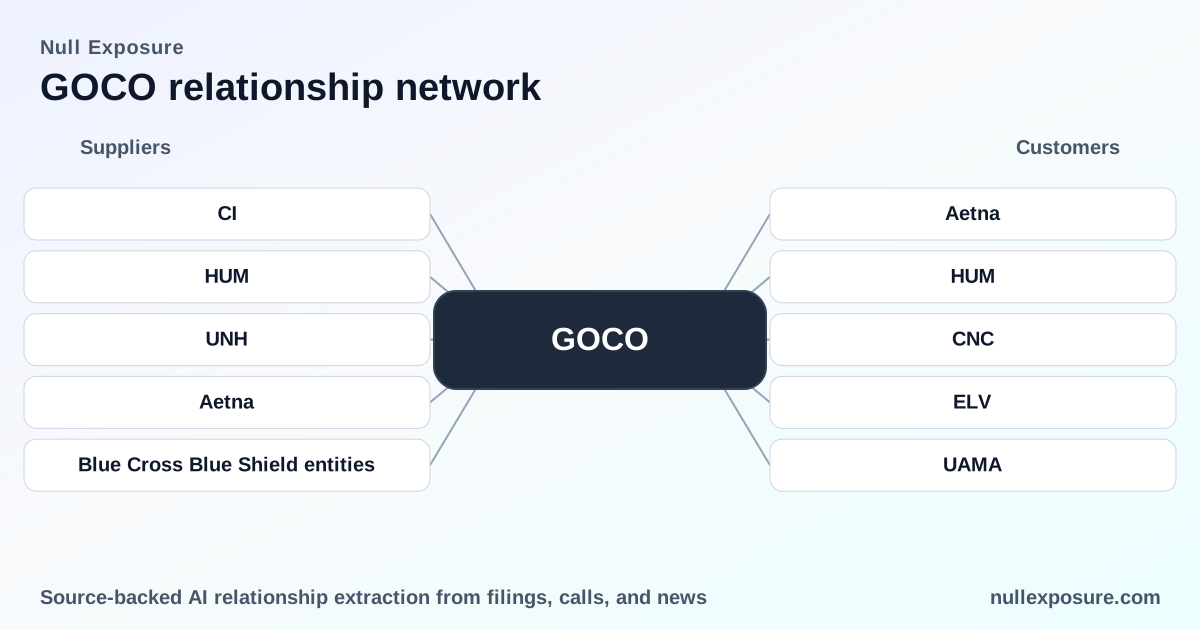
GoHealth’s payor relationships: concentrated, transactional, and central to near‑term value
GoHealth operates a Medicare‑focused health insurance marketplace that monetizes by charging commissions and service fees to health plan partners for enrollment and engagement services. The company runs a blended agency/non‑agency model under its Encompass operating approach, sells and administers Medicare products on behalf of insurers, and recognizes the large national health plans — United, Humana, Elevance, Aetna and Centene — as its primary customers in FY2024. For investors, the commercial dynamics are straightforward: revenue scales with plan volumes and partner economics, and downside is concentrated where a small number of plans represent material shares of revenue. Learn more at https://nullexposure.com/.
How GoHealth gets paid and why plan relationships matter
GoHealth’s product is distribution and enrollment services for Medicare products; it does not underwrite risk. The company’s end customer is the health plan, which pays GoHealth commissions and fees tied to enrollments and engagement metrics. That positioning makes GoHealth a vendor to a small set of large payors rather than a traditional insurer or risk carrier.
Contracting is commercial and outcome‑oriented: payors procure GoHealth’s services to capture or retain Medicare members, and compensation is typically tied to successful enrollments. This creates three practical investment implications:
- Concentration risk — a handful of plan partners can account for a disproportionate share of revenue; GoHealth discloses partners that have exceeded 10% of revenue in reporting periods.
- Revenue sensitivity to plan economics and policy shifts — payor commission schedules, plan mix, and regulatory changes that affect Medicare book economics flow directly to GoHealth’s top line.
- Operational criticality and maturity — GoHealth’s role is operationally critical to payors’ distribution strategy for Medicare, but the relationship is vendor‑style and contractual rather than equity or co‑sponsored risk sharing.
The five named plan relationships investors should know
GoHealth’s FY2024 10‑K identifies five primary health plan partners for the 12 months ended December 31, 2024, and the disclosure is the source for each relationship note below. Each partner is listed in the filing as a primary plan partner the company served during the 2022–2024 period (GoHealth Form 10‑K, FY2024).
Aetna
GoHealth lists Aetna among its primary health plan partners for the 12 months ended December 31, 2024, indicating Aetna paid commissions and fees to GoHealth for enrollment and engagement services during the period. (GoHealth FY2024 10‑K).
Humana
Humana is named as a primary plan partner in the FY2024 10‑K; GoHealth functions as a distribution and administrative channel for Humana’s Medicare products and is compensated accordingly. (GoHealth FY2024 10‑K).
Centene
Centene appears in the FY2024 10‑K list of primary health plan partners, underscoring GoHealth’s role in enrolling members into Centene’s Medicare offerings across the reporting period. (GoHealth FY2024 10‑K).
Elevance
Elevance is identified in the FY2024 10‑K among the primary health plan partners GoHealth served, meaning Elevance engaged GoHealth’s enrollment and administration services for Medicare business in the period. (GoHealth FY2024 10‑K).
ELV
The filing also lists “ELV” — a tickerized reference to Elevance — in the same primary partner enumeration for FY2024; this duplicate entry reflects the company’s practice of naming both the plan and its market symbol in disclosures. (GoHealth FY2024 10‑K).
United
United is recorded as a primary partner for the 12 months ended December 31, 2024, confirming that United paid for GoHealth’s enrollment and engagement services during the period. (GoHealth FY2024 10‑K).
Operating model constraints and what they signal about resiliency
GoHealth’s 10‑K and related disclosures provide several company‑level signals about how its business runs and the resilience of that revenue:
- Geographic concentration: The company derives substantially all revenue from customers located in the United States, which focuses regulatory and demographic risk domestically and links revenue performance to U.S. Medicare policy and enrollment cycles.
- Material customers: The company discloses health plan partners that represented 10% or more of total revenue in reporting periods, which signals meaningful revenue concentration and the financial importance of a small set of payors to overall results.
- Buyer relationship: The health plans are explicitly the customers who pay commissions and fees, placing GoHealth in a vendor role where contract terms and payor bargaining power influence margin and stability.
- Active contracting posture: GoHealth provides active services for the sale and administration of Medicare products through contractual relationships, indicating ongoing operational engagement rather than one‑time transactions.
- Service segment orientation: The firm’s stated focus is on distribution and administration services for Medicare products, emphasizing services revenue rather than insurance underwriting or capital‑intensive risk assets.
These factors together create a profile of a service‑oriented marketplace business that is commercially essential to plan distribution, but financially exposed to concentration and contract renegotiation.
Investment implications — upside and downside drivers
- Upside: If GoHealth sustains or grows placements with its top payors, incremental enrollments convert efficiently to revenue via commission schedules, and the company benefits from scale in consumer acquisition and platform operations.
- Downside: A small roster of plans represents material revenue exposure; changes in commission structures, plan mix, or payor strategy could meaningfully compress revenue and margins. Geographic concentration in the U.S. also amplifies exposure to domestic Medicare policy shifts.
For investors seeking to model GoHealth’s revenue trajectory, focus on payor enrollment volumes, disclosed material customer line items in periodic filings, and any public announcements of contract renewals or scope changes with the five named plan partners.
Explore the company‑level signals and partner disclosures in more detail at https://nullexposure.com/.
Bottom line: clarity and concentration
GoHealth’s business model is clear: it sells distribution and enrollment services to large U.S. health plans and is paid by those plans for Medicare enrollments and engagement. That commercial clarity makes revenue easier to trace to partner outcomes, but it also concentrates economic risk in a small group of large payors. For investors and operators evaluating GOCO customer relationships, the critical questions are contract tenure and economics with the five named partners and how much of GoHealth’s revenue they represent in upcoming filings.