Golden Ocean Group (GOGL): How customer ties and capital strategies shape returns
Golden Ocean Group is a Bermuda-headquartered dry-bulk shipping owner-operator that monetizes its fleet through a mix of voyage and time charters, commercial management fees, and occasional asset transactions such as sale‑and‑leaseback arrangements. Revenue derives from operating a diversified dry‑bulk fleet (Newcastlemax, Capesize, Panamax, Ultramax) and from financial engineering of those assets to optimize balance-sheet liquidity and shareholder returns. For a structured view of customer and counterparty relationships that affect Golden Ocean’s cash flows, see https://nullexposure.com/.
What the business sells and how it earns cash
Golden Ocean is fundamentally an asset-centric operator: it owns a fleet of large dry-bulk vessels and sells transportation capacity to commodity producers, traders and charterers via short‑ and long‑term charters. The company converts asset ownership into cash via charter revenue, occasional commercial-management contracts, and financing transactions that transfer ownership while preserving access to ship capacity (for example, sale‑and‑leaseback deals). Financial metrics from the company file show 2025 revenue of approximately $864m and EBITDA of $326m, with a market capitalization near $1.59bn — positioning Golden Ocean as a mid-cap shipping owner with meaningful earnings volatility tied to freight markets.
Customer and partner relationships that matter to investors
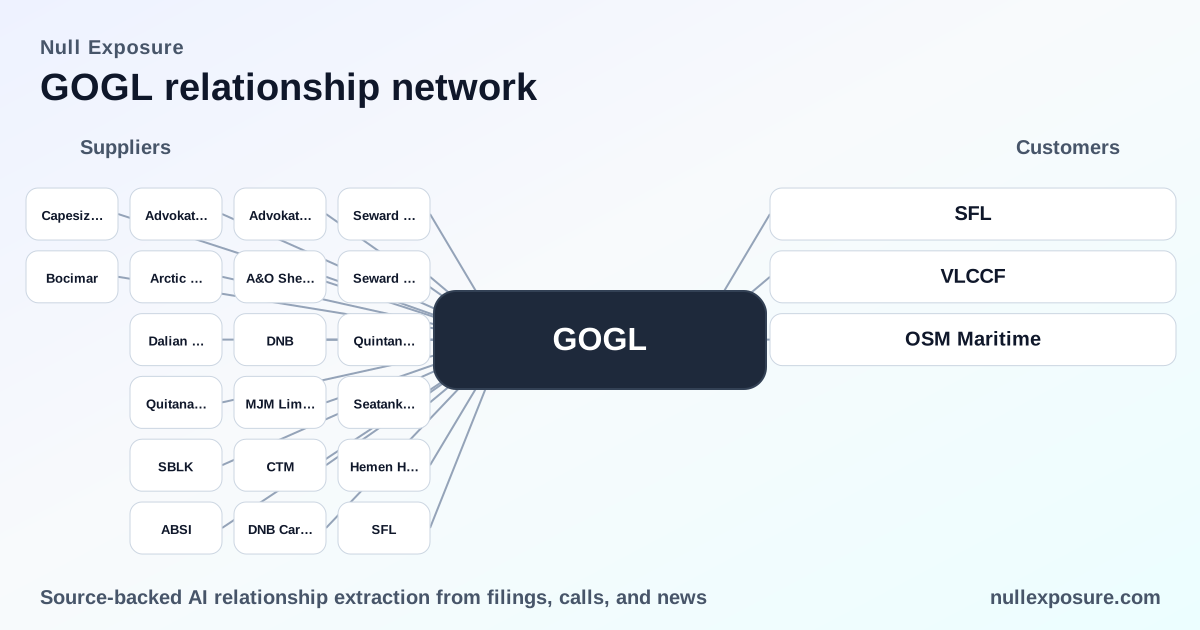
Below I cover every relationship captured in the results set and explain the commercial or financial role each plays for Golden Ocean.
SFL (Ship Finance International Ltd) — sale‑and‑leaseback of eight Capesize vessels
Golden Ocean executed a sale‑and‑leaseback transaction with Ship Finance International involving eight Capesize vessels, a classic financing move to free cash and reduce near‑term capital commitments while keeping vessels in operation under lease. A gCaptain news piece reported the transaction in connection with Golden Ocean’s decision to sell vessels and delay newbuilds (reported/accessed 2026-03-09): https://gcaptain.com/dry-bulk-shipper-golden-ocean-sells-vessels-delays-newbuilds/.
Ship Finance International Ltd — same counterparty described by full name
The story is repeated under the full corporate name: Ship Finance International Ltd acted as the lessor in the sale‑leaseback, which demonstrates Golden Ocean’s reliance on specialist maritime lessors to convert ship equity into liquidity. See the same gCaptain report (reported/accessed 2026-03-09): https://gcaptain.com/dry-bulk-shipper-golden-ocean-sells-vessels-delays-newbuilds/.
Knightsbridge Shipping Ltd — commercial management arrangement and merger management role
Golden Ocean served as the commercial manager of the Knightsbridge dry‑bulk fleet and was designated to manage the combined company after a proposed merger, showing the firm’s capability to provide third‑party commercial management services beyond its own fleet. gCaptain described this arrangement in its coverage of the Knightsbridge–Golden Ocean merger (reported/accessed 2026-03-09): https://gcaptain.com/knightsbridge-golden-ocean-group-merge/.
VLCCF — alternate listing for Knightsbridge‑related management responsibilities
The same Knightsbridge relationship appears under the inferred symbol VLCCF; Golden Ocean’s commercial‑management role carried through into the combined entity’s governance plan, signaling that management fees and cross‑entity operational control are part of Golden Ocean’s service set. See the Knightsbridge coverage on gCaptain (reported/accessed 2026-03-09): https://gcaptain.com/knightsbridge-golden-ocean-group-merge/.
OSM Maritime — negotiations to acquire SeaTeam from Frontline and Golden Ocean
Norwegian operator OSM Maritime entered final negotiations to buy SeaTeam Management from Frontline and Golden Ocean, indicating Golden Ocean’s prior ownership or co‑ownership of a crew/management business and the firm’s willingness to divest non‑core services to sharpen focus on dry‑bulk operations. Offshore‑Energy reported the planned transaction in its FY2020 context (reported/accessed 2026-03-09): https://www.offshore-energy.biz/osm-to-acquire-seateam-from-frontline-golden-ocean/.
How these relationships inform Golden Ocean’s operating model and risk posture
No explicit constraints were included in the records returned for the customer scope; that absence itself is a company‑level signal worth noting. From the relationship patterns above, investors should treat the following company‑level characteristics as core to Golden Ocean’s model:
- Contracting posture: Golden Ocean blends asset‑heavy ownership with asset‑light financing techniques (notably sale‑and‑leaseback), giving management flexibility to raise liquidity without changing commercial control of vessel capacity.
- Concentration and counterparty exposure: Large transactions with specialized lessors and a small set of maritime counterparties create concentrated counterparty risk — a single large lessor relationship can meaningfully affect financing costs and balance‑sheet breathing room.
- Service diversification and criticality: The company has historically provided commercial‑management services and held stakes in crew/management businesses, but the sale of non‑core units like SeaTeam indicates a strategic tightening toward core dry‑bulk operations, reducing operational complexity while potentially lowering recurring management‑fee revenue.
- Maturity and legacy ties: Relationships dated to FY2014–FY2015 alongside FY2020 divestiture activity show a company that has evolved its capital and service strategies over a multi‑year window rather than pivoting abruptly.
- Governance and ownership signals: High insider ownership (around 49%) and 30% institutional ownership in the company cap table influence negotiation dynamics with counterparties and the likelihood of shareholder‑driven asset sales or financing deals.
Investment implications — what to watch next
- Liquidity engineering is central to the thesis. Sale‑and‑leaseback activity is a repeatable lever to free cash but increases operating lease commitments and counterparty exposure; monitor lease tenors and lessor concentration.
- Earnings remain cyclically exposed. Freight rate swings drive revenue and margins; Golden Ocean’s commercial‑management revenue is helpful but not core to freight cyclicality.
- Balance‑sheet flexibility governs downside protection. Watch covenant headroom, lease obligations, and the company’s willingness to divest non‑core assets to preserve capital.
- Counterparty and operational consolidation reduce optionality. Fewer, larger external relationships simplify operations but raise single‑counterparty risk — an important factor for creditors and risk‑focused investors.
For investors building counterparty maps or monitoring customer and lessor concentration, NullExposure compiles relationship evidence and contextual signals that accelerate due diligence: https://nullexposure.com/.
Bottom line
Golden Ocean operates as a fleet owner that actively uses commercial management services and financial transactions to optimize capital structure. The firm’s customer and partner footprint shows pragmatic use of sale‑and‑leaseback financing, selective third‑party commercial management, and occasional divestments of non‑core assets — all of which materially influence cash flow stability and downside resilience. Investors should value Golden Ocean as a freight‑cyclical operator with purposeful balance‑sheet engineering and concentrated counterparty relationships that merit close monitoring.