GOODN (Gladstone Commercial Pref): Tenant exposures, leasing posture, and what investors should know
Gladstone Commercial (preferred unit GOODN) is the capital-market instrument of a net-lease focused REIT that acquires, owns and operates office and industrial properties and monetizes through long-term, triple-net style leases that convert property ownership into predictable rental cash flow and preferred dividends. The company funds that real estate platform with a mix of secured and unsecured debt plus periodic equity raises, and distributes income to holders via its preferred and common dividend programs. For a concise view of the platform and data resources, visit https://nullexposure.com/.
Operational thesis in one line: Gladstone converts real estate cash flow into dividend yield by owning long-dated net-leases across the continental U.S., then leverages capital markets (notes, preferreds, ATM equity) to smooth distributions.
Market posture and monetization mechanics
Gladstone’s model is built on three interlocking operating characteristics. First, contracting posture is long-term: the company targets lease terms in the roughly seven- to 15-year range with built-in rental escalators, which creates predictable base rent that supports preferred dividends. According to Gladstone’s filings, they “seek to obtain lease terms of approximately seven to 15 years with built-in rental increases,” and they historically acquire properties with remaining net-lease terms in that band. Second, counterparty breadth is wide, from small businesses to very large enterprises, which reduces dependence on a single tenant category but still creates idiosyncratic credit risk at the property level. Third, geographic focus is domestic: Gladstone owns properties across 27 states and expects most investments to remain within the continental United States.
Capital management is an explicit part of the monetization strategy. The company uses leverage—senior unsecured notes issued in 2024 as an example—and liquidity tools such as At‑the‑Market equity sales agreements to fund acquisitions and manage capital structure. Gladstone reported issuing $75.0 million of senior unsecured notes in December 2024 and has an ATM agreement with major underwriters active in 2023, per the company filing language.
What that combination delivers for investors: stable contracted cash flow (from long tenors and rent escalators) coupled with periodic balance-sheet funding events that affect dividend sustainability and equity dilution dynamics.
Customer relationships flagged in public records
This section covers every customer relationship flagged in the source results. Each entry below is presented as a plain-English takeaway with its source.
-
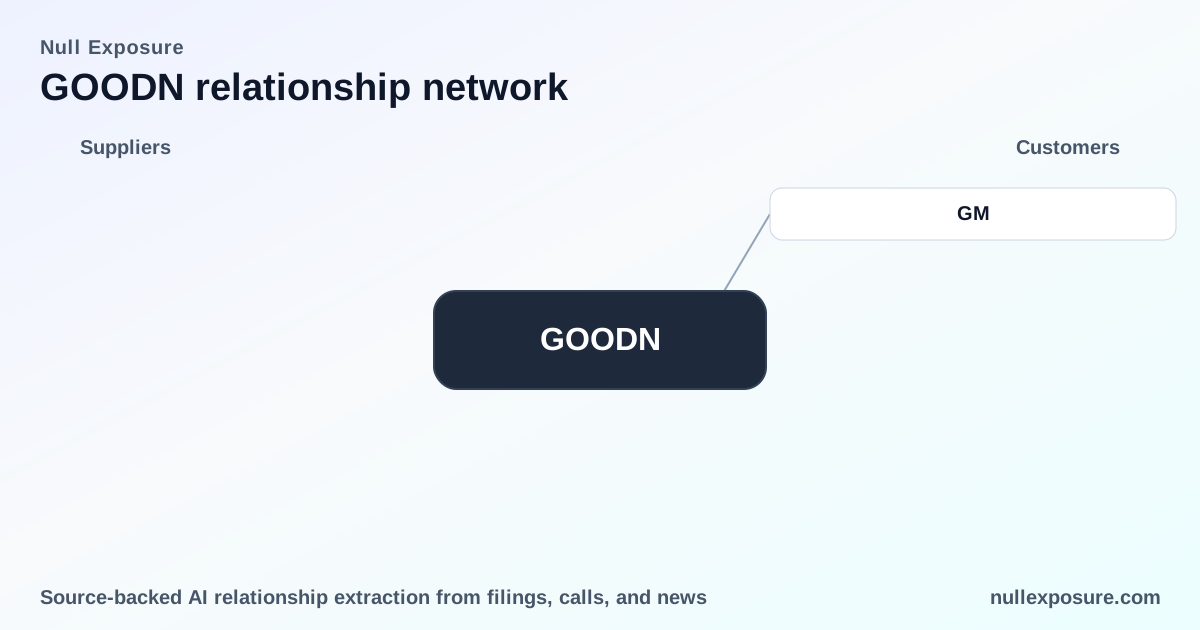
General Motors — FY2020: Gladstone owned a property that was formerly leased to General Motors, and GM vacated that site at the end of August in the referenced period. The item comes from a Q3 2020 earnings call transcript summarized by The Motley Fool covering the FY2020 period. (Source: Fool.com Q3 2020 Gladstone call transcript, referenced in public coverage.)
-
General Motors — duplicate FY2020 mention: A second listing in the records repeats the same point—the property previously leased to GM was vacated at the end of August—so the public record shows the event was captured multiple times in coverage of the FY2020 earnings call. (Source: same Fool.com Q3 2020 call transcript.)
Constraints and what they imply about the business model
The extracted constraints in Gladstone’s filings form a coherent picture of how the REIT runs its leasing and capital programs. Treat these constraints as company-level signals rather than relationship-level attributes unless the text explicitly names a tenant.
-
Contract maturity is long and deliberate. The company documents intent to acquire and hold net leases with remaining lives typically in the seven‑to‑15‑year band, which implies a deliberate low-turnover, income-first strategy that supports predictable distributions.
-
Contract framework includes active capital-market programs. Gladstone has an At‑the‑Market equity sales agreement with major banks (BofA, Goldman Sachs, Baird, KeyBanc, Fifth Third) established in March 2023 for up to $250 million of common stock, which signals recurring access to equity liquidity as part of the funding toolkit.
-
Counterparty universe is broad. Filings explicitly note tenants “range in size from small to very large private and public companies,” which reduces single-tenant concentration risk but maintains exposure to corporate occupier credit cycles.
-
Geographic concentration is national. The REIT’s footprint—135 wholly owned properties totaling about 16.9 million rentable square feet in 27 states as of December 31, 2024—confirms a continental U.S. focus that limits international macro risk while exposing the portfolio to domestic economic cycles by region.
-
Seller/landlord role and active relationship stage. Gladstone acts as the property owner/lessor (seller role in the portfolio context) and reports an active portfolio: the company collected 100% of outstanding base rent for calendar year 2024 and completed financing transactions during the year, reflecting current cash collection and capital activity.
How these constraints translate into investment considerations
-
Contracting posture reduces short-term volatility in cash flow. Long-term net leases with escalators are designed to smooth cash flow and provide coverage for preferred dividends, but the model trades liquidity flexibility for dependence on tenant credit over extended terms.
-
Capital strategy is balance-sheet dependent. The use of unsecured notes and ATM equity programs shows Gladstone actively manages funding via debt and market equity rather than relying solely on retained cash flow; changes in interest rates or equity market access will directly affect leverage and dilution dynamics.
-
Tenant diversity is real but imperfect. A broad tenant spectrum lowers systemic concentration risk, yet property-level losses—such as the GM vacancy highlighted in public transcripts—still impact localized cash flow and require asset-level management or re-leasing.
Risk, upside, and tactical takeaways for investors
-
Risk factors: tenant vacancies at individual properties (for example, the GM vacatur reported in FY2020) create re-leasing risk and potential near-term income pressure at the asset level; capital markets dependency means rising rates or tighter equity windows could compress distribution flexibility.
-
Upside drivers: long-term leases with escalators and a high base-rent collection rate (100% collection in 2024) support dividend coverage if occupancy and credit metrics remain stable; disciplined acquisitions of net-leased industrial/office assets in growing markets could lift NAV per share and preferred security stability.
-
Financial signals to watch: issuance of senior unsecured notes (December 2024) and ATM program activity indicate where balance-sheet risk is shifting; monitor leasing renewals, re-leasing speed on vacated assets, and any material tenant concentration changes.
Conclusion and next steps
Gladstone Commercial’s model is a classic net-lease REIT play: long-term contracted cash flows, diversified tenant mix, domestic geographic focus, and active capital-market financing. For credit-sensitive investors and operators evaluating GOODN, the critical questions are execution on re-leasing vacated assets, stability of rent collections, and the company’s access to capital markets under stressed conditions. For a practical comparison across REIT funding and tenant-exposure profiles, explore broader investor materials at https://nullexposure.com/.
Key takeaway: GOODN’s value hinges on lease term durability and capital strategy; investors should track asset-level vacancies and financing actions as primary drivers of preferred dividend stability.