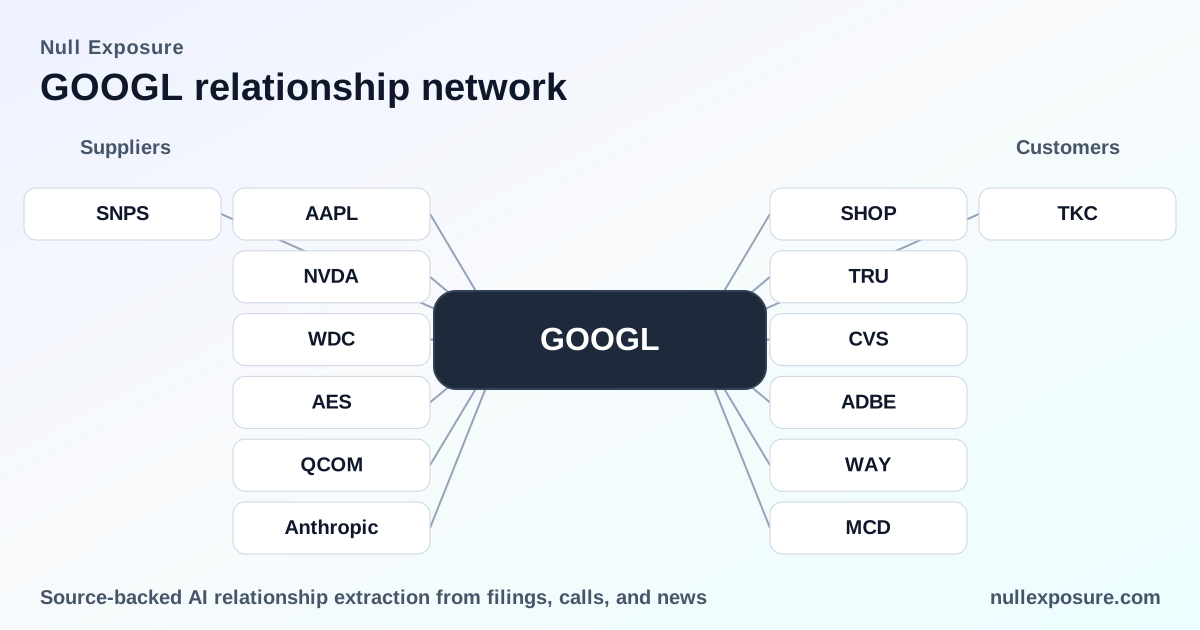
Alphabet (GOOGL) as a Customer Platform: why enterprise relationships matter for the thesis
Alphabet monetizes at scale by combining advertising, recurring cloud and AI infrastructure, and enterprise software partnerships. Google Cloud sells a mix of subscription and usage‑based services (infrastructure, Vertex AI, Gemini models) to global enterprises while Alphabet’s ad stack channels demand into a separate, high‑margin advertising engine; the revenue mix and contracting posture create both predictable recurring streams and high‑volatility, high‑leverage commercial wins. For investors evaluating GOOGL’s customer relationships, the critical questions are concentration of strategic cloud contracts, the balance of subscription vs. consumption pricing, and the degree to which partner integrations drive ad or cloud monetization. Learn more about how we surface these relationship signals at https://nullexposure.com/.
What the relationships tell investors about Google’s operating model
Alphabet’s customer signals in recent filings and press coverage show a consistent pattern: large enterprise adopters deploy Google Cloud for AI and convert those relationships into multi‑year strategic partnerships, often embedding Gemini/Vertex AI into product funnels (commerce, healthcare, telco). Contracts tilt between subscription and usage‑based consumption; geography is explicitly global; and role patterns show Alphabet as both platform provider (buyer of infrastructure spend) and a demand partner (ad inventory, YouTube integrations). These characteristics imply higher predictable recurring revenue from enterprise migration, paired with lumpy, high‑impact commercial wins that move margin and guidance.
If you want a single source that aggregates these signal types for transaction and relationship diligence, visit https://nullexposure.com/.
Quick takeaways for portfolio managers
- Cloud/AI wins are driving new recurring revenue levers (healthcare platforms, retail agentic commerce).
- Contracting mixes subscription + consumption, which tempers predictability but raises upside as usage scales.
- Customer breadth is global and cross‑sector, lowering single‑vertical concentration but increasing counterparty and regulatory exposure.
- Partner integrations can both expand ad reach (YouTube audio deals) and create downstream revenue for Google Cloud—a two‑way monetization play.
Detailed customer relationships (one‑line summaries with source)
- TransUnion (TRU) — Embedded Google Vertex AI and Gemini models inside the OneTru platform to power explainable credit analytics for TruIQ; reported in Cutoday and SiliconANGLE in March 2026. (Cutoday, Mar 2026; SiliconANGLE, Mar 2026)
- Sirius XM (SIRI) — Exclusive U.S. ad representative for YouTube audio inventory and a co‑developed integration with Google’s ad platform to scale audio advertising; noted on SiriusXM’s Q1 2026 call. (Earnings call transcript, May 2026)
- Macy’s (M) — Launched “Ask Macy’s”, a Gemini‑powered conversational shopping assistant that materially increased customer spending in early 2026. (RetailDive / Fortune, Mar 2026)
- WPP (WPP) — Deepened strategic collaborations with Google and Adobe to add AI and cloud capabilities across agency products (WPP strategy release, FY2026). (WPP press release, 2026)
- Shopify / Sales (SHOP) — Management said Gemini is widely adopted across leading SaaS companies, including Shopify, as of Q4 2025 results. (GOOGL earnings call excerpt, Mar 2026)
- Snowflake (SNOW) — Snowflake connectors include integrations to Google Drive and Google services for data flow and analytics. (Snowflake Q1 2026 call)
- System1 (SST) — Reported marketing headwinds from changes at Google, but shifting to a newer Google product where it is market‑leading (FY2025 filing). (Yahoo Finance, 2025)
- Commerce (CMRC) — Announced a deepened Google Cloud partnership to accelerate merchant performance using Google Cloud AI tools. (GlobeNewswire, Jul 2025)
- CXApp / CXAI (CXAI) — Public statements describe partnerships with Google Cloud to deliver agentic AI workplace experiences. (CXAI earnings material, 2025–2026)
- Liberty Global (LBTYA / LBYAV) — Announced a five‑year Google Cloud partnership to embed Gemini across its European TV and customer care platforms (Feb 2026 press releases). (Google Cloud press release, Feb 2026)
- Papa John’s (PZZA) — Deployed “Lou AI” via Google Cloud Food Ordering agent and previously migrated infrastructure to Google Cloud (announcements, 2021–2026). (ChainStoreAge / PizzaMarketplace, 2026)
- CVS Health (CVS) — Agreed to deploy an AI‑enabled health platform on Google Cloud, cited as a major commercial win for cloud/Gemini monetization (MarketBeat, Mar 2026). (MarketBeat filing note, Mar 2026)
- Klaviyo (KVYO) — Entered a strategic partnership to integrate Google search, advertising and messaging into its CRM platform (Investing.com, May 2026). (Investing.com, May 2026)
- Ulta Beauty (ULTA) — Announced Gemini‑enabled shopping experiences and integration with Google AI Mode for direct purchases (Google Cloud press materials / news, Apr–May 2026). (Google Cloud press corner, Apr 2026)
- Apple (AAPL) — Reported a partnership to adopt Google’s Gemini models for Siri improvements during FY2026 coverage. (SiliconANGLE, Apr 2026)
- Sea Limited (SE) — Signed a deal to co‑develop AI tools for Shopee and Garena using Google technologies (news reports, Feb–Mar 2026). (KFGO / Reuters coverage, Feb 2026)
- LivePerson (LPSN) — Expanded Google Cloud integration to put advanced AI into its conversational platform after completing a cloud migration. (PR Newswire / SiliconANGLE, 2026)
- Commvault (CVLT) — Announced its Commvault Cloud platform availability on Google Cloud for resilience and backup services. (PR Newswire, May 2026)
- Evogene (EVGN) — Expanded collaboration to integrate Vertex AI agents into its ChemPass AI discovery platform. (PR Newswire / Investing, Mar–May 2026)
- Waystar (WAY) — Expanded collaboration with Google Cloud to accelerate agentic AI for healthcare revenue cycle automation. (PR Newswire / company filings, Mar 2026)
- Five9 (FIVN) — Expanded partnership to integrate Five9’s CX platform with Gemini Enterprise and Vertex AI for enterprise contact centers. (Earnings coverage / SimplyWall, Jan–Mar 2026)
- Thomson Reuters (TRI) — Uses leading frontier models including Google’s Gemini alongside proprietary controls for regulated workflows. (PR Newswire, 2026)
- Hasbro (HAS) — Publicly acknowledged partnerships with Gemini and other models to embed AI into workflows. (InsiderMonkey, FY2026)
- Hilton (HLT) — Working with Google on AI travel‑planning capabilities as part of distribution/loyalty strategy. (Earnings call transcript, FY2026)
- IAC / IACVV (IACVV) — Disclosed ongoing negotiations with Google over paid listings that could affect AMG distribution (8‑K disclosures, FY2026). (IAC 8‑K / earnings notes, 2026)
- TD SYNNEX (SNX) — Won Google Cloud “Distribution: Market Reach” recognition for enabling customers to solve ecosystem problems via Google tech. (Yahoo Finance / Market coverage, 2026)
- IHG (IHG) — Developing trip planning capabilities in partnership with Google (earnings call notes, FY2026). (The Globe & Mail coverage, Mar 2026)
- Braze (BRZE) — Launched BrazeAI Decisioning Studio on Google Cloud Marketplace to streamline procurement in Google Cloud environments (Company release / analyst notes). (StockTItan / SahmCapital, 2025–2026)
- BlackLine (BL) — Completed multi‑year migration to Google Cloud; management expects margin upside as legacy data centers shut down. (Company release, Feb 2026)
- ADT (ADT) — Under a Google Commercial Agreement to supply Google devices and video/analytics services and expand ADT+ integrations. (Proxy filing, 2026)
- Gap Inc. (GAP) — Early launch partner for Google’s Universal Commerce Protocol and Gemini‑enabled search/checkout (various retail press, Mar 2026). (Gap corporate blog / CNBC, Mar 2026)
- Kyivstar / Ukraine (KYIV) — Selected Google’s Gemma as base model to train a national LLM with government support. (GlobeNewswire / press, Dec 2025–Mar 2026)
- Turkcell (TKC) — Announced hyperscale region partnership with Google Cloud and plans to resell GCP solutions (earnings notes). (The Globe & Mail / TipRanks, 2026)
- Snowflake customers and connectors — Multiple notices that Snowflake supports connectivity to Google Drive and Google services for enterprise data integration. (Snowflake Q1 2026 comments)
- Plus a broad list of platform and partner customers—including NetApp, SentinelOne, GitLab, Domo, Coursera, Opera, Quest Diagnostics, Shopify ecosystem players and many retail, telco and healthcare names—that publicly reference integrations with Google Cloud, Gemini, Vertex AI or Google‑distributed services across FY2024–FY2026 press and earnings materials. (Various press and earnings transcripts, 2024–2026)
Risk and concentration considerations investors should model
- Contract terms: Google’s mix of subscription and consumption pricing increases upside with usage but reduces revenue certainty relative to pure subscription. (Alphabet filings, FY2025–2026)
- Platform dependency: Many customers simultaneously rely on Google for cloud infrastructure, data services and distribution (YouTube/Search), creating multi‑vector exposure if policy or pricing changes occur.
- Regulatory and partner risks: Large ad relationships (publisher dynamics, exclusive YouTube audio deals) and cross‑platform data agreements attract regulatory and counterparty scrutiny that can alter economics quickly.
- Maturity and criticality: Relationships range from proof‑of‑concepts to five‑year strategic alliances (Liberty Global, CVS) — the longer, critical deals are the most material to cloud revenue growth.
For transaction diligence or to build a subscription/usage sensitivity model from customer‑level signals, see how we package and validate relationship evidence at https://nullexposure.com/.
Bold strategic wins and broad enterprise adoption of Gemini/Vertex AI are driving a durable re‑rating of Google Cloud’s revenue profile, but investors must model the dual realities of consumption upside along with concentrated contractual and regulatory exposure when sizing GOOGL positions.