Structure Therapeutics (GPCR): How a single licensing relationship reshapes a clinical-stage business model
Structure Therapeutics develops oral small-molecule therapeutics for chronic diseases and currently operates as a clinical-stage biotech with no product revenue; it monetizes primarily through licensing deals that deliver upfront payments and downstream royalties, while continuing to fund internal development programs. The March 2026 licensing arrangement with Genentech/Roche crystallizes that model — a material upfront payment and low-single-digit royalties convert future optionality into near-term cash and third-party validation. For investors and operators, the deal changes capital planning, partner concentration, and negotiating posture. Learn more at https://nullexposure.com/.
The headline deal and why it matters for investors
Structure’s subsidiary Gasherbrum granted Genentech and Roche a non‑exclusive, sublicensable patent license tied to CT‑996, an oral GLP‑1 receptor agonist, with Genentech agreeing to a $100 million one‑time upfront payment and low single‑digit royalties on net sales. That structure converts a zero‑revenue balance sheet into immediate liquidity and creates an ongoing royalty stream if CT‑996 advances to commercialization. Multiple market reports described the same commercial structure and emphasized the deal does not interfere with Structure’s internal programs — a signal the company preserved operational optionality while extracting value. (See the coverage below for source details.)
Key takeaways: this is a commercial validation event, a meaningful non‑dilutive financing mechanism for a clinical‑stage company, and an arrangement that reduces near‑term funding pressure while keeping internal pipeline independence.
How the licensing structure affects operating characteristics
- Contracting posture: Structure is using non‑exclusive, sublicensable licenses through a dedicated subsidiary (Gasherbrum), a posture that signals a capital‑efficient, portfolio‑friendly licensing strategy rather than exclusive platform sales.
- Concentration: a single large upfront payment is material given the company reports zero trailing revenue; this increases short‑term revenue concentration risk around partner milestones and royalties.
- Criticality: the license to CT‑996 is important for near‑term cash flow, but public reporting indicates it does not impinge on Structure’s ongoing internal development programs, preserving strategic independence.
- Maturity: as a clinical‑stage company with negative EBITDA and no product revenue, licensing is the most mature and predictable monetization route available today; commercial risk remains high until regulatory approvals and market launches generate sustained sales.
These operating signals should be read together: Structure is deliberately monetizing specific patents while maintaining internal R&D, accepting non‑exclusive commercial terms to diversify partner exposure rather than cede control in exchange for exclusivity.
All reported customer/partner relationships in the public feed
Below are every relationship mentioned in the sourced results, each summarized in plain English with source attribution.
-
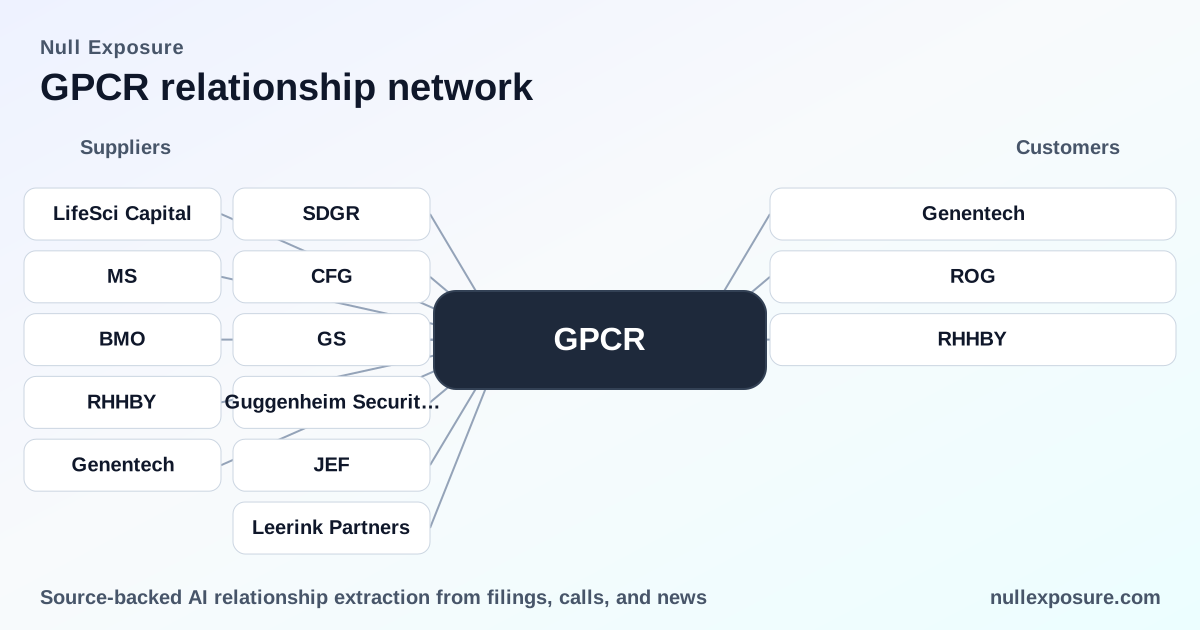
Genentech — Multiple reports state Genentech will pay a one‑time, non‑refundable payment of $100 million within 30 days as part of a patent license and will pay low single‑digit royalties on net sales tied to CT‑996. This licensing deal was reported by TS2.Tech, TradingView, and analysis outlets that referenced Guggenheim commentary in January–March 2026. (See TS2.Tech, March 9, 2026; TradingView, March 9, 2026; Sahm Capital coverage citing Guggenheim, January 2026.)
-
Roche — Coverage identifies Roche alongside Genentech as a licensee party entitled to the non‑exclusive, sublicensable patent license related to CT‑996, with public summaries noting Roche/Genentech will jointly hold rights under the agreement executed with Structure’s Gasherbrum subsidiary. Reporting used both Roche ticker variants in different outlets (ROG / RHHBY), reflecting cross‑market references in March 2026. (See TS2.Tech, March 9, 2026; TradingView, March 9, 2026; Sahm Capital, January 2026.)
Notes on source treatment: multiple news outlets repeated the same core terms — $100 million upfront, low‑single‑digit royalties, and non‑exclusive sublicensable licensing of CT‑996 — across articles dated in January–March 2026, providing consistent external confirmation of the commercial terms and timing.
Commercial and capital implications for investors
This licensing event transforms Structure’s cash profile in three ways: an immediate capital infusion, a potential long‑tail royalty stream if CT‑996 reaches market, and improved third‑party validation that can support re‑rating by the market and easier access to capital. Given Structure reports zero trailing revenue, the $100 million upfront payment is disproportionate to historical cash generation and will materially alter near‑term liquidity metrics.
However, the non‑exclusive nature of the license reduces single‑partner dependency for the asset but also limits the premium Structure can extract relative to an exclusive deal. The company preserved its internal programs, so management balanced immediate monetization against long‑term product value retention.
Operational risks and company‑level constraints
A company‑level constraint flagged in the relationship review concerns the services segment and regulatory compliance in China: Structure warned that compliance with China’s Cyber Security Law and Data Security Law could significantly increase the cost of providing service offerings or even prevent some services in affected jurisdictions. This is a corporate signal on regulatory exposure and operational cost sensitivity in cross‑border service delivery — not a relationship‑specific limitation. Investors should treat China data/security compliance as an operating expense and strategic constraint on global program execution.
What operators and business partners should watch next
- Monitor the timing and receipt of the $100 million upfront payment and any public disclosures about royalty calculation mechanics; those cash flow milestones drive near‑term credit and liquidity metrics.
- Track any subsequent amendments that convert non‑exclusive rights into broader collaborations, which would change Structure’s bargaining power and potential revenue upside.
- Evaluate how Structure allocates the capital to internal R&D versus business development; capital deployment decisions will indicate whether the company prioritizes organic pipeline advancement or additional licensing monetization.
For a quick refresher on the deal and its implications, see more analysis at https://nullexposure.com/.
Bottom line for investors
The Genentech/Roche license converts optionality into real cash and credible third‑party validation, materially improving Structure Therapeutics’ near‑term financial footing while preserving internal program autonomy. The agreement’s non‑exclusive, sublicensable form signals a deliberate go‑to‑market approach focused on diversified partner monetization rather than single‑buyer concentration. Investors should re‑price GPCR with the new upfront capital and royalty potential in mind, while watching for regulatory and operational headwinds identified at the company level.
Sources referenced in coverage above include TS2.Tech (March 9, 2026), TradingView market reports (March 9, 2026), and Sahm Capital commentary citing Guggenheim analysis (January–March 2026).