Green Plains (GPRE): Feedstock seller turned strategic partner — why the customer map matters
Green Plains produces, markets and distributes ethanol and co-products and monetizes through direct commodity sales, marketing agreements and derivative hedges; the company also leverages its ethanol production as feedstock for higher-value renewable fuels projects. Revenue comes from core ethanol sales, long-term marketing arrangements and a portfolio of short-term forward contracts accounted for as derivatives, creating a mixed contracting posture that drives both volatility and optionality. For deeper counterparty intelligence and continuous monitoring, see https://nullexposure.com/.
The strategic pivot: ethanol as raw material for SAF and why investors should care
Green Plains is converting commodity manufacturing into a strategic raw-material position in sustainable aviation fuel (SAF) supply chains. The company’s operational role is seller and operations manager for ethanol-based SAF pilots and commercial efforts, which lifts revenue optionality beyond spot ethanol margins into contracted offtake streams and joint-venture economics. That shift changes the company’s revenue profile from pure commodity cycles toward structural partnerships with large downstream buyers.
The customer relationships you must track
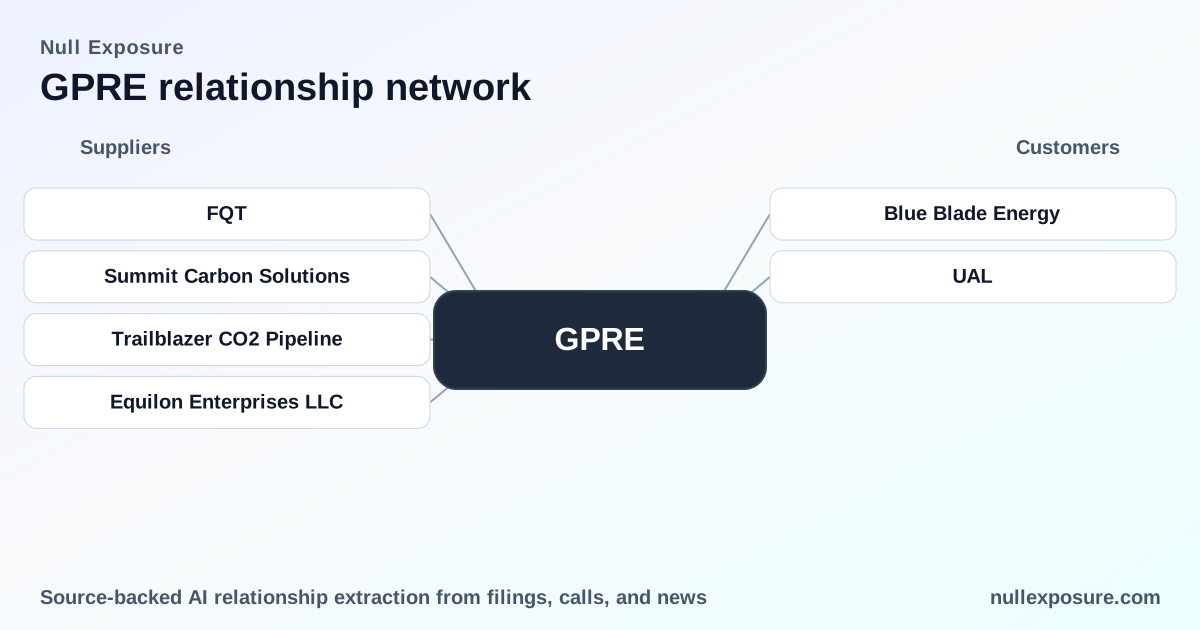
Blue Blade Energy
Green Plains is a founding partner in Blue Blade Energy, a joint venture with United Airlines and Tallgrass to develop and commercialize SAF technology that uses ethanol as feedstock; Green Plains will supply low‑carbon ethanol and manage operations once the pilot is built. This positions the company as a feedstock supplier and operating counterparty in SAF commercialization. (Future Travel Experience, March 9, 2026)
UAL (United Airlines, as reported)
United Airlines will provide SAF development support, certification and logistics support and has agreed to purchase up to 2.7 billion gallons of SAF produced by the joint venture, establishing a large potential offtake commitment for Blue Blade Energy partners. The volume commitment anchors long‑term demand for ethanol‑derived SAF feedstock. (Future Travel Experience, March 9, 2026)
United Airlines
United Airlines’ role in the Blue Blade JV includes fuel certification, into‑wing logistics and a significant offtake agreement, creating a demand channel for Green Plains’ low‑carbon ethanol and an industrial path to scale SAF production. This represents a strategic commercial relationship that elevates Green Plains beyond commodity supplier status. (Future Travel Experience, March 9, 2026)
Contracting posture, concentration and other commercial constraints that define the model
- On April 16, 2025, Green Plains entered a five‑year marketing agreement with Eco‑Energy LLC that requires exclusive sales of fuel‑grade ethanol to Eco‑Energy, and reciprocal purchase obligations, with a predetermined market‑based fee adjustable to gallons shipped. This is a named, long‑term contractual relationship that makes Eco‑Energy LLC a critical marketing partner for the company’s ethanol flows (company filing, April 16, 2025).
- At the same time, Green Plains reports that the vast majority of revenues are generated from forward contracts accounted for as derivatives under ASC 815, signaling a substantial short‑term hedging and contract mix alongside multi‑year marketing agreements (audited consolidated financial statements, FY2025).
- The company sells into channels that include major integrated oil companies, large independent refiners and petroleum wholesalers, indicating concentration toward large‑enterprise counterparties rather than retail end users (company filing, FY2025).
- Commercial reach is both North American and global: Green Plains is one of the largest ethanol producers in North America, and its ethanol is marketed by Eco‑Energy to local, regional, national and international customers, giving the company both domestic scale and exported revenue exposure (company filing, FY2025).
- A material concentration signal: “Customer A” represented 44% of total revenues for the year ended December 31, 2025 within the ethanol segment, creating a clear counterparty concentration risk that investors must monitor closely (audited consolidated financial statements, FY2025).
- The company also disclosed the ceasing of a third‑party ethanol marketing agreement effective April 1, 2025, which is a commercial transition point in its go‑to‑market posture and potentially drives shifts in realized ethanol margins and logistics (company filing, April 2025).
- At the segment level, ethanol and co‑products are the core product and the source of primary revenues, while SAF partnerships represent an adjacent monetization pathway (audited consolidated financial statements, FY2025).
What this means for valuation and operational risk
Green Plains operates with mixed contract tenors: long‑dated exclusive marketing arrangements such as the Eco‑Energy agreement provide revenue stability for a portion of production, while the company’s pervasive use of forward contracts under ASC 815 introduces earnings volatility tied to mark‑to‑market accounting. Investors should treat the company’s revenue stream as partially protected by structural deals but materially exposed to short‑term commodity dynamics.
Financial context reinforces the commercial picture: Revenue TTM is approximately $2.09 billion with EBITDA near $35.9 million and a negative trailing EPS, indicating thin operating profitability despite scale (company financials, latest twelve months). These margins amplify the importance of high‑value SAF commercialization and any large customer commitments that can lock in improved economics.
For ongoing monitoring and competitive intelligence on Green Plains’ buyer relationships and partner commitments, visit https://nullexposure.com/.
Key investor takeaways
- Concentration risk is real: a single customer represented 44% of revenues in FY2025, so any change in that counterparty’s buying pattern moves the top line materially.
- Contract mix is complex: the coexistence of exclusive multi‑year marketing agreements and a dominance of short‑term forward contracts produces asymmetric upside from strategic partnerships and downside from mark‑to‑market swings.
- SAF joint ventures are strategically transformative: the Blue Blade JV with United Airlines and Tallgrass repositions Green Plains as a critical feedstock supplier and operations partner for aviation‑grade renewable fuels, directly linking the company to multi‑billion‑gallon offtake potential.
- Counterparty profile tilts to large enterprises: sales channels include major oil companies and refiners, which can provide scale but increase counterparty bargaining power.
- Operational execution and logistics matter: exclusivity to Eco‑Energy and the ceasing of a prior marketing agreement highlight that distribution and marketing arrangements materially influence realized margins.
Bottom line
Green Plains is no longer just an ethanol commodity producer; it is a strategic feedstock supplier embedded in nascent SAF supply chains while still operating a high‑volume, low‑margin ethanol business with meaningful counterparty concentration. Investors should value upside from SAF commercialization and large offtake commitments against concentration risk, short‑term hedge exposure and historically constrained profitability. For continuous tracking of these counterparty dynamics and contract changes, start with https://nullexposure.com/.