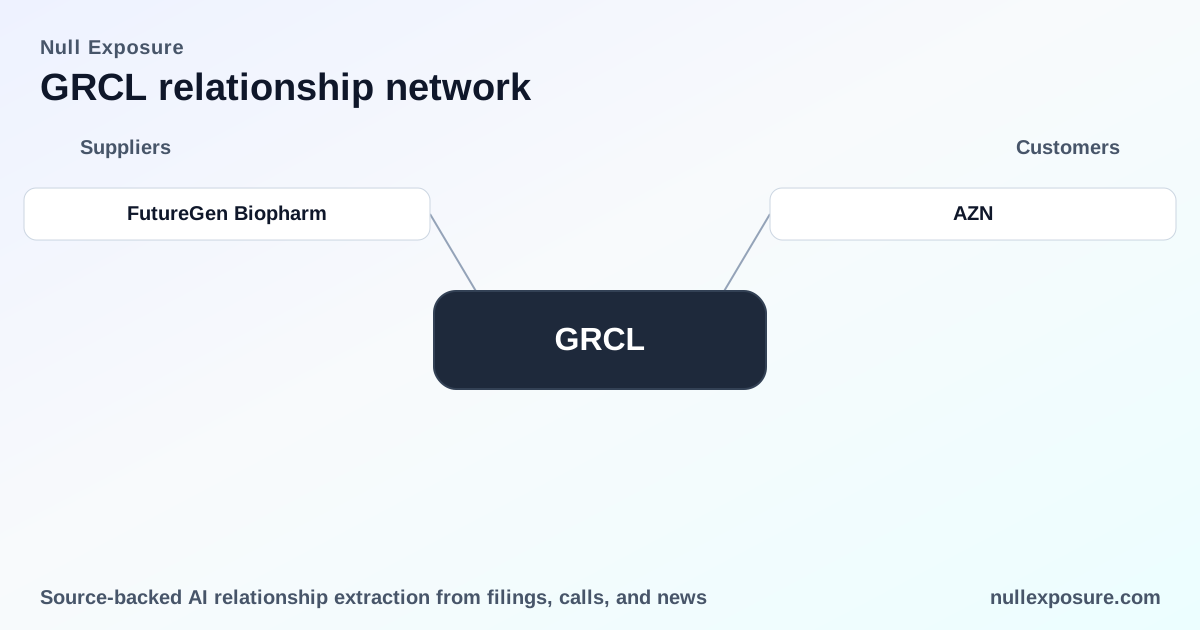
Gracell (GRCL): Strategic exit to AstraZeneca refocuses the customer map
Thesis: Gracell Biotechnologies operates as a clinical-stage cell therapy developer focused on CAR-T and related cell therapies; it monetizes through advancing clinical assets toward commercialization and through strategic transactions and partnerships that convert R&D value into realized cash — the acquisition by AstraZeneca converts Gracell’s primary commercialization pathway into an exit-driven monetization event. For background research or to track counterparty risk across similar transactions, visit https://nullexposure.com/ for structured coverage.
The deal in plain language: AstraZeneca bought Gracell and absorbed its commercial prospects
AstraZeneca publicly announced the successful completion of its acquisition of Gracell on March 9, 2026, ending Gracell’s independent public-company trajectory and folding its cell-therapy programs into AstraZeneca’s broader cell therapy platform. According to AstraZeneca’s press release (March 9, 2026) the transaction was completed to further AstraZeneca’s cell therapy ambition; multiple industry outlets reported the deal size and structure in contemporaneous coverage. Pharmaceutical-Technology reported a headline figure of $1.2 billion for the transaction, while BioSpace cited a reported $1 billion upfront component tied to the December 2023 agreement and subsequent closing. (AstraZeneca press release, March 9, 2026; Pharmaceutical-Technology, May 2026; BioSpace retrospective coverage.)
What this means operationally for GRCL’s customer profile
The acquisition fundamentally changes Gracell’s customer-facing posture: Gracell no longer operates as an independent counterparty selling or partnering on its lead assets. Instead, former Gracell programs and external relationships will be managed within AstraZeneca’s corporate and commercialization framework. That shift reduces the relevance of Gracell as a standalone supplier or partner and transfers counterparties, obligations, and integration risk to AstraZeneca’s governance and contracting structures. Contract counterparties evaluating exposure to GRCL should now evaluate the parent (AstraZeneca) for operational continuity, payment terms, and pipeline commercialization strategy. (AstraZeneca press release, March 9, 2026; ContractPharma reporting, March 2026.)
Customer relationships: the material counterparty list
Below is a concise inventory covering every relationship flagged in the available results. Each entry is a plain-English summary with source context.
- AstraZeneca / AZN — AstraZeneca completed the acquisition of Gracell, absorbing its clinical-stage cell therapy programs into AstraZeneca’s cell therapy portfolio; industry outlets reported the transaction in March–May 2026 and described material upfront consideration tied to the deal. (AstraZeneca press release, March 9, 2026; Pharmaceutical-Technology, May 2026; BioSpace coverage citing December 2023 agreement; Yahoo Finance, May 2026; ContractPharma, March 2026.)
Note: the results returned multiple press and news items that reference the same counterparty and transaction; the single material customer/counterparty identified across the dataset is AstraZeneca. (Sources as above.)
Company-level operating signals and constraints
With no independent constraint excerpts provided, the following are company-level signals derived from Gracell’s status as a clinical-stage biopharma that has completed a strategic sale:
- Contracting posture — acquisitive exit: As a result of the acquisition, Gracell’s contracting posture transitions from independent counterparty to an integrated business unit within a large pharmaceutical acquirer. Post-close contracting will reflect AstraZeneca’s standard supplier, vendor, and partnership terms rather than Gracell’s pre-acquisition agreements.
- Concentration — historically high, now absorbed: Prior to the sale, Gracell’s commercialization prospects and counterparty exposure were concentrated around its own pipeline and a limited set of partners; the acquisition disperses concentration risk into AstraZeneca’s broader portfolio but concentrates legal and integration risk under a single buyer.
- Criticality — asset-level importance: The intrinsic value lay in Gracell’s clinical assets and platform capabilities; those assets are material to AstraZeneca’s cell therapy strategy, which justifies the strategic acquisition and repositions the assets from independent development risk to parent-level portfolio prioritization.
- Maturity — clinical-stage validation through exit: Completing a strategic transaction with a major pharma buyer is a form of external validation of clinical and commercial potential and converts development-stage value into realized capital for previous Gracell investors and counterparties.
These signals should guide counterparty risk analysis: evaluate contractual novations, integration timelines, and the buyer’s priorities rather than legacy Gracell standalone metrics.
Investor takeaways and risk checklist
- Primary takeaway — exit executed: Gracell’s core monetization event is complete; the company no longer presents as an independent commercial counterparty. This is a liquidity event for equity holders and a transfer of asset stewardship to AstraZeneca. (AstraZeneca press release, March 9, 2026.)
- Counterparty exposure shifts to AstraZeneca: Any vendor, service provider, or payer previously contracting with Gracell should expect contract review, novation, or termination discussions under AstraZeneca’s playbook. Assess counterparties against AstraZeneca’s credit, contracting cycles, and integration capacity.
- Integration risk matters: The strategic benefit to AstraZeneca is clear, but operational timelines for integrating cell-therapy programs can affect milestone payments, clinical operations, and supplier demand. Monitor AstraZeneca disclosures for program prioritization and milestone schedules. (ContractPharma; Pharmaceutical-Technology.)
- Regulatory and commercialization sequencing: Clinical-stage assets retain development and regulatory execution risk under the new parent; the acquisition reduces sponsor risk for programs but does not eliminate clinical or regulatory hurdles.
- Counterparty diligence focus: For investors and operators assessing exposure, prioritize documentation that tracks contract novation, payment waterfalls from the acquisition agreement, and any contingent consideration tied to clinical or commercial milestones cited in coverage.
Final read: positioning and next steps for due diligence
Gracell’s acquisition by AstraZeneca is a definitive outcome that converts development-stage promise into strategic incorporation within a global pharmaceutical platform. For stakeholders evaluating customer and counterparty risk, the analytical work shifts from Gracell’s independent balance sheet and contracts to AstraZeneca’s integration plan, contract novation process, and stated prioritization of acquired programs.
If you need structured monitoring of how this acquisition changes counterparty exposures across portfolios or want a deeper review of the integration-related contractual risks, NullExposure maintains coverage and signaling on counterparties and acquisitions — visit https://nullexposure.com/ to explore tracking and alerting options.