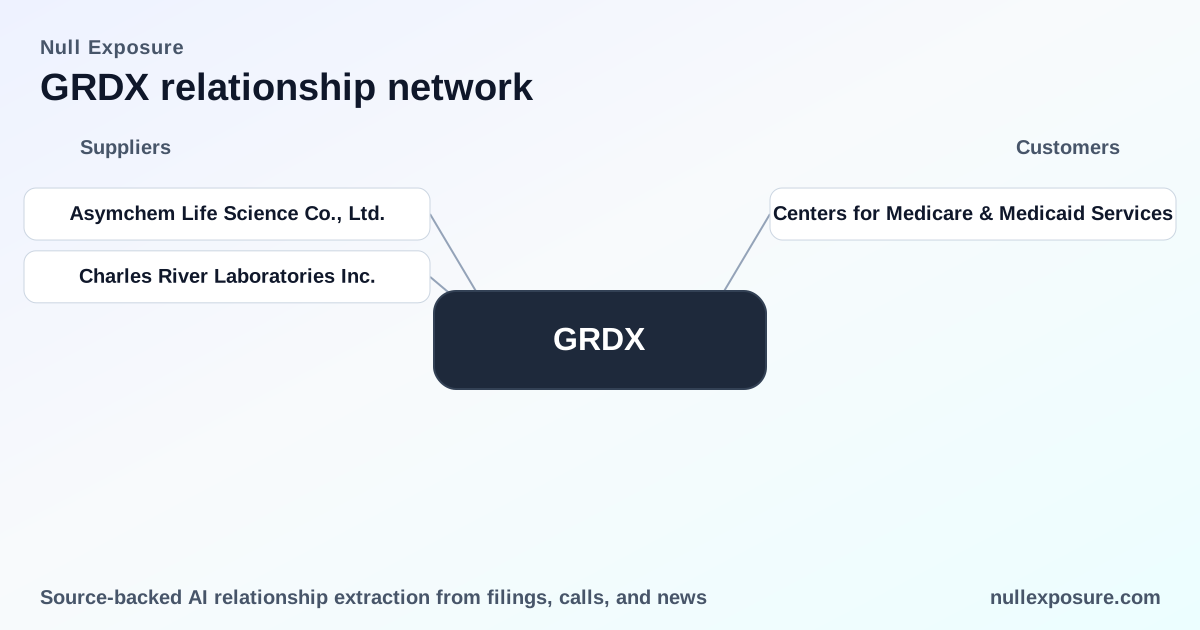
GRDX customer landscape: regulatory touchpoints and an unexpected commercial footprint
GRDX is a company that reports its core product as drug development for gastrointestinal diseases and that operates at the intersection of regulated pharmaceuticals and public-sector visibility. It monetizes primarily through the clinical development and eventual commercial licensing or sales of therapeutic candidates, while regulatory reporting and partner contracts create secondary touchpoints that influence revenue recognition and market access. For a quick snapshot of relationship coverage, explore the full profile at https://nullexposure.com/.
Investment thesis in one paragraph
GRDX’s primary economic engine is long-cycle, high-capital drug development focused on GI indications, which creates a revenue profile driven by milestones, licensing, and eventual product sales rather than steady recurring operational income. At the same time, public filings and news coverage show non-commercial relationships and service arrangements that affect compliance, disclosure burden and operational optionality; investors should value GRDX on its pipeline and regulatory positioning while monitoring these ancillary relationships for potential earnings variability or strategic pivots.
How to read the relationships: what matters for investors
Two features matter when assessing GRDX’s customer relationships: regulatory exposure and commercial concentration or diversification. Regulatory relationships (for example, reporting to government agencies) do not generate revenue but create compliance costs and visibility that can influence reputation and access. Commercial relationships tied to technology or service providers can indicate either strategic partnerships or transitional activities outside core therapeutic development. Both types influence cash flow timing, counterparty risk, and management bandwidth.
Visit https://nullexposure.com/ for the full dataset and relationship visualizations.
Detailed relationship inventory: every customer relationship in the record
Centers for Medicare & Medicaid Services (CMS)
GRDX’s filing references the federal Physician Payment Sunshine Act reporting obligation, which requires manufacturers of drugs, devices and biologics to report transfers of value to physicians and teaching hospitals to CMS. According to the company’s FY2024 10‑K, this is a regulatory disclosure requirement that imposes ongoing reporting and transparency costs and elevates public visibility into payments to healthcare professionals. (Source: FY2024 10‑K filing, company regulatory disclosure.)
Amp Z
Multiple news reports in 2026 document a commercial relationship between GridAI (referenced under GRDX’s relationship set) and Amp Z: a May 2026 LOI positions GridAI to deliver energy management and optimization solutions for Amp Z’s forthcoming AI data center campuses, and earlier reporting described Gridai Technologies Corp. as providing an Energy Orchestration Platform service to Amp Z CI. These items indicate commercial services and platform deployments tied to large-scale AI infrastructure projects, representing a revenue stream from enterprise energy and operations contracts rather than therapeutic sales. (Sources: GuruFocus news item, May 2026; MarketScreener report, May 2026.)
Note: the Amp Z entries in news coverage reference GridAI/ Gridai Technologies’ energy-optimization services and an LOI; investors should treat these as service contracts with potential staged revenue and implementation risk. (Sources as above.)
Operational constraints and what they imply for the business model
The company’s segment disclosure explicitly identifies drug development for the treatment of GI diseases as the reportable segment. That corporate signal drives several operating-model implications:
- Contracting posture: The business operates with long-term, milestone-driven contracts and regulatory milestones rather than short-term subscription sales; contracting tends to be bespoke and tied to clinical, licensing or partnership agreements rather than standardized purchase orders.
- Concentration and criticality: Core revenue is concentrated on pipeline success and a relatively narrow therapeutic focus, which makes each partnership, licensing agreement or regulatory interaction materially important to valuation and near-term cash flow.
- Maturity and revenue cadence: The maturity profile is early- to mid-stage development, with irregular, milestone-driven cash inflows; ancillary service relationships (like the energy services reported for Amp Z) represent non-core commercial activity that can temporarily diversify cash flows but do not substitute for the long-term revenue potential of approved therapeutics.
These constraints are drawn from the company-level segment disclosure and should guide how investors weight regulatory versus commercial relationships when modeling GRDX.
Key takeaways and risk checklist
- Primary value driver: pipeline progress and regulatory approvals for GI indications; financial models should prioritize milestone timing and probability-weighted outcomes.
- Regulatory transparency is non-trivial: the CMS Sunshine Act disclosure requirement creates recurring compliance work and public visibility into physician payments that can affect commercialization strategy and partner selection (Source: FY2024 10‑K).
- Non-core commercial services exist and warrant monitoring: the GridAI/Amp Z items indicate engagement in energy management services and platform deployments; these provide diversification but introduce execution and delivery risk tied to large infrastructure projects (Sources: GuruFocus, MarketScreener, May 2026).
- Concentration risk remains high because the firm’s reportable segment is narrowly focused on GI drug development; ancillary commercial contracts will not materially offset a failed clinical program.
Conclusion: where GRDX stands for investors
GRDX is best evaluated as a clinical-stage therapeutic developer with regulatory visibility and occasional commercial service engagements that influence short-term cash flows. The company’s filing-level segment disclosure anchors its strategy in GI drug development, which dictates a long-horizon investment thesis; meanwhile, the CMS relationship and the reported service arrangements with Amp Z represent compliance and execution vectors that investors should track for near-term cost and revenue implications.
For investors seeking a deeper look at counterparties, contract timing and disclosure history, the relationship visualizations and source summaries at https://nullexposure.com/ will accelerate due diligence.