GREEL: Customer relationships and what they mean for investors
Greenidge Generation (GREEL) operates and monetizes a hybrid business: power generation and wholesale electricity sales combined with datacenter hosting and cryptocurrency mining services, and it augments liquidity through selective asset dispositions. Hosting and power sales drive recurring cash flows while land and facility sales provide episodic capital. For a focused read on counterparty exposures and operating constraints, visit the firm summary at https://nullexposure.com/.
How Greenidge runs the customer side of the business — a concise investor thesis
Greenidge sells electricity into the NYISO wholesale market and provides datacenter hosting and management for third‑party miners, generating revenue from energy sales, hosting fees and cost‑reimbursements; the company also liquidates non‑core real estate to raise cash. Business model characteristics are clear: a blend of long‑term hosting arrangements and highly flexible, short‑term pool contracts; concentrated revenue from one major hosting customer and material reliance on NYISO grid participation; and active monetization of land to de‑risk balance sheet obligations. Learn more about coverage and signals at https://nullexposure.com/.
Operating constraints that shape valuation and execution
Greenidge exhibits a mixed contracting posture and concentrated counterparty exposure:
- Contracting posture: The company runs both multi‑year hosting agreements (company disclosures reference a five‑year hosting agreement) and one‑day pool operator contracts that allow rapid counterparty rotation. This structure limits pricing stickiness on some revenue streams while anchoring others.
- Revenue concentration: One hosting services customer historically accounted for around 50–56% of revenue in recent years, signaling high counterparty concentration and associated single‑counterparty risk.
- Criticality and market role: Greenidge is an active participant in the NYISO grid — it sells capacity, energy, and ancillary services and adjusts generation based on wholesale prices, making grid access and market pricing key value drivers.
- Stage and maturity: The company transitioned the majority of its datacenter capacity to hosting operations in early 2023 and continues to run active hosting and pool operations. These constraints should be viewed as company‑level signals that affect credit profile, margin stability, and asset monetization strategy.
All reported customer and counterparty relationships — concise investor summaries
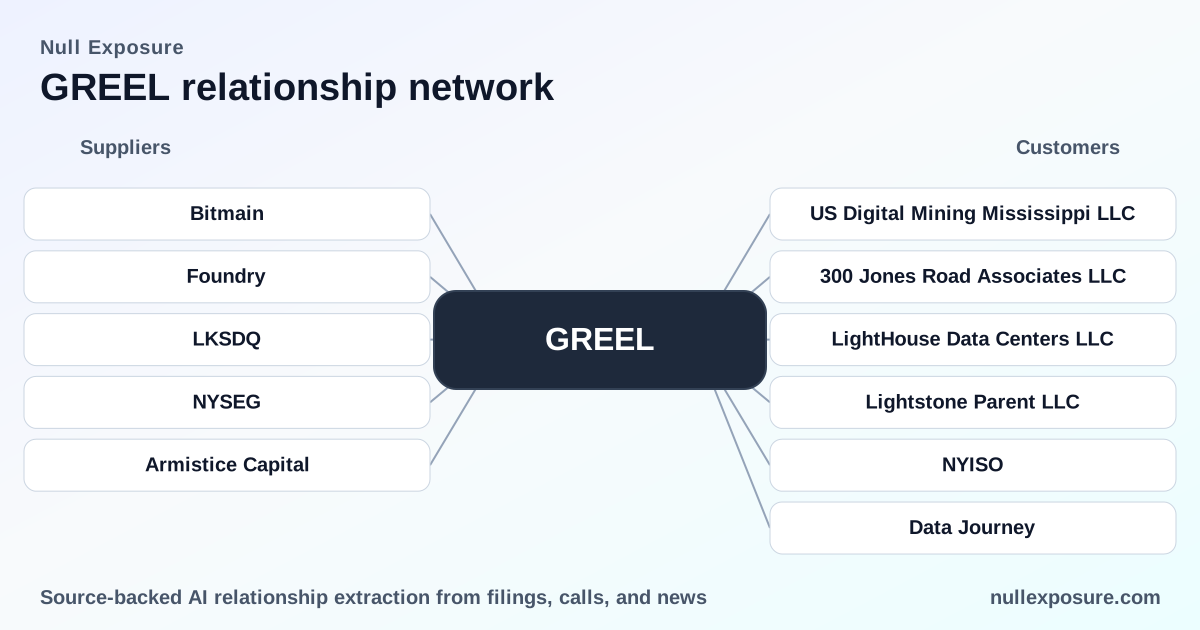
US Digital Mining Mississippi LLC
Greenidge closed the sale of its Columbus, Mississippi bitcoin‑mining facility to US Digital Mining Mississippi LLC for $3.9 million (subject to customary adjustments) with the transaction closing on September 16, 2025. This was disclosed in a company press release reported by The Globe and Mail. https://www.theglobeandmail.com/investing/markets/stocks/GREE/pressreleases/34873022/
LightHouse Data Centers
Greenidge sold a 152‑acre property in Spartanburg, South Carolina to an affiliate of The Lightstone Group and LightHouse Data Centers, closing the transaction for cash in 2025 as part of its asset‑monetization program. The transaction was reported on Investing.com in May 2026. https://ng.investing.com/news/company-news/greenidge-sells-south-carolina-property-for-18-million-in-cash-93CH-2251228
The Lightstone Group
An affiliate of The Lightstone Group was the purchaser of the Spartanburg land, signaling institutional real estate demand for Greenidge’s non‑core parcels and providing immediate cash proceeds to the company. This transfer was reported on Investing.com in May 2026. https://ng.investing.com/news/company-news/greenidge-sells-south-carolina-property-for-18-million-in-cash-93CH-2251228
LightHouse Data Centers LLC
DatacenterDynamics reported that Greenidge entered an agreement to sell approximately 152 acres in Spartanburg to 300 Jones Road Associates LLC, an affiliate of Lightstone Parent LLC and LightHouse Data Centers LLC, indicating an active buyer group from the data‑center real estate community. https://www.datacenterdynamics.com/en/news/greenidge-generation-cryptomine-offline-after-fire/
300 Jones Road Associates LLC
300 Jones Road Associates LLC, an affiliate vehicle tied to Lightstone/LightHouse, is the entity named in the Spartanburg land purchase agreement reported by DatacenterDynamics, highlighting the use of affiliate special‑purpose buyers in Greenidge’s land sales. https://www.datacenterdynamics.com/en/news/greenidge-generation-cryptomine-offline-after-fire/
Lightstone Parent LLC
Lightstone Parent LLC was referenced as a parent affiliate in the Spartanburg parcel transaction, demonstrating the layered structure of the purchaser group for Greenidge’s asset dispositions. The sale was covered by DatacenterDynamics. https://www.datacenterdynamics.com/en/news/greenidge-generation-cryptomine-offline-after-fire/
NYISO
The New York Independent System Operator is a major market counterparty: Greenidge sells electricity, capacity and ancillary services into the NYISO and the New York facility is a meaningful contributor to operations. Company filings and market commentary reference the NY facility’s role in NYISO sales and grid participation. (See the firm's 10‑Q commentary reproduced on TradingView for FY2025 context.) https://www.tradingview.com/news/tradingview:a6354cc1eacff:0-greenidge-generation-holdings-inc-sec-10-q-report/
Data Journey
Greenidge had been set to sell certain land to Data Journey, but that agreement collapsed, illustrating that not all disposal negotiations close and that deal execution risk is present in the company’s monetization strategy. DatacenterDynamics reported the failed sale. https://www.datacenterdynamics.com/en/news/greenidge-generation-cryptomine-offline-after-fire/
What investors should take away — risks and levers
- Concentration risk is material. With one hosting customer accounting for roughly half of revenue, counterparty shock creates downside volatility for top‑line and margins. This is an explicit company signal.
- Contract mix balances predictability and flexibility. Long‑term hosting arrangements provide anchor revenue while one‑day pool contracts allow Greenidge to re‑price or reallocate capacity quickly; this creates a dual risk/return profile where some revenue is stable and some is fluid.
- NYISO dependency is both asset and exposure. Selling energy into NYISO supplies steady cash but ties performance to wholesale power prices and grid dispatch decisions; the NY facility’s grid role is explicitly documented.
- Asset sales are a visible tool to manage liquidity. Multiple land sales to Lightstone affiliates and the Mississippi facility sale demonstrate management’s willingness to monetize non‑core assets to shore up the balance sheet; execution risk (as with the failed Data Journey deal) persists.
Bottom line for allocators
Greenidge’s customer map shows a company transforming from vertical crypto‑mining to a hosting and power‑supply operator that leans on a small number of large counterparties and opportunistic asset sales. For investors, the key valuation levers are counterparty concentration, NYISO market access and wholesale price exposure, and management’s ability to execute additional non‑core disposals without damaging core operations. For ongoing monitoring and structured coverage of these counterparty signals, visit https://nullexposure.com/.