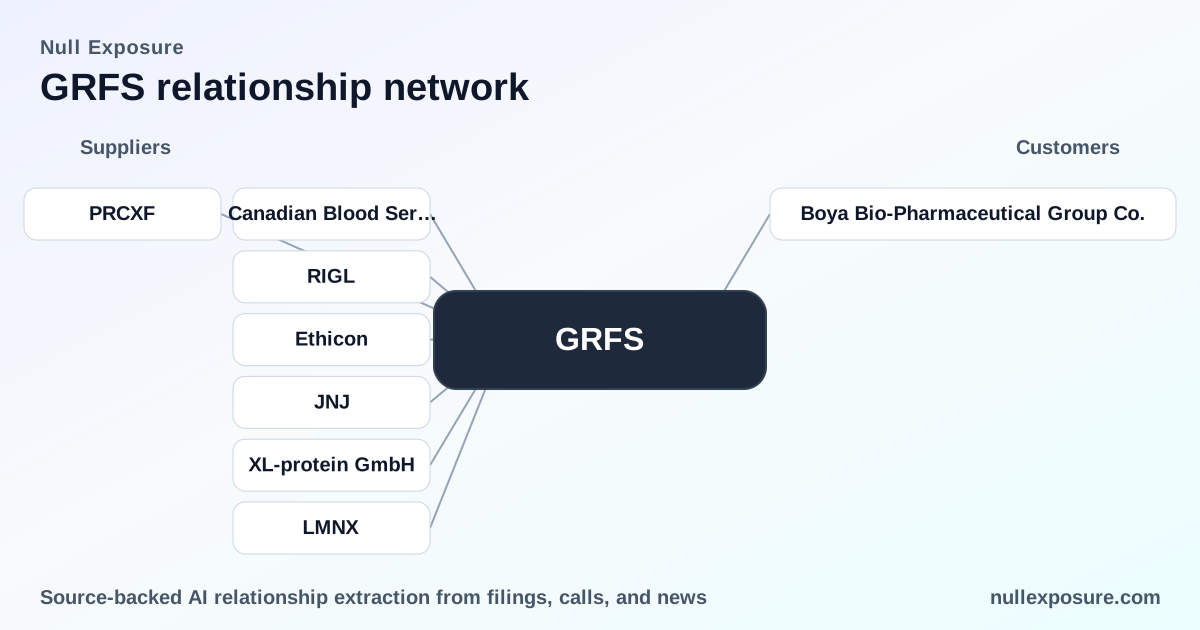
GRFS customer map: where Grifols’ commercial reach and counterparties affect valuation
Grifols (GRFS) operates as an integrated plasma‑derived therapeutics company that collects plasma, manufactures specialty biologics, and monetizes through product sales and strategic asset transactions. Its commercial relationships combine long‑term supply partnerships, country‑specific collection arrangements, and occasional equity divestments that materially influence cash flow, leverage and access to growth markets.
If you evaluate counterparty risk or revenue durability for GRFS, this customer map is a concise way to match counterparties to strategic outcomes and balance‑sheet effects. For a structured view of similar relationship intelligence, visit the NullExposure homepage: https://nullexposure.com/.
What investors should watch in Grifols’ customer posture
Grifols’ customer footprint shows a hybrid operating model: commercial supply agreements for core plasma‑derived products coexisting with strategic partnerships and asset sales to unlock capital. That structure produces several firm-level signals that affect valuation and operational risk:
- Contracting posture: A mix of supplier‑side long‑term contracts and strategic joint ventures suggests predictable revenue for core products but also negotiation points in country‑specific markets where local law governs purchase and collection rights.
- Concentration and criticality: Partnerships and off‑balance sales indicate that a few large counterparties and market entries (notably in China and other APAC markets) are strategically important for scale and distribution.
- Maturity and financial strategy: Use of asset sales to address debt maturities demonstrates an active capital‑management approach consistent with a mature industrial player balancing growth investments and deleveraging.
These are company‑level signals derived from observed counterparty relationships and corporate actions; they frame how counterparties influence Grifols’ cash generation and risk profile.
Relationship-by-relationship review: the partners that matter
ADMA: recognized as a reliable supplier by peers
ADMA’s public commentary lists Grifols alongside other established suppliers, indicating industry recognition of Grifols as a dependable source of plasma‑derived inputs and finished biologics. This reinforces Grifols’ role in the supply chain and its reputation among smaller biopharma customers. Source: InsiderMonkey earnings‑call transcript referencing FY2025 (InsiderMonkey, March 2026) — https://www.insidermonkey.com/blog/adma-biologics-inc-nasdaqadma-q3-2025-earnings-call-transcript-1641742/
Boya Bio‑Pharmaceutical Group: a China‑focused collection and purchase arrangement
A joint initiative reported between Grifols and Boya centers on building plasma donation capacity in China, but Chinese law constraints mean Boya is the legal purchaser of the plasma the partners collect, creating a structured buyer‑seller dynamic that limits direct purchase flexibility in that jurisdiction. This arrangement gives Grifols market access through a local counterparty while ceding purchase control under domestic regulation. Source: Yicai Global coverage of the Grifols‑Boya investment (reported with FY2018 context) — https://www.yicaiglobal.com/news/grifols-boya-will-inject-usd60-million-to-set-up-plasma-donation-centers-in-china
Haier Group: strategic asset sale to cut leverage
Grifols executed a major capital transaction when it sold a 20% stake in Shanghai RAAS to the Haier Group for approximately €1.6 billion, a material liquidity event that directly addressed pressing debt maturities and improved the company’s near‑term balance‑sheet dynamics. This is an example of turning an equity position into cash to reduce financial risk and regain flexibility. Source: FinancialContent market analysis citing the mid‑2024 sale and FY2026 context — https://markets.financialcontent.com/stocks/article/finterra-2026-3-25-the-great-resurgence-a-deep-dive-into-grifols-sa-grfs-in-2026
What those relationships mean for valuation and operations
The three relationships trace a coherent strategic pattern: market access through local partners, reputational strength among specialty biopharma buyers, and active asset recycling to manage leverage. Investors should weigh the following implications:
- Revenue durability vs. regulatory complexity: Grifols’ supply credibility with customers like ADMA supports recurring revenue, but country‑specific rules (illustrated by the Boya arrangement in China) introduce operational constraints on how revenue and margin flow are structured.
- Counterparty concentration risk: Large transactions and partnerships (for example with Haier and large domestic purchasers) reduce liquidity risk when they release capital, but they also increase dependence on a limited set of strategic counterparties for market entry and balance‑sheet relief.
- Capital strategy is part of the business model: The Haier sale confirms that asset monetization is an explicit lever in Grifols’ financial toolkit to manage maturities and support operational priorities.
How to use this map in your modeling
- Stress test revenues under scenarios where local purchasing rules change in key jurisdictions; model margin shifts when sales are routed through local buyers rather than direct Grifols sales.
- Reflect balance‑sheet improvements from asset sales as discrete events that materially alter interest coverage and covenant headroom in short‑term windows.
- Monitor counterparties for their own financial health; a counterparty failure or regulatory shift in China will have outsized effects given local purchase constraints.
For a consolidated view of Grifols’ counterparty landscape and comparable intelligence on other names, see NullExposure: https://nullexposure.com/.
Bottom line for investors and operators
Grifols combines industrial scale in plasma‑derived therapeutics with a pragmatic commercial strategy that leverages local partners and selective asset sales. The net effect is a company with durable commercial counterparty relationships but concentrated strategic dependencies and active capital management, both of which should be explicitly reflected in underwriting, stress scenarios, and counterparty monitoring.