Brazil Potash (GRO): Offtakes, Financing, and What the Customer Map Reveals
Brazil Potash develops the Autazes potash project in Brazil and monetizes through the sale of processed potash under long-term offtake contracts with fertilizer traders and distributors; the company has presold a high proportion of future production using binding take-or-pay agreements to underpin construction financing and de‑risk market exposure. For investors and operators, the core thesis is straightforward: Brazil Potash is a project developer whose value realization depends on executing construction while converting long‑dated offtake commitments into cash flow when production begins. Learn more about the platform at https://nullexposure.com/.
Why the offtake map matters to valuations and financing
Brazil Potash’s capitalization and near-term financing trajectory are conditioned less by spot fertilizer markets and more by the quality, tenor and coverage of its commercial contracts. Public disclosures and press coverage document binding take‑or‑pay terms ranging from 10 to 17 years and a level of pre‑commitment that the company reports as roughly 91% of forecast production. Those commercial terms perform three critical functions for investors:
- They convert future production into predictable revenue streams that lenders and equity can underwrite.
- They concentrate commercial counterparty risk across a small set of large fertilizer traders and distributors, increasing counterparty importance relative to a more diversified merchant model.
- They lengthen project maturity from construction risk toward operating cash‑flow risk, making execution and delivery the primary value drivers.
These are company‑level operating signals: binding long-term contracts improve bankability and reduce market risk, but also concentrate commercial exposure and elevate the strategic importance of contract performance and logistics.
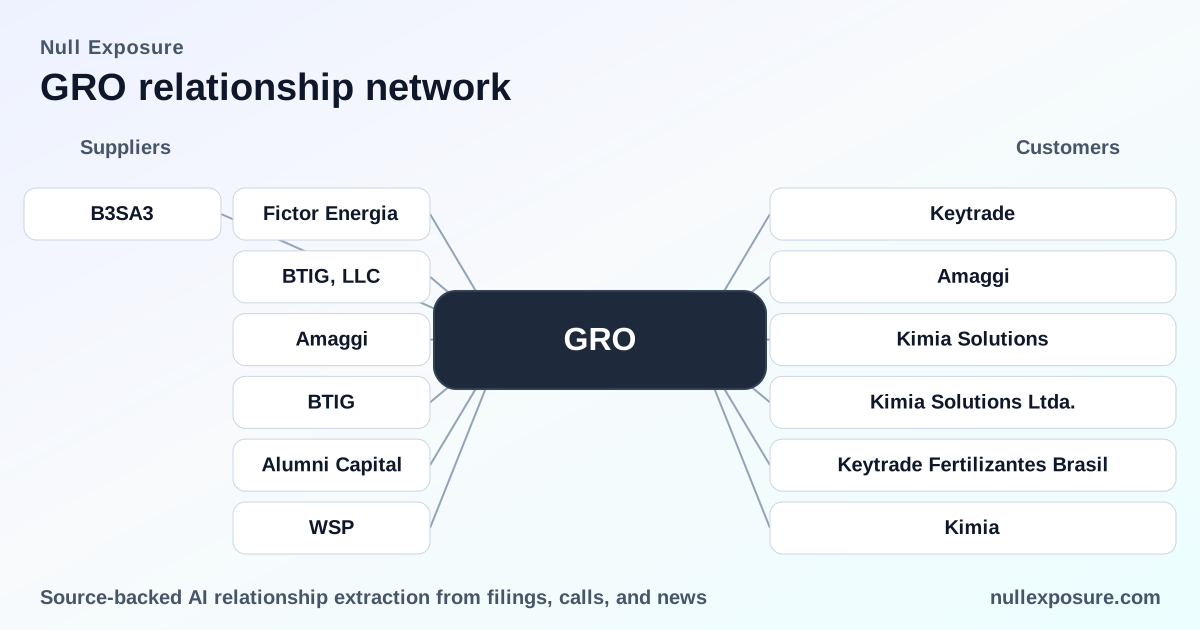
Who has committed to buy Autazes production (every relationship represented)
H3: Keytrade / Keytrade Fertilizantes Brasil
Brazil Potash executed a 10‑year take‑or‑pay offtake with Keytrade Fertilizantes Brasil (a subsidiary of Keytrade AG) that commits Keytrade to purchase up to 900,000 tonnes per year once production starts, a key piece of the company’s presale program. This agreement is cited repeatedly in company press releases and industry coverage as one of the final major commercial commitments. Source: Equity.Guru reporting on the Oct 2025 Keytrade agreement and subsequent GlobeNewswire and Yahoo Finance summaries (Oct–Dec 2025).
H3: AMAGGI / Amaggi
Brazil Potash previously reached an offtake with AMAGGI, one of the world’s largest soybean producers, which together with subsequent deals brings locked‑in sales to roughly 1.45 million tonnes per year—about 60% of planned output according to company commentary. AMAGGI’s participation anchors the project with a large Brazilian agribusiness counterparty and is cited in multiple press releases and market write‑ups. Source: Equity.Guru and GlobeNewswire releases summarizing the AMAGGI agreement (Oct–Dec 2025).
H3: Kimia Solutions / Kimia Solutions Ltda. / Kimia
Brazil Potash signed a binding 10‑year take‑or‑pay agreement with Kimia Solutions Ltda., part of Bulkfertz, committing Kimia to purchase up to 704,000 tonnes per year at market prices under the terms disclosed; the Kimia deal is presented in company PRs as the final of the three major offtakes that together cover the bulk of future production. Market coverage and press releases describe Kimia as a longstanding Brazilian fertilizer distributor and trace the commercial terms to Oct–Dec 2025 announcements. Source: GlobeNewswire press release dated Oct 28, 2025 and follow‑up company milestone release Dec 8, 2025; additional reporting in ValueTheMarkets and Yahoo Finance (late 2025 to early 2026).
Notes on duplication and naming: company communications and third‑party coverage refer to the same commercial partners under slightly different names (Keytrade vs. Keytrade Fertilizantes Brasil; AMAGGI/Amaggi; Kimia vs. Kimia Solutions Ltda.). All references above correspond to the offtake transactions disclosed in Brazil Potash press material and replicated in market reporting (Oct–Dec 2025).
Commercial characteristics and contract posture (company‑level signals)
- Contracting posture: The disclosed agreements are binding take‑or‑pay structures with tenors in the low‑teens of years, converting projected production into contracted volumes and improving bankability for construction financing. Company releases explicitly characterize these as foundational to progressing into construction. Source: GlobeNewswire and company milestone releases (Oct–Dec 2025).
- Concentration: A small group of counterparties account for the bulk of presold volumes. Concentration reduces market exposure but increases the impact of any single counterparty default. Source: Company statements aggregated in media coverage (Dec 2025; ValueTheMarkets, March 2026).
- Criticality to financing: Brazil Potash and reporters link the commercial program directly to the company’s ability to catalyze construction financing—presales are positioned as the central credit enhancement. Source: GlobeNewswire release "Presells 91% of Future Production" (Oct 28, 2025) and follow‑up milestone briefings (Dec 8, 2025).
- Maturity and tenor: Contracts reported between 10 and 17 years shift the project’s risk profile toward execution and long‑term delivery rather than short‑term commodity price exposure. Source: Company milestone disclosures and press summaries (Dec 2025).
Because no separate constraints were provided in the relationship data file, these operational and business model characteristics are presented as company‑level signals synthesized from the disclosed commercial agreements and attendant press coverage.
What investors and operators should watch next
- Construction execution and schedule risk. With a high share of production presold, the stock’s value will pivot to the company’s ability to deliver on schedule and on budget; delays erode the present value of the contracted revenue stream.
- Counterparty performance and credit quality. The concentrated offtake book elevates counterparty credit risk; operators and lenders will monitor each buyer’s balance‑sheet strength, payment record under take‑or‑pay mechanics, and logistics capability.
- Price alignment mechanics. Many of the disclosed commitments reference market‑price settlement within defined frameworks. Investors should examine how price indexing and pass‑throughs affect revenue under varied fertilizer cycles.
- Conversion of contracts into financing. The market will price Brazil Potash on its ability to translate presales into committed construction capital and into early‑life cash flow.
For an organized investor view of these relationships and their financing implications, additional analysis is available at https://nullexposure.com/.
Bottom line
Brazil Potash has shifted the investment calculus from speculative resource optionality to contracted commercial execution: long‑dated take‑or‑pay agreements with Keytrade, AMAGGI and Kimia Solutions cover the majority of planned output and materially improve project bankability. Investors should treat future returns as conditional on construction delivery and counterparty performance rather than on short‑term commodity upside. The commercial map reduces commodity exposure but concentrates execution and counterparty risk—factors that will determine valuation as the project advances into construction and production.