GRRR: Customer relationships that turn hardware into recurring AI infrastructure revenue
Gorilla Technology Group (NASDAQ: GRRR) builds and monetizes large-scale GPU-based AI infrastructure by selling and leasing high-performance servers, edge video intelligence and associated services to hyperscale and sovereign customers in APAC. Revenue is driven by multi-year, high-ticket infrastructure contracts and phased deployments where Gorilla supplies GPU systems under long-duration commercial models while partners operate and resell compute services, converting capex-grade hardware into predictable, contract-backed revenue streams. For investigators and operators assessing customer risk and upside, the recent contract roster reveals concentration in a small number of strategic partners and clear dependency on ecosystem participants like NVIDIA. Learn more at the Gorilla customer portal: https://nullexposure.com/.
How Gorilla gets paid and why customer contracts matter
Gorilla’s commercial approach is not transactional hardware sales alone — the company structures long-duration infrastructure engagements that embed Gorilla into customers’ go-to-market and sovereign compute stacks. Contracts commonly include staged deliveries, design and vendor approvals, and revenue recognition tied to installation milestones. That model produces high nominal backlog and revenue visibility, but it also concentrates execution risk in delivery schedules, partner approvals, and a handful of very large counterparties.
Key business-model characteristics:
- Contracting posture: long-duration commercial models and phased delivery schedules that convert hardware supply into multi-year revenue streams.
- Concentration: revenue can be dominated by a few large deals, increasing single-counterparty risk.
- Criticality: customers build sovereign or hyperscale AI capability around Gorilla-supplied infrastructure, raising the strategic importance and stickiness of those relationships.
- Maturity and timing: deployments are phased and dependent on design approvals and delivery slots, so recognized revenue lags headline bookings.
If you want consolidated coverage and monitoring of Gorilla’s customer relationships, visit https://nullexposure.com/ for structured context and alerts.
Customer-by-customer read: every relationship in the record
Yotta Data Services — India: scale, sovereign posture, and headline deals
Gorilla expanded a landmark partnership with Yotta to supply GPU infrastructure in India under long-duration commercial arrangements, supporting deployment of thousands of GPUs (reported as roughly 5,000 GPUs in one tranche and an additional 20,736 B300 GPU cards in another announcement) to be implemented at Yotta’s Tier IV Navi Mumbai facility for enterprise and government compute services. According to a Newsfile press release and multiple media reports (May 3, 2026), Gorilla will provide GPU systems while Yotta operates them under NVIDIA Reference Architecture and delivers hyperscale AI compute services to commercial and sovereign customers (Newsfile, May 3, 2026; Economic Times, May 3, 2026). Source: Newsfile release and Economic Times coverage (May 3, 2026) — https://www.newsfilecorp.com/release/288663/Gorilla-Technology-Yotta-Sign-Landmark-AI-Infrastructure-Deal-Establishing-Major-Position-in-Indias-Sovereign-AI-Buildout and https://m.economictimes.com/tech/artificial-intelligence/yotta-gorilla-technology-expand-india-ai-infra-pact-with-2-8-billion-project/articleshow/130611365.cms.
Yotta Data Services — revenue scale headlines (market commentary)
Market reports frame the expanded India program as a multi-year effort valued in the hundreds of millions to billions of dollars, with outlets citing figures such as more than $500 million over five years and press coverage labeling the tranche at approximately US$2.8 billion for the expanded program. These public estimates drove notable market moves in GRRR shares in early May 2026 (Benzinga, Investing.com, May 2026). Source: Benzinga and Investing.com coverage (May 2026) — https://www.benzinga.com/markets/small-cap/26/04/52135904/gorilla-technology-to-deploy-20736-gpus-in-india-by-2026 and https://www.investing.com/news/company-news/gorilla-technology-secures-28-billion-ai-infrastructure-deal-in-india-93CH-4645272.
Freyr — Southeast Asia rollout partner and phased delivery risk
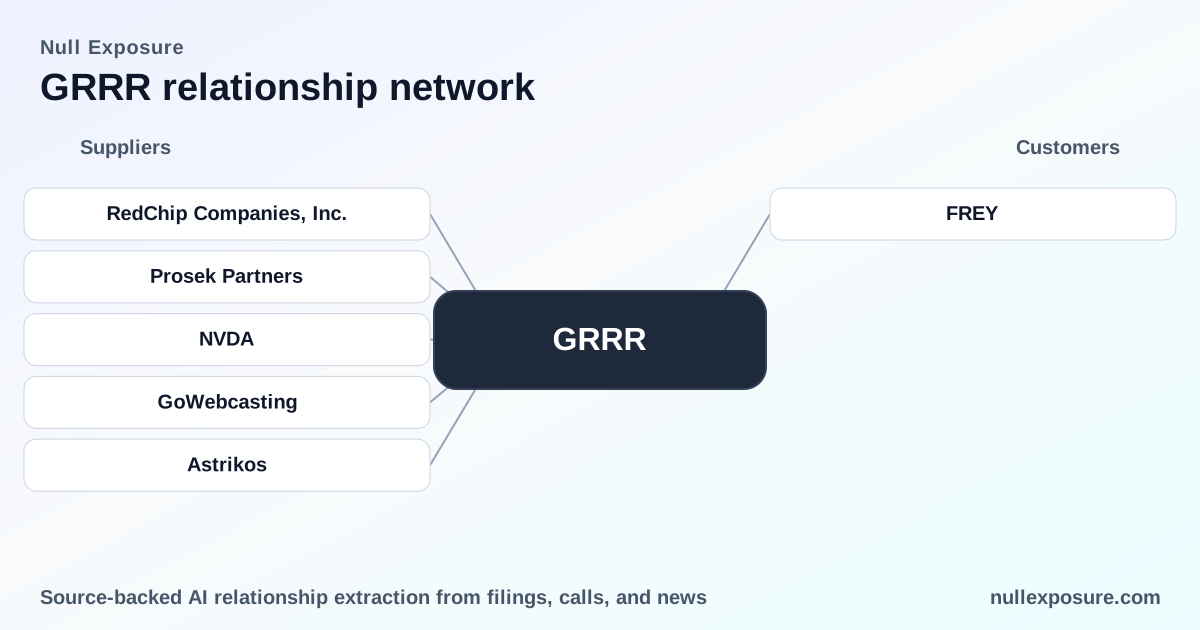
Freyr (symbol FREY) is a multi-year partner tied to a three-year, US$1.4 billion contract to build AI-powered data centers across Southeast Asia, a program frequently cited by management when discussing backlog and pipeline. Gorilla’s revenue recognition for the Freyr relationship is contingent on phased deployments, design approvals and “delivery slots,” and requires NVIDIA approvals for certain components, which creates timing variability in revenue realization (company remarks and market coverage, Q4 2025 / FY2026 commentary). Source: MarketBeat and earnings-call transcripts reported by market outlets (Q1–Q2 2026) — https://www.marketbeat.com/instant-alerts/gorilla-technology-group-says-backlog-tops-100m-as-ai-data-center-pipeline-nears-10b-2026-01-28/ and earnings-call coverage.
NVIDIA — ecosystem offtake and approval gating
NVIDIA surfaces in the record as a strategic ecosystem participant: reports indicate NVIDIA is expected to account for roughly half of offtake under a major GPU tranche through a multi-year commitment tied to an APAC DGX Cloud cluster in India. That elevates NVIDIA from a vendor to an ecosystem gatekeeper whose approvals and offtake commitments materially affect Gorilla’s deployment schedules and end-customer economics. Source: media reporting on the Yotta expansion that cites NVIDIA’s involvement (SMEStreet and related coverage, May 2026) — https://smestreet.in/technology/gorilla-technology-expands-yotta-ai-infrastructure-deal-11782414.
What the relationship map implies for investors and operators
- Concentration is both a feature and a risk. A handful of large, multi-year contracts (Yotta, Freyr) provide fast backlog growth and margin leverage but expose Gorilla to execution timing risk and counterparty performance. A single delayed delivery slot or vendor approval can shift revenue across quarters.
- Commercial posture is capital-intense and long-dated. Gorilla’s monetization is structured around long-duration infrastructure support and staged recognition; management commentary confirms that timing depends on coordinated delivery and third-party approvals, which creates predictability in headline backlog but uncertainty in near-term cash flow timing (Q4 2025 / FY2026 comments).
- Ecosystem dependencies matter. NVIDIA’s offtake and reference-architecture role effectively make NVIDIA a partner whose commitments and hardware availability influence Gorilla’s ability to meet contract milestones.
- Strategic criticality supports stickiness. Supplying sovereign and hyperscale AI infrastructure positions Gorilla as a strategic vendor in customers’ critical compute stacks, increasing renewal and retention prospects once deployments are live.
Investment takeaways and risk checklist
- Upside: Large, reportable contracts can materially re-rate revenue and backlog; analyst coverage reflects a constructive view of GRRR’s growth opportunity.
- Execution risk: Phased deliveries, vendor approvals, and reliance on a small number of large customers create timing and concentration risk.
- Monitoring priorities: Watch delivery schedules, NVIDIA offtake confirmations, and milestone-based revenue recognition on earnings calls and company filings.
For a centralized view of customer relationships, contract cadence and media-sourced developments for GRRR, visit our monitoring hub at https://nullexposure.com/.
Bold summary: Gorilla converts GPU hardware supply into multi-year, contract-backed revenue through a concentrated set of strategic customers; the model creates both high upside from large bookings and material execution risk tied to phased delivery, vendor approvals and a few dominant partners.