GRVY: Platform-heavy distribution, licensed publishing, and steady monetization from multi-store channels
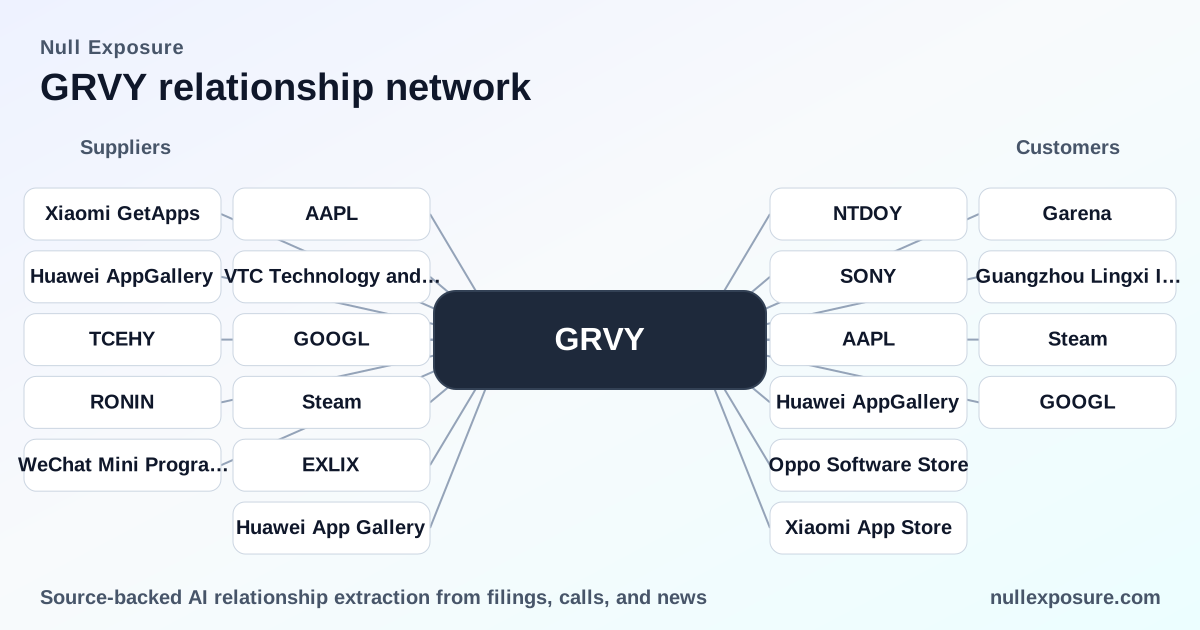
Gravity Co., Ltd. develops and monetizes online games through a combination of in-house releases, platform storefront distribution and licensed publishing partners in region-restricted markets; the company captures revenue via digital storefront sales, in-game purchases and licensing fees to local publishers. Investors should view GRVY as a content owner whose revenue profile is driven by multi-platform distribution and third‑party publishers in China and Southeast Asia, rather than a single direct-to-consumer channel. For a structured view of GRVY’s partner footprint, visit https://nullexposure.com/.
How Gravity’s operating model converts IP into cash
Gravity operates like a mid‑cycle games publisher: it develops titles and then distributes them across console, PC and mobile storefronts, and also grants publishing licenses in markets where local partners provide market access. This creates three predictable revenue levers: direct digital sales on major storefronts, recurring spend from live services (in‑game purchases), and licensing/publishing fees earned from regional publishers. The company’s use of multiple storefronts and third‑party publishers reduces single‑channel concentration but simultaneously exposes margins to platform revenue shares and partner performance.
Partner-by-partner readout: what every relationship contributes
Apple App Store
Gravity distributes mobile titles through Apple’s App Store for iOS, giving access to a large premium user base and monetization via App Store purchases and IAP. A press release and subsequent coverage cite the App Store as a distribution channel for multiple titles including Ragnarok launches (news releases, 2025–2026).
Google Play
Google Play is Gravity’s primary Android distribution channel for global and Southeast Asian launches; Google Play listings support downloads and in‑app monetization. Company launch notices for several Ragnarok titles list Google Play as the mobile distribution outlet (Quiver Quant, Jan–Mar 2026).
Xiaomi App Store
Regional Android marketplaces such as Xiaomi App Store are used to reach local Android users in markets like China and Southeast Asia, widening mobile reach beyond the global stores. A Manila Times/GlobeNewswire report on Ragnarok: Twilight notes availability on Xiaomi App Store (Aug 2025).
Huawei AppGallery
Huawei’s AppGallery is listed among the local Android markets Gravity uses for distribution, providing additional exposure in Android‑heavy markets where Google Play penetration is limited. This distribution channel was mentioned in the company’s China mobile release disclosures (Manila Times / GlobeNewswire, Aug 2025).
Oppo Software Store
Oppo’s Android store appears in launch disclosures as another local channel used to maximize mobile downloads in markets targeted by Gravity’s mobile launches (Manila Times / GlobeNewswire, Aug 2025).
Nintendo eShop
Gravity released Tokyo Psychodemic on Nintendo Switch, with digital sales executed through the Nintendo eShop; this provides console storefront revenue and permanent sell‑through outside of mobile ecosystems (Newswire.ca press release, Mar 2026).
PlayStation Store
The PlayStation Store hosts Gravity’s console releases for PS4 and PS5, enabling additional paid content and digital sales on Sony’s platform across global markets outside Japan (Newswire.ca press release, Mar 2026).
SONY
Beyond the PlayStation storefront listing, Sony is the platform owner whose commercial terms (store revenue share, platform policies) directly affect console economics for Gravity’s titles released on PlayStation (Newswire.ca press release, Mar 2026).
Steam
Steam is cited as the PC distribution channel where Gravity provides language support and PC storefront updates; Steam serves as a key outlet for PC sales and global distribution of specific titles (Newswire.ca press release, Mar 2026).
Garena
Garena has been referenced in Gravity’s regional revenue commentary for collaboration events tied to Ragnarok IP, indicating past business with Garena that affected localized revenue generation in Southeast Asia (company filings and historical results commentary, cited via ADVFN/press coverage).
Guangzhou Lingxi Interactive Entertainment Limited
In China, Gravity uses local publishers such as Guangzhou Lingxi to publish mobile titles (for example, Ragnarok: Rebirth), reflecting reliance on licensed local partners for market access and regulatory navigation (Benzinga / Quiver Quant coverage, 2025–2026).
GRAVITY Game Unite SDN. BHD.
GRAVITY Game Unite SDN. BHD. is a regional licensee/operator for PC services (Ragnarok Zero: Global), running a unified global PC server that is officially licensed by Gravity and targets SEA, Europe and Oceania user bases (EQS News / corporate release, Mar–May 2026).
GRAVITY Game Vision, Ltd.
Gravity’s wholly‑owned subsidiary GRAVITY Game Vision released Ragnarok: The New World on mobile storefronts in Taiwan, Hong Kong and Macau, showing the company uses owned subsidiaries to execute regional launches and retain greater control over monetization and live operations (Quiver Quant release, Jan 2026).
What this partner footprint implies for investors: risks and upside
- Revenue diversification across platforms lowers single‑channel concentration risk, since Gravity monetizes across mobile, PC and console storefronts and through licensing deals.
- Platform economics are a material margin pressure: App Store, Google Play, and console platform fees reduce gross take; investors should treat platform revenue share as a persistent operating drag.
- China strategy relies on local publishers, creating dependency on Chinese partners for market access and regulatory compliance; successful partnerships in China are revenue‑critical but not wholly controlled by Gravity.
- Live service performance and regional partner execution drive short‑term volatility: titles that rank highly on launch day (noted in QuiverQuant for Taiwan/HK/Macau) translate directly into cash‑flow; conversely, collaboration cancellations or underperforming events with partners like Garena can depress revenue.
Company‑level signals from partner activity and public disclosures
Because direct contract data is not disclosed in the public record, the observable partner footprint provides company‑level signals about Gravity’s operating posture: Gravity pursues non‑exclusive, multi‑channel distribution, combines owned‑subsidiary launches with licensed publishing in constrained markets, and skews toward recurring monetization through live services rather than one‑off boxed sales. The mix of global storefronts (Apple, Google, Steam, console stores) and regional publishers (Guangzhou Lingxi, GRAVITY Game Unite) indicates a mature publisher model that balances direct control with outsourcing where regulatory or market access requires it.
Bottom line and next steps for research
Gravity’s partner map supports a stable, platform‑driven monetization model with meaningful exposure to mobile app stores and local Chinese publishers. For investors focused on cash‑flow stability, the combination of console/PC storefront sales and multiple mobile channels provides diversification; for those assessing downside, platform fee pressure and partner execution in China/SEA are the primary risks.
For a consolidated, investor‑grade presentation of GRVY’s partner relationships and observed disclosures, visit https://nullexposure.com/ to access the full relationship summary and source links.