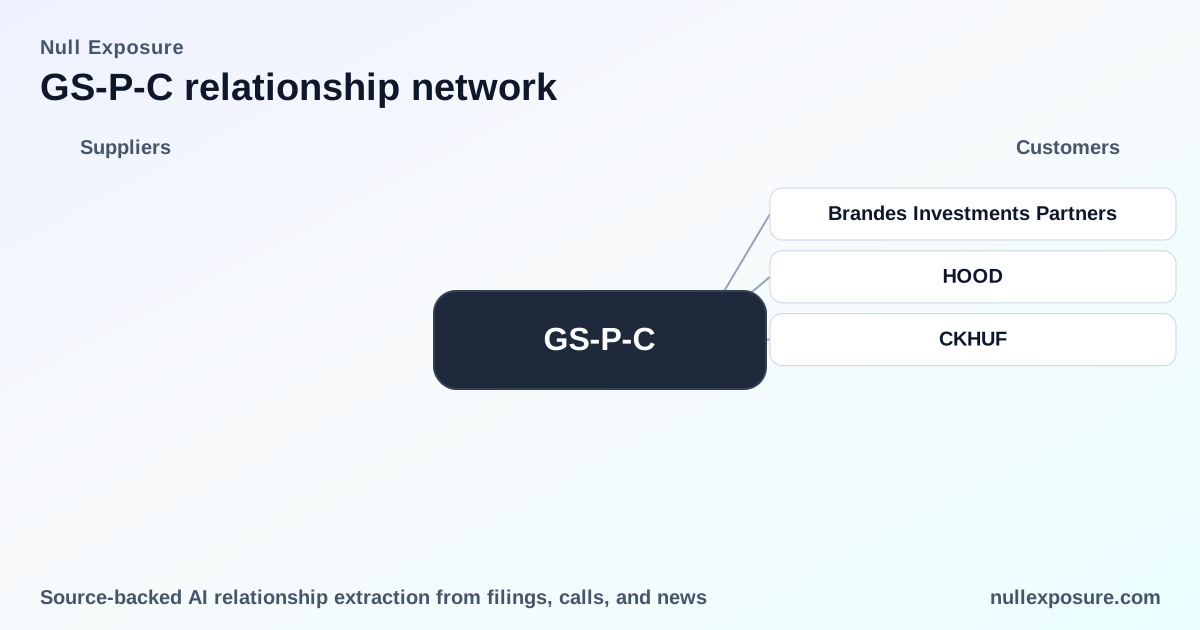
Goldman Sachs (GS‑P‑C) — What recent customer signals mean for investors and operators
Goldman Sachs generates cash through a diversified mix of underwriting and advisory fees, trading and principal activities, and asset-management and distribution businesses; the preferred depositary share GS‑P‑C represents a capital instrument underpinning that platform rather than an operating division. Recent public references to Goldman’s customer relationships reinforce a persistent investment-banking and distribution pipeline, while also highlighting litigation vulnerability and global deal flow that feed fee income. For investors and operators, these customer touchpoints signal where fee velocity, reputational exposure, and cross‑sell opportunities concentrate. Learn more at https://nullexposure.com/.
Why these relationship hits matter to revenue and risk
Goldman’s economics rely on high‑margin, episodic fee events (IPOs, block placements, underwriting) combined with recurring asset‑management and ETF distribution revenue. The items below frame how the listed relationships translate into those cash flows and strategic exposures:
- Deal flow confirmation: Multiple items document Goldman acting as lead underwriter or platform partner—direct evidence of near‑term underwriting and advisory fee potential.
- Distribution and product partnerships: ETF and closed‑end fund initiatives show Goldman’s push to monetize distribution channels and managed‑product economics.
- Legal and reputational risk: Active litigation filings led by institutional plaintiffs underscore the firm’s ongoing legal exposure from historical securitizations.
Company‑level operating signals inferred from the coverage: contracting posture is deal‑centric and fee‑for‑service, client concentration is sector‑diversified but oriented toward large institutional and corporate mandates, criticality is high where Goldman leads syndicates, and maturity is that of a global, incumbent investment bank with entrenched relationships and legacy liabilities.
Relationship roll call — what each mention actually says
Brandes Investments Partners
Goldman hosted Brandes’ first ETF strategies through the Goldman Sachs ETF Accelerator, marking a distribution channel activation that should generate listing and distribution fees as the strategies trade (InvestmentNews, March 9, 2026: https://www.investmentnews.com/mutual-funds/goldmans-build-your-own-etf-hub-debuts-first-funds/244233).
Arkansas Teacher Retirement System
A Supreme Court filing gave Goldman another opportunity to seek dismissal of a shareholder suit led by the Arkansas Teacher Retirement System that alleges conflicts in mortgage‑backed securities sales—this remains a legal and reputational overhang tied to historical securitization practices (InvestmentNews, referenced Supreme Court coverage, FY2021; reported May 3, 2026: https://www.investmentnews.com/regulation-legal-compliance/supreme-court-gives-goldman-chance-to-end-shareholder-suit/207928).
HOOD (Robinhood / HOOD filing mention)
Goldman is documented as lead underwriter on Robinhood’s $1 billion closed‑end pre‑IPO fund, a transaction that produces underwriting and distribution fees and underscores continued investment‑banking flow with fintech clients (MarketBeat filing alert, February 19, 2026: https://www.marketbeat.com/instant-alerts/filing-the-goldman-sachs-group-inc-gs-shares-bought-by-king-luther-capital-management-corp-2026-02-19/).
Robinhood
Separate mentions of Robinhood reiterate the same underwriting relationship: Goldman’s role on Robinhood’s capital raise is a near‑term fee event and evidences the bank’s positioning with high‑profile retail fintech sponsors (MarketBeat, FY2026 filing coverage: https://www.marketbeat.com/instant-alerts/filing-the-goldman-sachs-group-inc-gs-shares-bought-by-king-luther-capital-management-corp-2026-02-19/).
CKHUF (CK Hutchison implied)
Bloomberg coverage relayed via trade reporting shows CK Hutchison tapped Goldman and UBS to lead a planned IPO for A.S. Watson, a cross‑border mandate that points to fee opportunities in the Asia‑Pacific IPO market and validates Goldman’s global underwriting footprint (ts2.tech summary referencing Bloomberg, March 2026: https://ts2.tech/en/goldman-sachs-stock-edges-higher-before-cpi-and-a-packed-week-of-bank-earnings/).
CK Hutchison
The corporate sponsor CK Hutchison’s engagement of Goldman as a lead banker on A.S. Watson’s planned IPO confirms the same strategic advisory and syndication role for Goldman in large corporate exits, supporting material advisory and underwriting fee potential (ts2.tech/Bloomberg report, FY2026: https://ts2.tech/en/goldman-sachs-stock-edges-higher-before-cpi-and-a-packed-week-of-bank-earnings/).
Strategic takeaways for investors and operators
- Underwriting and advisory remain primary growth levers. Lead‑manager assignments on Robinhood’s pre‑IPO vehicle and A.S. Watson’s planned IPO provide direct pathways to fee revenue and syndicate follow‑on business. Investors should treat these as high‑margin, event‑driven cash generators that can materially swing quarterly results.
- Asset‑management and product distribution are active plays. The ETF Accelerator engagement with Brandes emphasizes Goldman’s strategy to monetize distribution control and distribution economics through incubator/accelerator models that generate ongoing management and platform fees.
- Legal exposure is a persistent constraint. Institutional plaintiffs like the Arkansas Teacher Retirement System keep legacy litigations on the docket; these matters translate into legal expense, settlement risk, and occasional reputational erosion that can pressure premium multiples.
- Global reach and sponsor relationships underpin resilience. Engagements with large corporates such as CK Hutchison show Goldman’s entrenched role in cross‑border capital markets, which diversifies fee sources across geographies and deal types.
For a concise view of how relationship signals translate to revenue potential and risk concentration, revisit the platform overview at https://nullexposure.com/.
What investors should watch next
- Announcements converting lead‑manager assignments into priced transactions will be the clearest short‑term revenue trigger. Monitor deal calendars and Goldman syndicate announcements for fee realization.
- Litigation milestones and Supreme Court docket movements tied to historical RMBS suits will determine the scale and timing of legal exposures.
- Uptake and asset gathering around ETF Accelerator launches will indicate whether distribution models translate into durable AUM and recurring fees.
Final verdict: these customer mentions collectively reinforce Goldman’s fee‑centric, deal‑driven business model with meaningful upside from active underwriting and distribution engagements, offset by ongoing legal risks that constrain valuation multiples.