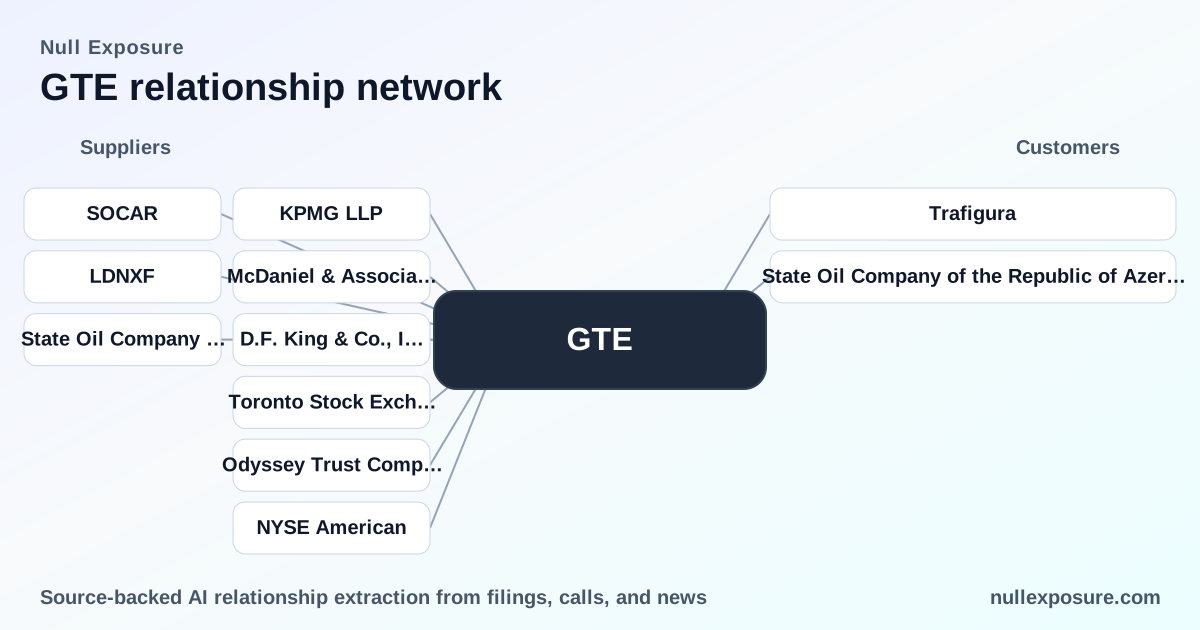
Gran Tierra Energy (GTE): Customer relationships that drive cash and concentration risk
Gran Tierra is an upstream oil and gas producer that monetizes through the sale of produced oil, natural gas and NGLs, primarily in Colombia with additional production in Ecuador and intermittent Canadian operations. The company converts production into cash via short‑term sales agreements and occasional prepayment/offtake facilities, supplementing operating cash flow with tailored commodity financing. For investors, the critical lens is simple: operational revenues are heavily concentrated, but liquidity lines such as Trafigura’s prepayment facility materially change near‑term funding flexibility. For further signal coverage and relationship tracking, visit https://nullexposure.com/.
How Gran Tierra actually sells oil and gets paid
Gran Tierra’s commercial model is straightforward: produce hydrocarbons, sell them to domestic and international marketers, and manage cash flow through short‑term contracts and receivables management. The company sells most production through domestic marketers under contracts that are renegotiated on a 12–30 month basis and routinely collects receivables weekly in Colombia and Ecuador (monthly in Canada). These mechanics create a working capital cycle that is strongly linked to short contract tenors and the credit posture of a small set of buyers.
Where the customer concentration risk lives
Gran Tierra’s revenue base is geographically concentrated: 93% of 2024 sales were generated in Colombia, 4% in Ecuador and 3% in Canada, while proved reserves at year‑end 2024 were split roughly 47% Colombia, 46% Canada and 7% Ecuador. Commercially, this translated into a single principal buyer that accounted for over 91% of sales volumes in 2024, producing a high dependency profile that influences negotiation leverage, pricing exposure and counterparty credit risk.
What transactions and partners matter now
Gran Tierra’s most consequential customer relationships in the public record for FY2026 are with Trafigura and SOCAR. Both relationships have discrete strategic and financial consequences for investors.
Trafigura — prepayment and offtake expanded to $350 million
Gran Tierra amended and expanded its oil offtake and prepayment agreement with Trafigura to a facility of up to $350.0 million, enhancing liquidity and extending maturities while strengthening the balance sheet. This commercial facility converts near‑term production into upfront cash and reduces reliance on unsecured credit lines. The expansion was disclosed in the company’s FY2025/FY2026 results and public releases in early March 2026 via GlobeNewswire and subsequent press coverage. (Company release, GlobeNewswire / InvestingNews, March 2026.)
SOCAR — a new upstream footprint in Azerbaijan through an EDPSA
Gran Tierra signed an exploration, development and production sharing agreement (EDPSA) for the onshore Guba‑Khazaryani region in the Republic of Azerbaijan through an indirect wholly owned subsidiary. This entry into Azerbaijan represents a strategic geographic diversification of the company’s asset base and a potential multi‑year growth avenue outside Latin America. The agreement was announced in March 2026 and positions Gran Tierra as an operator/partner in a state‑governed contract area managed by SOCAR. (Company announcement reported by InvestingNews, March 2026.)
Interpreting the constraints: contracting posture, concentration, criticality, and maturity
The company‑level signals from filings and disclosures make the operating model clear:
- Contracting posture is short‑term. Sales agreements for core producing regions are renegotiated on cycles of 12–30 months, and specific sales agreements for Putumayo and MMV had expiries reported as March 31, 2025 and March 31, 2026 respectively. This structure gives buyers frequent re‑opportunity to reset commercial terms and places pricing/cash flow sensitivity on near‑term market dynamics.
- Counterparty concentration is acute and functionally critical. One customer accounted for roughly 91% of sales volumes in 2024, which creates single‑counterparty exposure that is operationally significant. That concentration is a principal business risk unless mitigated by replacement buyers or by financing arrangements that convert receivables into liquidity.
- The company presents a substitutability claim, but the commercial footprint says otherwise. Management states that customers can be substituted or crude marketed directly; however, the disclosed sales concentration and the short contract horizons make substitution operationally difficult without transitional revenue disruption.
- Receivables and payment cadence are operationally tight. Collections occur weekly in Colombia and Ecuador and monthly in Canada, reflecting the cash conversion tempo that supports working capital and services debt commitments.
- Relationship stage is active and transactional. The company actively sells production through marketers and uses prepayment facilities; recent amendments (Trafigura) and new EDPSAs (SOCAR) indicate both liquidity management and exploration expansion are live priorities.
- Core product focus remains oil and gas E&P. Customer relationships are transactional in nature—Gran Tierra is the seller of hydrocarbons and the commercial agreements reflect commodity offtake, marketing and financed prepayments.
Why these relationships matter for investors
- Immediate liquidity relief from Trafigura reduces short‑term refinancing risk and supports drilling and operating plans without diluting shareholders; the $350 million facility is a material credit buffer relative to market cap and near‑term funding needs. (GlobeNewswire / InvestingNews, March 2026.)
- SOCAR deal is strategic but immature. The Azerbaijan EDPSA expands geopolitical exposure and upside potential but will require substantial execution and capital to convert into production and cash, creating a medium‑term catalyst rather than immediate revenue relief. (Company announcement, InvestingNews, March 2026.)
- Concentration remains the dominant valuation risk. Despite financing and diversification efforts, the revenue footprint remains heavily skewed to Colombian sales channels; any disruption to the principal buyer or domestic marketing infrastructure would have an outsized impact on cash flow and covenant compliance.
Investment implications and next steps
For research and portfolio teams: prioritize monitoring of (1) utilization and terms of the Trafigura facility, (2) commercial replacement activity or diversification of buyers in Colombia, and (3) milestones on the SOCAR EDPSA that convert exploration rights into a production timeline. These three vectors will determine whether Gran Tierra’s near‑term liquidity gains translate into sustainable de‑risking or remain temporary relief against a concentrated sales base.
For ongoing relationship intelligence and to track updates to these counterparty arrangements, see https://nullexposure.com/.
Bold takeaways: Trafigura’s $350M facility materially improves short‑term liquidity;SOCAR gives geographic optionality but is a multi‑year value driver; customer concentration remains the principal downside risk.