Gaxos.ai (GXAI): Customer Dynamics Drive Near-Term Value and Concentration Risk
Gaxos.ai operates as a hybrid AI software and services provider, monetizing through SaaS subscriptions and usage-tier pricing for gaming and health applications, supplemented by direct service sales and in-app item commerce. The company sells AI-driven tooling to game developers and publishers (Gaxos Labs/Gaming), operates a nascent health business (Gaxos Health) that sells coaching and testing packages, and recognizes revenue from in‑app item sales via app stores. Investors should value GXAI as an early-stage commercial software company with recurring pricing architecture but with material customer concentration and negative profitability today. For a deeper look at customer exposure and implications for valuation, see https://nullexposure.com/.
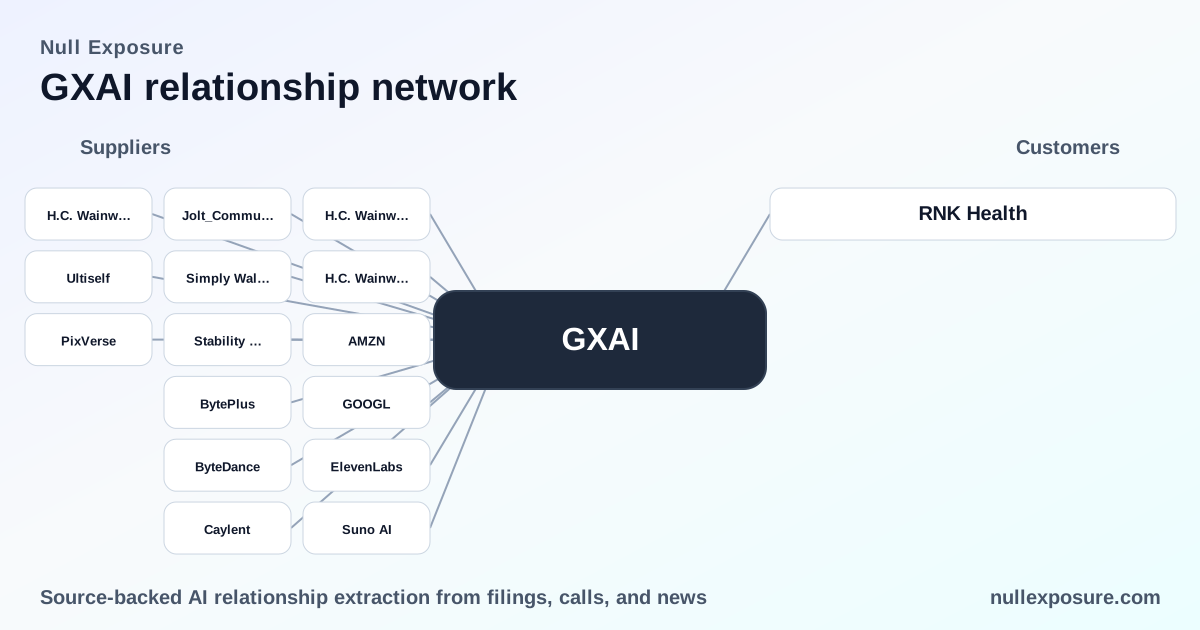
A single customer that matters today: RNK Health
RNK Health supplied a meaningful portion of Gaxos.ai’s recent revenue. According to a market report published March 10, 2026, Gaxos pulled in $692,974 of revenue in the first nine months of 2025, with the bulk coming from RNK Health administrative services. That external reporting identifies RNK Health as a material customer for the period. (Source: tech report, March 10, 2026 — https://ts2.tech/en/gaxos-ai-stock-jumps-after-america-first-defense-wins-navy-license-for-counter-drone-system/)
What the customer footprint implies for operating and commercial strategy
Gaxos.ai’s public disclosures and product descriptions describe a deliberate mix of recurring and transaction-based monetization that shapes contracting posture and revenue predictability:
- Subscription-first with usage tiers. Company filings state Gaxos sells its software under a SaaS subscription model and supports prepaid/postpaid, usage-based pricing in a tiered system that lets customers select subscription levels based on intended consumption.
- Services and individual sales complement software. Disclosures show revenue contributors include health coaching packages sold to individual consumers along with administrative and professional services — indicating a hybrid revenue mix of recurring software and direct services.
- Seller role and marketplace activity. Gaxos positions itself as a seller of in‑game items and enables third-party game developers to mint NFTs and list primary sales on its Platform, meaning a portion of revenue is transaction-driven and tied to app store delivery mechanics.
These characteristics create a contracting posture that combines recurring, tiered SaaS contracts with variable, usage-based revenue and direct service engagements. The mix improves upside when usage grows but increases near-term volatility when a small number of counterparties account for outsized receipts.
(Sources: company disclosures covering the year ended Dec 31, 2024; Gaxos product launch announcements July–September 2024 in company filings.)
Financial context and maturity: early commercial stage
Gaxos.ai reports TTM revenue of $1.933M with negative EBITDA of $4.76M and a diluted EPS of -$0.53 as of the latest quarter (2025-12-31). The company shows rapid top-line expansion in recent periods (material quarterly revenue growth year-over-year), but still operates at a negative margin as it scales. Recent product launches—Gaxos Labs launched September 2024; Gaxos Health launched July 2024—signal that commercial offerings are very recent and revenue streams are still maturing.
These facts together define a company with early recurring revenue patterns, evolving product-market fit, and high operating leverage downside until subscription and usage revenue stabilize.
(Sources: company reporting as of latest quarter 2025-12-31; company disclosures for year ended Dec 31, 2024.)
Relationship-by-relationship brief (complete coverage)
- RNK Health — RNK Health served as a major billing customer in early 2025, with the company reporting $692,974 in revenue for the first nine months of 2025, primarily attributable to RNK Health administrative services. This relationship represents a material near‑term revenue source and highlights customer concentration risk. (Source: tech news report, March 10, 2026 — https://ts2.tech/en/gaxos-ai-stock-jumps-after-america-first-defense-wins-navy-license-for-counter-drone-system/)
Principal constraints and what they mean for investors
The public record surfaces several company-level operating constraints that drive commercial behavior and risk:
- Contracting posture — subscription plus usage: The company’s stated model is a SaaS subscription augmented with prepaid/postpaid usage‑based tiers. This structure creates a revenue profile with a recurring backbone but variable cash flow tied to customer activity levels.
- Counterparty mix includes individuals: The firm reports revenue from individual health coaching package sales, which introduces retail dynamics and microtransaction behavior alongside enterprise customers.
- Role as seller and marketplace operator: Gaxos sells in‑game items and enables primary NFT listings; revenue recognition is tied to delivery through app stores and platform mechanics, meaning platform fee economics and store policies directly affect gross receipts.
- Segment duality — services and software: Gaxos markets both services (health coaching, administrative services) and software (Gaxos Labs and Gaming), so investors must assess cross-segment margins and how easily services can convert into recurring software revenue.
- Early maturity signal: Multiple product launches in 2024 and small absolute revenues point to a company still proving product-market fit and scaling commercial operations.
(Sources: company disclosures for the year ended Dec 31, 2024 and product launch narratives.)
Key risks and valuation implications
- Customer concentration is the immediate valuation risk: a single reported customer supplying the bulk of a six‑figure near‑term haul is material for a sub-$13M market capitalization company. That concentration compresses downside protection in cash flows.
- Revenue predictability is mixed. Usage tiers and app-store‑driven item sales increase upside but reduce short-term visibility; converting transactional receipts into durable subscriptions is required to de‑risk multiples.
- Margin and scale risk. Negative EBITDA and EPS show capital deployment ahead of profitable scale—investors must price in execution risk around CAC, retention, and marketplace dynamics.
- Counterparty diversity is incomplete. The blend of enterprise administrative services, individual health coaching, and gaming marketplace activity means management must manage multiple go-to-market motions simultaneously.
Bottom line: judge growth against concentration
Gaxos.ai is a small, early-stage AI software-and-services company with a subscription-forward monetization strategy that is already showing customer concentration through relationships such as RNK Health. The investment thesis hinges on the company converting its recent product launches into predictable, recurring usage revenue while diversifying its customer base. For investors focused on customer exposures and revenue quality, RNK Health’s outsized contribution is the defining near-term data point.
To monitor developments in customer mix and contract type evolution, track upcoming quarterly disclosures and customer-revenue rollouts. For further proprietary customer-exposure analysis and regular updates on GXAI and comparable names, visit https://nullexposure.com/.