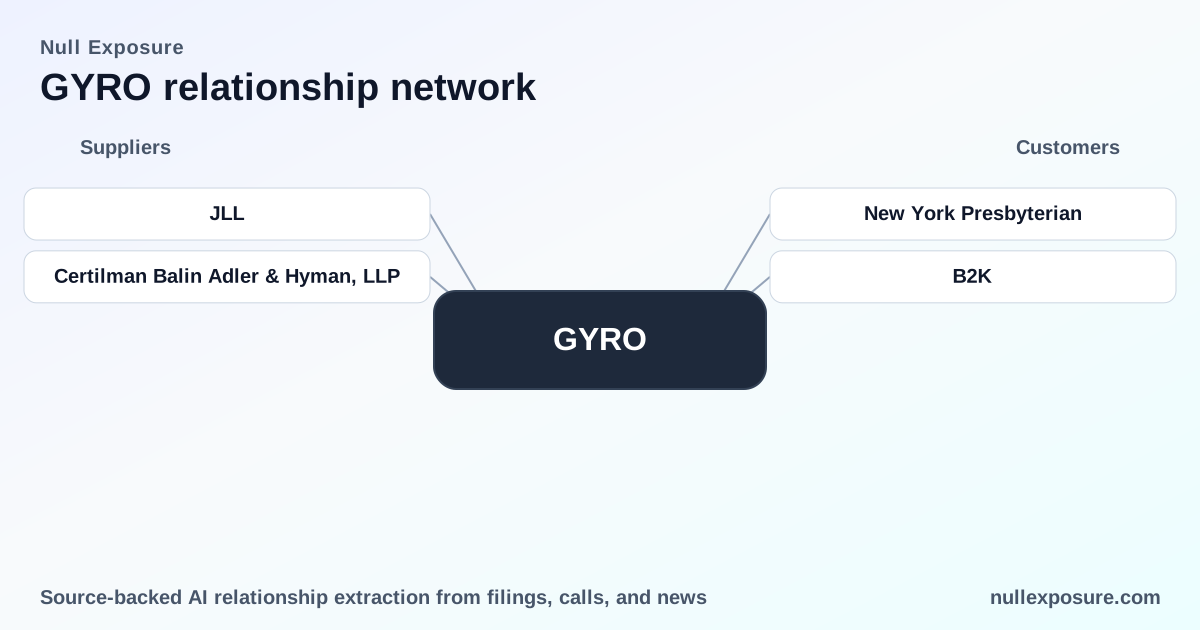
Gyrodyne (GYRO): Asset-sale play with concentrated healthcare exposure and a defined liquidation path
Gyrodyne operates as a self-managed real estate owner focused on two New York portfolios—Flowerfield (St. James, Suffolk County) and Cortlandt Manor (Westchester County). The company monetizes through rental income from medical office and industrial tenants and the strategic sale of its remaining properties after pursuing entitlements that increase development flexibility; management intends to complete asset dispositions and return proceeds to shareholders under a controlled liquidation plan. For a focused view of counterparties and transaction counterpart risk, see more at https://nullexposure.com/.
How Gyrodyne makes money and what that means for investors
Gyrodyne’s business model is simple and narrow: operate income-producing medical and light-industrial real estate, enhance entitlements, and sell at higher values. Operating cash flow comes from tenants (medical providers, university affiliates and smaller commercial tenants) while the principal value unlock is expected from property sales. The company reported 2024 revenue of $2.738 million and negative EBITDA of roughly $3.08 million, underscoring that realization of shareholder value depends on executed property dispositions rather than ongoing operating leverage.
- Contracting posture mixes long-term leases (e.g., consolidated lease terms extended into 2027) with a material bucket of short-term/month-to-month tenants, and an explicit strategy to pursue spot asset sales once entitlements are achieved.
- Concentration is material: the three largest tenants produced roughly 25%, 21% and 9% of rental income in 2024, meaning tenant performance directly impacts liquidity available for planned distributions.
- The company is in a mature liquidation trajectory: management projects negotiation and sale activity to culminate in 2026 and intends to dissolve after asset dispositions; estimated liquidation and operating costs were disclosed alongside net proceeds expectations.
If you need an annotated, investor-grade breakdown of counterparties and deal progress, Null Exposure maintains live monitoring of these relationships at https://nullexposure.com/.
Counterparties and transactions you need on your radar
B2K Smithtown LLC — buyer for Flowerfield acreage
Gyrodyne’s subsidiary, GSD Flowerfield LLC, entered into a purchase and sale agreement with B2K Smithtown LLC to sell approximately 49 acres of vacant Flowerfield land; that agreement was later amended as Gyrodyne and the buyer negotiated timing and contingencies. According to Investing.com (May 3, 2026), Gyrodyne announced the sale agreement and a subsequent second amendment to the Flowerfield purchase contract in FY2026. Newsday (reporting on a related August announcement) identified the buyer as the developer behind The Bristal assisted living chain (Newsday, 2026).
B2K (Star Equity / voting & governance context)
Gyrodyne disclosed governance and board-structure agreements tied to an investor referred to as Star Equity / B2K in public filings and market briefs; those disclosures also highlight the risks and contingencies associated with the purchase and sale agreement and the potential effect on liquidation timing and proceeds. MarketScreener and QuiverQuant summarized the company’s March 2025–2026 disclosures describing an agreement with Star Equity Fund and cautions about contingent, years-long regulatory contingencies that affect the PSA with B2K (QuiverQuant and MarketScreener, March 2026).
New York Presbyterian — material tenant on the Westchester site
The Westchester (Cortlandt Manor) property is adjacent to NewYork-Presbyterian Hudson Valley Hospital and is occupied by medical office buildings that are heavily tenant-dependent for rental cash flow, with New York Presbyterian named among the primary occupants. JLL’s marketing release (March 10, 2026) noted that the site’s five medical office buildings were approximately 92% occupied by tenants including New York Presbyterian, underscoring the strategic value and leasing dependency of the Cortlandt asset (JLL, March 2026).
Constraints that shape Gyrodyne’s contracting and execution profile
These are company-level signals derived from public filings and investor communications that define how Gyrodyne runs deals and what to expect from counterparties.
- Contract mix and timeline: Gyrodyne runs a hybrid contract posture—long-term leases (notably a consolidated lease that extends to December 2027), short-term/month-to-month occupancy for some units (four tenants on month-to-month as of Dec 31, 2024), and spot-sale transactions for properties or lots as part of the liquidation strategy. That mix creates both predictable near-term cash and optionality to monetize via sales.
- Concentration and criticality: Tenant concentration is material; a handful of tenants (including university and medical clients) produce a disproportionate share of rent and therefore are critical to near-term cash flow and the timing of distributions.
- Maturity and corporate posture: The company is in a winding-down/liquidation phase, with management estimating liquidation costs and projecting asset dispositions to complete in the 2026 timeframe; this drives a sales-first mindset rather than growth or new development.
- Spend profile and counterparty scale: Typical rental revenue per counterparty sits in the $100k–$1m band, with some property-level annual base rent figures in the $1m–$10m band (Flowerfield base rent approximated at $1.637m in 2024), suggesting counterparties are a mix of mid-sized institutional and small tenants rather than very large, diversified corporate lessees.
- Operational pass-throughs and tenant risk: Substantially all developed properties include tenant reimbursements of insurance, taxes and maintenance, limiting landlord cash exposure on some operating costs but leaving Gyrodyne exposed to tenant solvency and regulatory shifts in healthcare reimbursement that could materially affect rent collection.
What moves the stock and the liquidation timeline
- Primary upside: successful entitlements and sale of Flowerfield and Cortlandt Manor at or above management’s target prices will unlock the largest value for shareholders; buyers like B2K Smithtown LLC are the proximate execution path to that outcome.
- Primary risk: regulatory delays, successful appeals (Article 78 litigation referenced in filings), or buyer termination rights could extend liquidation timelines or reduce proceeds; tenant concentration and health-sector reimbursement pressures add downside to rent cash flows while sales are negotiated.
- Operational priorities for management: improve occupancy, negotiate lease renewals and extensions, and convert entitlements into unappealable site plans that reduce buyer contingency and accelerate closings.
For a clean, investable breakdown of counterparties, active sale agreements and the litigation timeline that affects realization of asset values, visit our in-depth coverage at https://nullexposure.com/.
Conclusion — how to think about Gyrodyne from an investor perspective
Gyrodyne is not a growth REIT; it is an asset-conversion vehicle where execution on a small number of property sales drives intrinsic value. Monitor the B2K Smithtown transaction documents, amendments, and any Article 78 judicial outcomes closely—those items determine both timing and surplus available for distributions. Tenant concentration, proximity to large healthcare providers, and a mixed lease tenor profile create a predictable but fragile cash flow bridge until sales close.