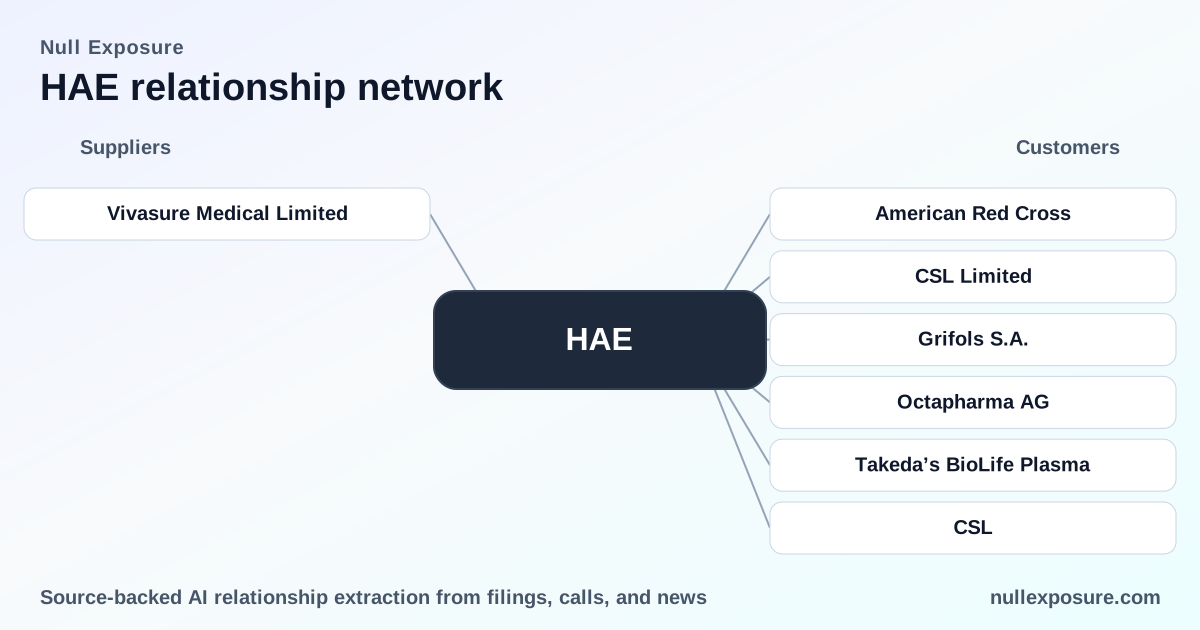
Haemonetics (HAE): Customer Relationships and Commercial Constraints Investors Should Price In
Haemonetics is a global medical‑technology company that monetizes through a mix of hardware sales (devices), recurring consumables (disposables), software licensing and support, and service/maintenance for plasma collectors, blood centers and hospitals. The company's revenue model is anchored in installed devices that generate follow‑on disposable and software revenues, producing a high‑value recurring stream alongside periodic equipment sales and multi‑year contracts. For investors, the valuation hinge is the durability of consumable/usage revenue, concentrated large‑customer exposure, and the commercial cadence of software and long‑term service agreements. Visit https://nullexposure.com/ for primary coverage and related analytics.
How Haemonetics actually sells — the commercial anatomy and constraints investors should internalize
Haemonetics runs a hybrid contracting posture that combines short‑term transactional sales (product shipments recognized at point of delivery) and longer‑term contracts and licenses (multi‑year equipment leases, term software licenses and service agreements). The FY2025 10‑K documents both short‑dated performance obligations and $33.1 million of remaining performance obligations for contracts originally longer than one year, with ~80% expected to recognize within 12 months — a mix that delivers near‑term visibility without eliminating renewal risk.
Key operating characteristics as company‑level signals:
- Concentration and criticality: Ten largest customers represented ~42% of net revenues in FY2025, creating meaningful credit and negotiation exposure even though no single customer exceeded 10% of consolidated revenue (FY2025 10‑K).
- Recurring, usage‑tied economics: A substantial portion of revenue is usage‑based or subscription/licensing, including per‑collection fees and disposables sold against installed devices, which creates high lifetime value for installed base but links revenue to customer volumes and utilization (FY2025 10‑K).
- Geographic skew: The U.S. dominates the revenue base (roughly 74% of net revenues), while international contributed ~25.7% in FY2025; this creates currency and regulatory exposures but also a large, resilient domestic market (FY2025 10‑K).
- Contract maturity profile: The business combines short operating leases and spot product sales with multi‑year customer contracts and licensing, producing a mixed renewal and retention risk profile (FY2025 10‑K).
Customers called out in filings and public remarks
Below are every customer relationship the company cited in the provided results, each described in plain English with source attribution.
American Red Cross
Haemonetics supplies apheresis collection devices that support plasma collection activities at blood collectors such as the American Red Cross, positioning Haemonetics as a supplier to national blood organizations. According to Haemonetics’ FY2025 Form 10‑K, these devices are part of the Blood Center business that supports plasma collection (FY2025 10‑K).
CSL Limited (as a market participant)
CSL is identified as a vertically integrated biopharmaceutical company that collects source plasma and competes in the same market for plasma collection; Haemonetics positions itself to serve such integrated collectors. This characterization is in Haemonetics’ FY2025 Form 10‑K (FY2025 10‑K).
Grifols S.A.
Grifols is listed alongside other large vertically integrated plasma collectors that have driven the structure of the plasma market over the past two decades; Haemonetics competes to supply equipment and services into that cohort. This is noted in the company’s FY2025 10‑K (FY2025 10‑K).
Octapharma AG
Octapharma is cited as another major vertically integrated plasma collector in markets Haemonetics serves; the 10‑K frames these companies as central customers for source plasma collection solutions (FY2025 10‑K).
Takeda’s BioLife Plasma
Takeda’s BioLife Plasma is referenced among the vertically integrated biopharmaceutical firms performing source plasma collection, and thus sits within Haemonetics’ addressable customer set for collection devices and supporting software (FY2025 10‑K).
CSL (management remark, Q3 FY2026)
Management reported in a Q3 FY2026 earnings‑call transcript (published on InsiderMonkey) that Haemonetics values its relationship with CSL and stated that the company is “delighted to have 100% of their international business, to have their US software on a long‑term agreement”, signaling continued commercial engagement and software revenue capture with CSL (InsiderMonkey, Q3 FY2026 earnings transcript).
What the constraints imply for commercial performance and valuation
- Contract mix drives revenue visibility and risk: The company concurrently discloses short‑term contracts (original term ≤1 year) and long‑term contracts (>1 year) with remaining performance obligations; this produces a near‑term recognized revenue stream but leaves a non‑trivial element dependent on renewals and milestone achievement (FY2025 10‑K).
- Licensing and usage pricing widen margin leverage: Haemonetics explicitly sells per‑collection and usage‑based software/hosting fees and perpetual licenses with maintenance; this structure amplifies margins when utilization is stable or growing, but it ties revenue to collection volumes and clinical procedure activity (FY2025 10‑K).
- Concentration increases counterparty and credit risk: With ~42% of revenue from the top ten customers, customer negotiations, group purchasing organizations and consolidation among buyers are primary commercial risks to monitor (FY2025 10‑K).
- Geography and regulatory footprint are material: Heavy U.S. exposure (~74% of revenue) reduces some regulatory complexity but leaves the business exposed to U.S. reimbursement, FDA scrutiny and domestic demand cycles; international operations introduce FX and tender risks (FY2025 10‑K).
Note: a discrete constraint excerpt names CSL explicitly — Haemonetics disclosed that CSL informed the company in April 2021 of its intent not to renew a U.S. PCS2 supply agreement, extending non‑exclusive terms through December 2025; this historical development is relevant when reconciling management’s later remarks about international and software agreements (FY2025 10‑K).
Risks and upside drivers investors should track
- Risks: Customer concentration and tender dynamics; product recalls and quality events; regulatory approvals and evolving device regulation (EU MDR, IVDR, FDA scrutiny); foreign currency and receivables exposure for government‑owned healthcare systems; and potential erosion of consumable volumes if alternative technologies or clinical practice changes occur (FY2025 10‑K).
- Upside drivers: Continued adoption of NexSys PCS and NexLynk DMS software across U.S. plasma centers (management cites near‑ubiquitous U.S. adoption), successful rollouts of new hospital devices (VASCADE MVP family and ensoETM), and expansion of usage‑based software revenue streams (FY2025 10‑K).
Investment implication and a short monitoring checklist
Investors should value Haemonetics as a hybrid hardware/recurring‑revenue business where downside risk concentrates in customer renewal and utilization trends and upside accrues from installed base growth and software monetization. Track these items quarterly:
- Top‑10 customer revenue trending and individual account disclosures (concentration movement).
- Consumable volumes per installed device and per‑collection software usage metrics.
- Renewal outcomes for large plasma collectors (CSL developments remain material given prior non‑renewal history).
- Regulatory or recall developments and any related charges.
- FX impact on international revenue and margins.
For broader situational awareness and company‑level analytics, visit https://nullexposure.com/ for coverage and alerts.
Bold takeaway: Haemonetics is a structurally recurring business built on installed hardware that generates follow‑on consumables and software revenue, but its valuation is levered to a concentrated customer base, contract renewal outcomes and utilization trends.