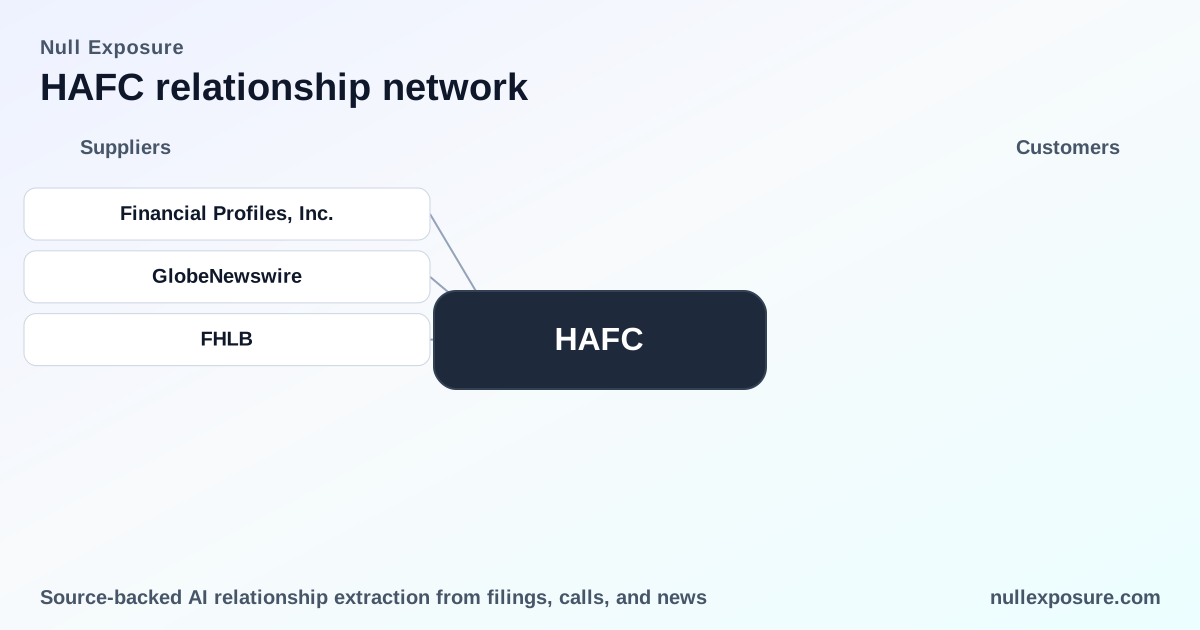
Hanmi Financial (HAFC): Customer Relationships and What They Signal to Investors
Thesis: Hanmi Financial is a regional bank that underwrites, originates and services loans to a concentrated community and commercial client base, and monetizes through net interest margin, loan sales and servicing fees. Its revenue mix and balance-sheet posture make customer relationships both a source of fee income and a leading indicator of credit exposure. For deal and portfolio managers evaluating Hanmi as a counterparty or platform, the interaction between active lending, loan sales/servicing and deposit concentrations drives risk and return. Visit the NullExposure homepage for additional coverage and tools: https://nullexposure.com/.
How Hanmi operates and how customers drive the economics
Hanmi Bank is a California‑based community-oriented regional bank that focuses on commercial real estate, commercial and industrial loans, SBA lending and deposit products for small- and middle‑market businesses and individuals. The company’s primary revenue stream is net interest income—interest and fees from its loan book funded by deposits and wholesale borrowings—supplemented by noninterest income from loan sales, servicing fees and trade finance services. According to Hanmi’s annual disclosures through December 31, 2024, 77% of loans are commercial real estate and commercial & industrial, and servicing income and gains on loan sales are material contributors to other operating income.
Contracting posture, maturity and counterparty mix — reading the constraints
The public filings and disclosures provide a multi‑dimensional view of Hanmi’s customer relationships that is actionable for investors:
- Contracting posture is mixed but skewed to short‑to‑medium terms. The bank documents frequent use of short‑term lines (12‑month commercial lines, loans with interest‑only periods of six‑to‑12 months) while also originating longer term instruments such as SBA loans and commercial term loans up to seven (and in some cases up to 25) years. This mix implies a balance between stickiness from term loans and liquidity/repricing sensitivity from short-term facilities.
- Spot/transactional revenues coexist with longer commitments. Noninterest income is largely transactional and recognized when services are rendered, yet the bank also retains servicing rights and sells guaranteed portions of SBA loans—creating recurring servicing fees and periodic sale gains.
- Concentration is sectoral and geographic. Lending is heavily concentrated in real estate collateral and Southern California markets, with notable exposures in hospitality, retail and multifamily. The bank’s customer base is primarily small‑ and middle‑market businesses and individual consumers, creating correlation to local economic cycles and real‑estate risk.
- Criticality and materiality are real. Several risk excerpts stress that adverse local economic conditions, regulation or a major natural disaster could have a material adverse effect on Hanmi’s financial condition, reflecting the bank’s concentrated loan composition and deposit base.
- Maturity profile drives sensitivity to rates and liquidity. With a large share of deposit funding and both short-term and long-term loan vintages, Hanmi’s net interest margin and funding costs will move with Federal Reserve policy and deposit competition.
These constraints should be read as company‑level signals about how customer behavior — deposit withdrawals, loan delinquencies, prepayments and demand for trade finance — translate into earnings volatility and capital stress.
Catalog of observed customer relationships (what we found)
Below is every relationship observed in the public search results for HAFC. Each entry includes a plain‑English summary and the source reference.
- Assertio Holdings (ASRT) — Hanmi as API manufacturer and long‑term supplier: Assertio disclosed that it executed a long‑term supply agreement with Hanmi, naming Hanmi as the API manufacturer for Rolvedon, positioning Assertio for “continued stable supply and pricing going forward.” This was announced in Assertio’s Q3 2025 earnings call and documented in a March 2026 transcript. According to the Q3 2025 earnings call, the long‑term supply pact establishes Hanmi in a manufacturing role for Assertio’s product Rolvedon; a transcript of the call posted by InsiderMonkey reiterated the same language in March 2026. (Sources: Assertio Q3 2025 earnings call; InsiderMonkey transcript, posted March 2026.)
Note: the search returned two records for the same ASRT disclosure (the earnings call and a published transcript). Both records reference the same contractual relationship between Assertio and Hanmi.
What the relationships and constraints imply for investors
- Hanmi acts as both lender and service provider. The company’s disclosures list it as an originator and seller of loans, a servicer of loans sold to investors, and as a counterparty in transactional banking services—this dual role creates multiple revenue levers (interest, servicing fees, sale gains) but also multiple channels for credit and operational risk.
- Customer concentration is a primary risk vector. With 77% of loans concentrated in commercial real estate and C&I, Hanmi’s profitability and asset quality are highly sensitive to local real‑estate cycles and industry stress in hospitality and retail.
- Deposit composition amplifies liquidity sensitivity. Large uninsured deposit balances and reliance on money market and time deposits increase rollover and competitive funding risk, making customer attrition or a sudden deposit flight a meaningful threat to liquidity and margins.
- Contract maturity mix creates rate opportunity and repricing risk. The presence of both short-term commercial lines and long‑term SBA/term loans means the bank benefits when asset yields reprice upward faster than funding costs, but suffers when funding repricing outpaces asset repricing.
- Service relationships (loan servicing and SBA guarantee sales) provide stable fee income but also operational exposure. Servicing assets and retained servicing rights produce recurring income, while sale‑and‑servicing activity exposes Hanmi to servicing performance and regulatory obligations.
Practical takeaways for portfolio and counterparty analysis
- Focus diligence on CRE concentration and regional stress tests. Given the bank’s concentration and local footprint, scenario analysis for Southern California and New York multifamily/hospitality is essential.
- Monitor deposit stickiness and uninsured exposure. Large uninsured deposits and brokered deposits warrant ongoing surveillance as market liquidity and rate cycles evolve.
- Value the servicing franchise but stress-test operations. Servicing fee growth cushions margins; however, servicing shortfalls, prepayment volatility and counterparty performance on sold loans affect realized income.
- Review contract types across the book. The coexistence of spot/transactional revenue and longer‑term loan commitments requires valuation of both interest income trajectory and fee sustainability.
If you want a structured, machine‑readable mapping of Hanmi’s counterparty exposures and relationship roles for RM or due‑diligence workflows, see our tools and reports at https://nullexposure.com/.
Bottom line
Hanmi Financial’s customer profile is distinctly community and real‑estate oriented, generating steady net interest income and supplemental fee income from loan sales and servicing. The company’s concentration in CRE, mix of short‑ and long‑term contracts, and significant deposit balances are the principal levers that determine earnings upside and downside. For investors and operators, due diligence should prioritize credit concentration, deposit dynamics and the resilience of servicing operations.