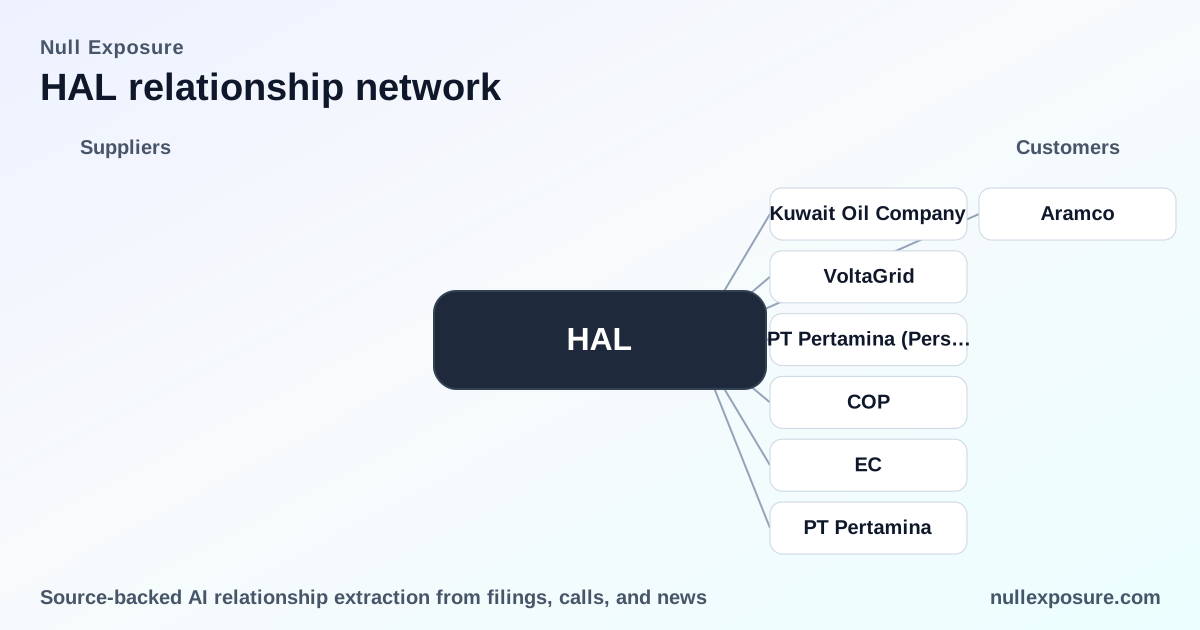
Halliburton (HAL): Customer Relationships That Drive Global Services and International Growth
Thesis: Halliburton monetizes a broad portfolio of upstream services and products—primarily through the Completion & Production and Drilling & Evaluation segments—by selling a mix of short‑term, usage‑based field services and select long‑term, lump‑sum integrated project contracts. Revenue is generated from equipment, stimulation/fracturing, artificial lift, project management and digital services across more than 70 countries, and recent international awards (including multibillion‑dollar completions and Arctic logistics deals) illustrate how service scale and proprietary technology (for example, the ZEUS electric fracturing platform) convert into sizeable, contract‑level cash flow. For a concise HAL customer map and ongoing updates, visit https://nullexposure.com/.
What investors should know up front
Halliburton sells complex, capital‑intensive services that are critical to customers’ oilfield programs and therefore command durable commercial relationships and high entry barriers. The business mixes:
- Short‑term, usage‑priced work (per day, per meter, per man‑hour) for routine services;
- Long‑term, fixed price or lump‑sum project contracts for integrated project management and turn‑key work;
- A large international footprint that creates both growth optionality and geopolitical/regulatory exposure.
A mid‑report note and further customer detail are available at https://nullexposure.com/ for readers who want a structured relationship view.
How HAL’s operating model shapes customer risk and opportunity
Halliburton’s commercial posture is deliberately hybrid. Most relationships are transactional and usage‑based, which yields high revenue churn but fast cash conversion; strategic, long‑term contracts exist where Halliburton assumes execution and logistical risk in exchange for higher-margin integrated fees. No single customer represented more than 10% of consolidated revenue, yet the company still shows regional concentration—North America and Latin America together account for a large share of sales—so macro oilfield spending and regional political risks translate directly into revenue variability. The scale of recent awards demonstrates the company’s ability to win contracts at the $100m+ spend band and to export North American technologies (e.g., ZEUS) internationally.
The customer relationships that matter right now
Below I cover every relationship captured in the source results, with a short plain‑English take and a source reference.
-
VoltaGrid — Halliburton has a strategic collaboration with Voltigrid to pair Halliburton’s global execution footprint with VoltaGrid’s distributed power platform, positioning HAL to support distributed energy use cases at remote sites. (Halliburton Q4 2025 earnings call; March 2026.)
-
Kuwait Oil Company — KOC named Halliburton a service partner of the year and awarded a multiyear ESP (electrical submersible pump) contract, strengthening HAL’s artificial‑lift presence in Kuwait. (Halliburton Q3 2025 earnings call; reported March 2026.)
-
Ecopetrol — Ecopetrol awarded Halliburton ESP contracts in nine of eleven Colombian fields, underscoring HAL’s artificial‑lift footprint in Latin America. (Halliburton Q3 2025 earnings call; reported March 2026.)
-
Greenland Energy Company (GLND / Greenland Energy) — Halliburton signed an agreement to provide integrated consulting, well services and logistics for Greenland Energy’s 2026 Jameson Land drilling campaign, a contract that highlights HAL’s Arctic and remote‑operations capabilities. (GlobeNewswire and WorldOil coverage; April–May 2026.)
-
YPF — Halliburton won a multibillion‑dollar, multi‑year exclusive contract to deliver unconventional completions services in Argentina’s Vaca Muerta, which will be the first international deployment of HAL’s ZEUS electric fracturing platform. (WorldOil and Reuters/TradingView reporting; April 2026.)
-
PT Pertamina (Persero) / PT Pertamina — Halliburton entered a strategic memorandum of understanding with Pertamina to accelerate unconventional energy development in Indonesia, positioning HAL as a technology and knowledge partner for national upstream modernization. (Finviz/InsiderMonkey and EnergiesMedia; February–March 2026.)
-
Matador Resources (MTDR) — Matador publicly credited Halliburton’s frac designs and execution, reflecting operational endorsement from an independent U.S. producer and the commercial value of HAL’s stimulation engineering. (Matador Q4 2025 earnings call coverage; March 2026.)
-
ConocoPhillips (COP) — Halliburton won a major five‑year production‑services contract in the North Sea from ConocoPhillips, a multi‑year buy that secures recurring revenue in a high‑margin offshore basin. (Halliburton Q3 2025 earnings call; reported March 2026.)
-
Pelican Acquisition Corporation / PELI — As Pelican (later Greenland Energy Company) prepared a NASDAQ listing and an East Greenland campaign, Pelican disclosed Halliburton contracts for drilling services and logistics planning for the Jameson project. (SEC/press coverage and WorldOil; 2025–2026 filings and press releases.)
-
PETRONAS Suriname Exploration & Production BV (PETRONAS Suriname) — Halliburton signed a strategic collaboration with PETRONAS Suriname and Valaris to support offshore Suriname development, reflecting HAL’s integrated offshore execution capabilities. (GlobeNewswire summary and Tikr commentary; April 2026.)
-
Valaris (VAL) — Valaris’ Ensco UK unit entered a strategic collaboration with PETRONAS Suriname and Halliburton to support Suriname offshore development, linking HAL to offshore drilling fleet partners. (Tikr and Intellectia AI reporting; April–May 2026.)
-
ExxonMobil Guyana — Halliburton participated in a complex project completed with Sekal, Noble and ExxonMobil Guyana, demonstrating HAL’s role on high‑profile Guyana plays and its ability to coordinate with large IOC operators. (AlphaStreet Q1 review; May 2026.)
-
Noble (NBLCF) — Noble collaborated with Halliburton on the ExxonMobil Guyana project, with HAL contributing technical services and coordination on the campaign. (AlphaStreet Q1 review; May 2026.)
-
Sekal — Sekal worked alongside Halliburton on the ExxonMobil Guyana program, indicating HAL’s ecosystem of specialty services and contractor partners in large offshore projects. (AlphaStreet Q1 review; May 2026.)
Constraints and what they tell investors about business durability
The source material yields clear company‑level signals about Halliburton’s operating model:
-
Contracting posture: Halliburton runs a mix of predominantly short‑term, usage‑based engagements alongside targeted long‑term fixed‑price and lump‑sum project contracts for integrated project management. That mix supports stable cash flow from recurring activity while enabling occasional outsized margin capture on integrated projects.
-
Concentration: No single customer >10% of revenue, but regional concentration matters—North America and Latin America constitute meaningful shares of revenue—so regional capital‑spending cycles materially affect results.
-
Criticality and role: Halliburton is principally a seller and service provider (stimulation, completions, artificial lift, drilling, project management), often performing mission‑critical field services that are difficult to replace quickly.
-
Commercial maturity: HAL operates globally in 70+ countries with broad service lines and digital offerings (software, hardware, core product sales), indicating a mature, diversified commercial footprint but with significant exposure to customers’ capital spending and regulatory regimes.
-
Deal scale: The company is capable of winning and executing $100m+ spend‑band contracts, demonstrated by multibillion‑dollar awards like YPF and sizeable Arctic logistics engagements.
Investment implications and actionable takeaways
- Growth lever: Internationalization of North American technologies (ZEUS) and execution in frontier markets (Greenland, Suriname, Argentina) will drive HAL’s margin mix and revenue upside.
- Risk profile: Regional political/regulatory shifts and cyclical capital spending by customers remain the most direct threats to revenue. Counterparty concentration is low at the customer‑level but regional exposure is elevated.
- Operational edge: HAL’s ability to couple field execution, logistics, and proprietary tech for integrated contracts is a differentiator that converts into larger, longer‑duration awards.
For a deeper relationship map and continuous monitoring of HAL’s commercial counterparties, visit https://nullexposure.com/.
Bold investors will find Halliburton’s recent international awards both a revenue and strategic technology adjudication—these contracts validate HAL’s transition from pure field services to integrated international execution and support the company’s positioning across large offshore and unconventional plays.