Huntington Bancshares (HBANP) — Customer relationships that move the P&L
Huntington Bancshares operates as a multi-state regional bank whose core monetization is classic banking economics: net interest margin on a diversified loan book (consumer and commercial) plus fee income from payments, wealth management, mortgage servicing and capital markets. Deposits fund the balance sheet, loans and lease financing generate interest income, and periodic loan sales and servicing arrangements convert credit assets into fee streams. For readers focused on counterparty risk and revenue durability, Huntington’s customer footprint combines high-volume retail deposit relationships with concentrated commercial credit exposures and recurring service arrangements. Learn more at https://nullexposure.com/.
How to read Huntington’s customer model — what matters for investors
Huntington’s operating model is a hybrid of short-duration retail relationships and long-duration lending commitments. The public evidence highlights several firm-wide characteristics you should treat as structural:
- Deposit-funded balance sheet is critical. Customer deposits fund the majority of assets and provide the bank’s primary liquidity and low-cost funding advantage. That makes deposit retention and rates on deposit products direct drivers of funding cost and net interest income.
- Contract mix mixes short and long tenor exposures. Many customer contracts are cancelable or have maturities under one year (time deposits, certain commitments), while residential mortgages, subordinated debt and lease financing produce multi-year, predictable cash flows. This combination creates sensitivity to deposit repricing and interest-rate cycles on one hand, and longer-term credit and servicing lines on the other.
- Counterparty breadth with pockets of concentration. Huntington serves individual consumers and small businesses at scale, while its commercial banking and middle-market activities create larger single-name exposures that are monitored at portfolio and loan-level — a classic regional bank risk profile.
- Service-provider economics are material. Mortgage servicing rights, payments and cash management, and wealth-management fee streams are material noninterest income drivers and anchor recurring revenue.
- Operational and regulatory risk is material. Cybersecurity, consumer compliance and reputational outcomes are explicitly flagged as potentially material to earnings and franchise value.
These are company-level signals drawn from Huntington’s public filings and reporting; they frame how each customer relationship converts into revenue or risk.
Direct customer relationships: what the market flagged
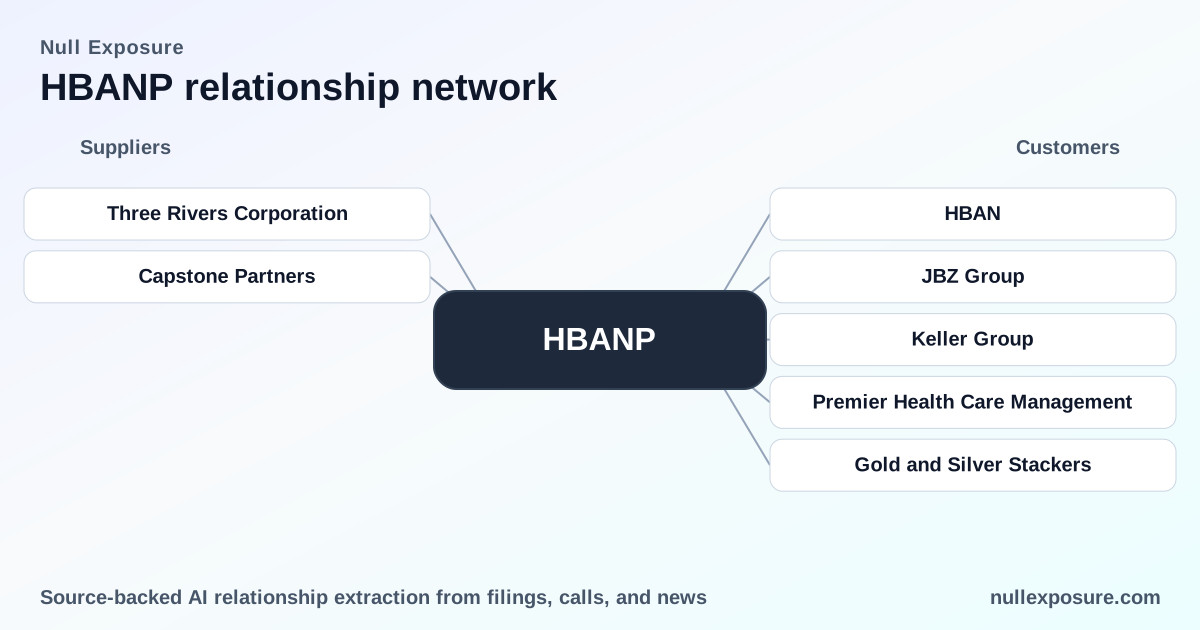
Below are the customer relationships surfaced in public sources that investors tracking HBANP should note. Each entry is a plain-English take and the source reference.
OneDigital
Huntington sold its retirement-planning services business and, under the separation terms with OneDigital, Huntington will receive reimbursement for client referrals, which preserves a referral revenue stream while transferring fiduciary operations. Source: American Banker coverage of the transaction and Huntington securities filing, March 10, 2026.
HBAN (Huntington itself referenced)
Huntington disclosed in securities filings that referral reimbursements to OneDigital are contractually provided to Huntington, underscoring the bank’s approach to monetize customer relationships through referral and fee-sharing arrangements following the divestiture. Source: American Banker reporting and Huntington filing text, FY2023 disclosure cited March 2026.
JBZ Group
Court filings show Huntington entered a credit agreement in 2018 involving Premier, Keller Group and JBZ Group companies, demonstrating Huntington’s role as a lender in syndicated or multi-party credit arrangements that can surface in public litigation or workout dockets. Source: Court News Ohio docket referencing the credit agreement and litigation, FY2025.
Gold and Silver Stackers
A consumer-facing dispute reported in media describes Huntington closing a small business customer’s accounts, highlighting that relationship termination decisions can occur at the branch level and may carry reputational implications for community-facing banks. Source: The Sun article reporting on an account closure incident and a YouTube video by the business owner, FY2023 coverage.
Keller Group
Keller Group is named alongside JBZ Group in the November 2018 credit agreement with Huntington, reflecting the bank’s exposure through commercial lending arrangements to corporate groups that can later become the subject of legal proceedings. Source: Court News Ohio docket, FY2025.
Premier Health Care Management
Court records indicate Huntington lent approximately $77 million to Premier as part of a real-estate refinancing effort, illustrating Huntington’s direct lending to healthcare-related commercial borrowers and the bank’s participation in large, asset-backed credit facilities. Source: Court News Ohio case documents, FY2025.
East 128th Street Block Club Association
Local reporting around a branch closure notes that community associations and other civic entities maintain deposit relationships with Huntington, reinforcing that branch-level decisions affect both consumer and grassroots organizational customers in Huntington’s footprint. Source: Signal Cleveland reporting on the Buckeye Road branch closure, FY2024.
What these relationships mean for investors — a concise checklist
- Revenue mix: Fee-sharing and referral agreements (example: OneDigital) permit Huntington to convert bank-held relationships into recurring, lower-operational-risk fees while offloading servicing costs. This supports noninterest income growth without increasing balance-sheet credit exposure.
- Credit profile: Court dockets and credit agreements (JBZ, Keller, Premier) confirm the bank’s active role as a commercial lender; these relationships underline the need to monitor loan concentrations and workout processes. Commercial loans and CRE remain material to asset quality.
- Reputational and operational vector: Branch-level account closures and community reactions (Gold and Silver Stackers; East 128th Street Block Club) can affect local deposit behavior and brand perception—important given deposits are Huntington’s primary funding source.
- Service and securitization activity: Huntington acts as seller (loan sales, securitizations) and service provider (mortgage servicing, cash management), which diversifies revenue but requires strong operational controls and valuation governance.
Bottom line — where investors should focus next
Huntington’s customer relationships combine scale in retail deposits with targeted commercial lending and fee-generating services. Key investor priorities are deposit stability, credit concentration monitoring in commercial loans, and the durability of fee arrangements created through divestitures and servicing rights. For deeper diligence on counterparties and contractual terms, see Huntington’s filings and curated intelligence at https://nullexposure.com/.
If you want a consolidated view of Huntington’s counterparty map and contract-type signals for portfolio analysis, visit https://nullexposure.com/ for the detailed relationship matrix and source links.